Temperature20 – 26 °C
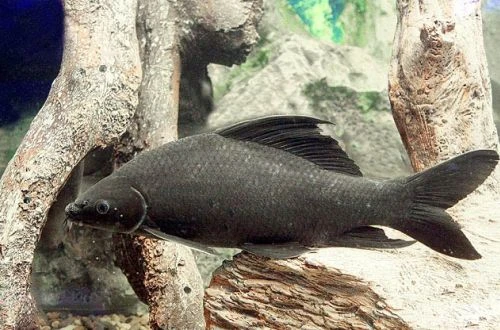
Labeo chrysophekadion, also known as the Black Labeo, belongs to the family Cyprinidae. Due to its impressive size and complex temperament, this species is quite demanding and not recommended for aquarium beginners.
Adult Black Labeo can grow up to 50–60 cm in length. They are characterized by a robust build, with a noticeably elevated back and large fins. Their coloration is typically uniform—black or dark gray. An albino form, bred artificially, also exists.
The natural habitat of this fish covers vast territories of Southeast Asia. It is found in large river systems such as the Mekong and Chao Phraya, flowing through Laos, Thailand, Cambodia, and Vietnam, as well as on the islands of Borneo and Java. It prefers deep-water sections of these rivers.
This species exhibits pronounced territorial behavior, which can escalate into aggression in the confined space of an aquarium. Compatibility with other species is only possible in spacious aquariums and provided that tank mates are comparable in size.
For keeping a pair of these fish, an aquarium with a volume of several hundred liters is required. In limited space, the Black Labeo may show aggression towards other inhabitants. For young individuals, it is advisable to provide shelters in the form of grottoes or caves. Adult fish are less demanding regarding decor elements and can feel comfortable even in an almost empty tank. The overall aquarium design is at the discretion of the aquarist. It is worth remembering that large fish produce a lot of waste, so the filtration system must be high-performance, consisting of at least a powerful external filter. In addition, a weekly water change of 50–70% of the volume with fresh water and enhanced aeration are mandatory.
In nature, their diet consists mainly of algae, aquatic vegetation, as well as insect larvae, small crustaceans, and other invertebrates living on them. In a home aquarium, it is important to provide food rich in both protein and plant components. Sliced cucumbers, zucchini, spinach, and other green vegetables and fruits can be a good addition to the main diet.
In natural conditions, the reproduction of the Black Labeo is associated with the onset of the rainy season, when the fish migrate upstream. Spawning occurs in the headwaters, and the hatched fry move into the flooded coastal zones as the water level rises, finding shelter and food there. Breeding these fish in a home aquarium presents significant difficulties due to the need for precise recreation of natural environmental changes. In commercial fish farms, the breeding process is usually stimulated by hormonal preparations.
The Black Labeo is a hardy and robust fish. Diseases rarely occur if living conditions are optimal and nutrition is balanced. However, if water parameters deteriorate, injuries occur, or other negative factors affect them, the immune system can weaken, increasing the risk of infections.
When purchasing, select active and agile individuals with clean scales without visible damage, ulcers, or spots. It is important to assess the condition of the fins: they should be intact, without signs of splitting or film. Avoid fish with sluggish behavior that stay near the surface or appear emaciated. Since the species is territorial, observe the interaction of individuals in the general aquarium at the store to avoid purchasing injured fish with signs of aggression from tank mates.
The essentials: size, tank volume, water parameters and care
An adult reaches 50–60 cm in length. Plan the tank around the maximum size: the fish quickly outgrows a cramped setup.
The recommended volume is 500 L. A smaller tank speeds up nitrate build-up and raises stress levels.
Temperature 20–26 °C, pH 6–8, hardness 2–14 dGH. Stability matters more than exact values: sudden swings are harder on the fish than a small deviation from the ideal.
Around 10 years when kept properly. Lifespan depends directly on tank volume, water quality and a varied diet.
Temperament: territorial (often aggressive). Keep this in mind when choosing tank mates.
Recommended setup: solitary. Ignoring this is a common cause of stress and disease.
Diet type: plant-based (algae, vegetables). Feed small portions that are finished within a couple of minutes — overfeeding does more harm than underfeeding.
The scientific name of the species is Labeo chrysophekadion, family Cyprinids (Cyprinidae). It also appears in the literature as: Chrysophekadion polyporos, Labeo crysophekadon, Morulius chrysophekadian.
The water suits 197 of 208 plants in the catalogue — the easiest ones are shown first.
Afzelius's AnubiasAnacharisAnubiasBrazilian PennywortDwarf CloverDwarf CloverDwarf HygrophilaDwarf SagittariaDwarf ValGuppy GrassHornwortJava FernJava MossMoneywortMud SwordNair's LagenandraNarrow Leaf AnacharisNarrow-leaf CloverStringy MossSüsswassertangTaiwan MossTape GrassTemple PlantUssuri Watermilfoil
Matched by family, categories and overlapping keeping conditions
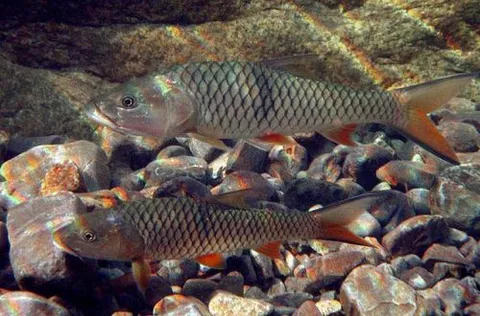
Hampala macrolepidota
The Hampala Barb, also known as the Jungle Perch (scientific name Hampala macrolepidota), is a member of the Cyprinidae family. This relatively large freshwater predator requires very spacious aquariums. In its natural…
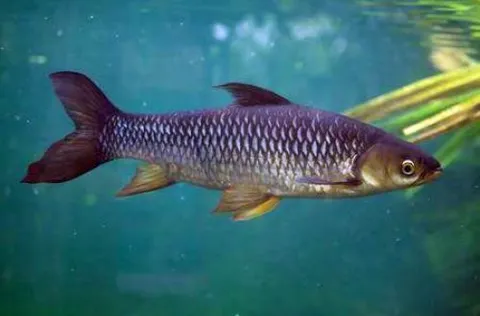
Leptobarbus hoevenii
The fish known as Hoven's Carp (Leptobarbus hoevenii) belongs to the family Cyprinidae. It is named after the zoologist Jan van der Hoeven (1801–1868). Due to its impressive size, this species is rarely found in amateur…
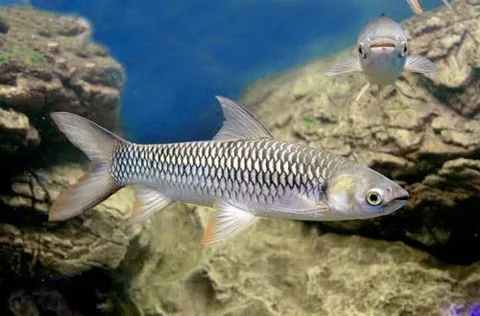
Leptobarbus rubripinna
The Red-Finned Leptobarbus, also known as the Sultan Fish, belongs to the family Cyprinidae and bears the scientific name Leptobarbus rubripinna. This is a hardy and undemanding species that exhibits a peaceful…
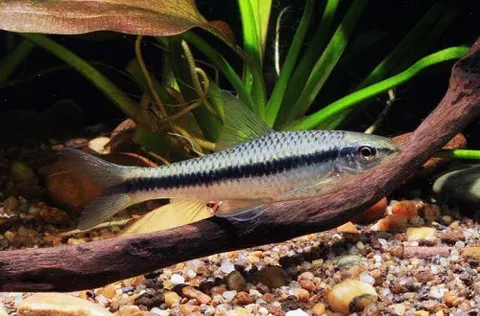
Crossocheilus oblongus
The Siamese Algae Eater, scientifically known as Crossocheilus oblongus, is a member of the Cyprinidae family. It is highly valued for its dietary preferences and is considered one of the most effective algae eaters.…