Rainbowfishes (Melanotaeniidae)

Boeseman's Rainbowfish

Melanotaenia boesemani

Boeseman's Rainbowfish belongs to the family Melanotaeniidae (Melanotaenia boesemani). This species appeared in the hobby relatively recently but has quickly become popular.

Tank
from 110 L (29 gal)
Temperature
27 – 30 °C (81 – 86 °F)
Size in aquarium
8 – 11 cm (3.1 – 4.3 in)
Acidity
pH 7–8
Natural rangeRange on the map
  • West Papua area
  • Indonesia

Tank conditions

Plan the tank stocking
Temperature
27 – 30 °C (81 – 86 °F)
Water pH
Neutral (7) – Slightly alkaline (8)
Water dH
Medium hardness (8) – Very hard (20)
Water salinity
no salt (freshwater)
Size in aquarium
8 – 11 cm (3.1 – 4.3 in)
Lifespan
8 years
Temperament
Peaceful, active/mobile
Toward small fish
not a predator
Required aquarium volume
from 110 L (29 gal)
Lighting
dimmed
Substrate
any (no restrictions)
Water flow
weak
Swimming level
near the surface
Feeding
Any (universal)
Keeping
Medium group 6–8 individuals
Jumping
low
  • Lifespan. A lifespan to expect under good care, not a measured value: it depends heavily on tank volume, water quality and diet — and for selectively bred forms, on their origin as well.
  • Toward small fish. Based on the Predators category in the catalog or the temperament in the species parameters. “A risk to small fish” means the species is not a predator by habit, yet will swallow any fish that fits in its mouth.
  • Required aquarium volume. This is a husbandry recommendation, not a measured value: the volume depends on the keeping mode (medium group (6–8 individuals)), footprint, decor and tank mates.

Care and keeping

Description

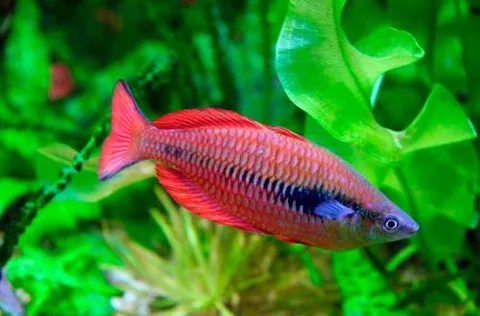
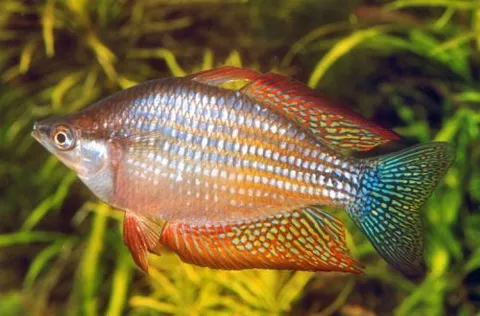
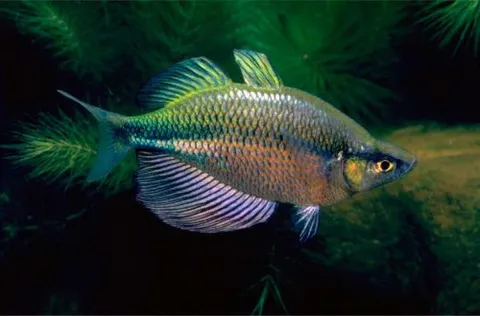
Adult Boeseman's Rainbowfish reach 8–11 cm in length. Their colour is quite variable: the head and front of the body are blue, gradually shifting to yellow-orange tones towards the tail and on the tail itself. Males are usually larger and display more intense, vivid colours.

Habitat

This species occurs naturally only in the western tip of New Guinea, now part of Indonesia. In the wild it is found in three small lakes and their tributaries. It prefers shallow areas with abundant aquatic vegetation. Unfortunately, the species is endangered in nature. Most fish sold in shops are farm-bred.

Behavior and Compatibility

Boeseman's Rainbowfish are peaceful and active. They get along well with other fish of similar size and temperament that share the same requirements. Keep them in a group, preferably 6–8 individuals of both sexes. Interestingly, males display more vivid colour when they have rivals.

Care and Maintenance

A school of Boeseman's Rainbowfish needs a tank of at least 110 L with a low water level. The setup can be simple: plant dense stands of rooted and floating plants while leaving plenty of open swimming space. Other décor is optional. These fish come from still waters, so avoid excessive water movement. Set up your filter for moderate circulation.

Diet

Boeseman's Rainbowfish are not fussy eaters and readily take all common foods: dry, live and frozen. The quality and composition of the diet directly affect the brightness of their colour. Use food from reputable makers, and offer live foods such as Artemia or bloodworm at least once a week.

Breeding and Reproduction

Successful breeding requires hard, slightly alkaline water (pH around 7.5) at 27–29°C and a protein-rich diet. Provide fine-leaved or low plants, or their artificial substitutes. Spawning lasts about 2 weeks; the female lays a few eggs daily among plants, attaching them to leaf surfaces with sticky threads. One male can fertilize eggs from several females. These fish show no parental care and ignore their eggs and fry after spawning, but they do not eat them either. Tank mates, however, may consume the fry and eggs. To protect the brood, carefully move the eggs to a separate tank with identical water parameters. The incubation period lasts 7–12 days. In the first days after hatching, fry need infusoria. From the first week onwards, you can offer powdered fry food and/or Artemia nauplii.
Diseases

Health problems arise only from injury or poor conditions, which weaken immunity and trigger disease. If the fish show symptoms, first test the water for any unusual levels or dangerous concentrations of toxins such as nitrite, nitrate or ammonia. Once you find any deviation, restore all parameters to normal before treating the fish.

How to choose

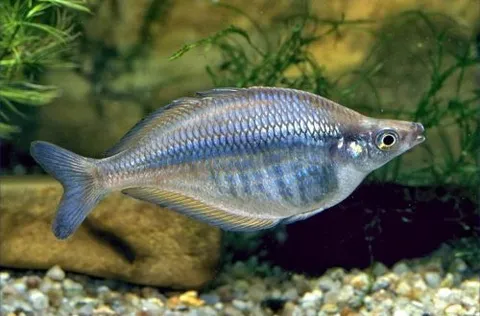
When buying Boeseman's Rainbowfish, note that young fish in the shop often look grey and drab—this is normal for the species. Bright colour develops only as they mature with good food and stable conditions. Avoid fish with damage, ulcers or odd behaviour. Choose active individuals that show interest in food and school together. Since this is a schooling species, buy 6–8 fish at once to reduce stress and support normal socialisation. Make sure the seller's tank shows no signs of infectious disease, as rainbowfish are sensitive to environmental conditions.

Compatibility

There are no pair reviews for this species yet — check tankmates in the matcher.

All tankmates

Plants and this fish

Matching water does not mean the plant will stay intact.

Frequently asked questions

The essentials: size, tank volume, water parameters and care

How big does Boeseman's Rainbowfish get?

An adult reaches 8–11 cm in length. Plan the tank around the maximum size: the fish quickly outgrows a cramped setup.

What size aquarium does Boeseman's Rainbowfish need?

The recommended volume is 110 L. A smaller tank speeds up nitrate build-up and raises stress levels.

What water parameters does Boeseman's Rainbowfish need?

Temperature 27–30 °C, pH 7–8, hardness 8–20 dGH. Stability matters more than exact values: sudden swings are harder on the fish than a small deviation from the ideal.

How long does Boeseman's Rainbowfish live?

Around 8 years when kept properly. Lifespan depends directly on tank volume, water quality and a varied diet.

Is Boeseman's Rainbowfish aggressive?

Temperament: peaceful, active/mobile. Keep this in mind when choosing tank mates.

How many Boeseman's Rainbowfish should be kept together?

Recommended setup: medium group (6–8 individuals). Ignoring this is a common cause of stress and disease.

What does Boeseman's Rainbowfish eat?

Diet type: any (universal). Feed small portions that are finished within a couple of minutes — overfeeding does more harm than underfeeding.

What is the scientific name of Boeseman's Rainbowfish?

The scientific name of the species is Melanotaenia boesemani, family Rainbowfishes (Melanotaeniidae).

Similar fishes

Matched by family, categories and overlapping keeping conditions

Wanam Lake Rainbowfish

Wanam Lake Rainbowfish

Glossolepis wanamensis

Rainbowfishes (Melanotaeniidae)

The Wanam Lake Rainbowfish, known scientifically as Glossolepis wanamensis, or Bluish Glossolepis, belongs to the family Melanotaeniidae. This fish is native to the island of New Guinea. Its natural habitat is Lake…

Fasciated Rainbowfish

Fasciated Rainbowfish

Chilatherina fasciata

Rainbowfishes (Melanotaeniidae)

Chilatherina fasciata, known as the Fasciated Rainbowfish, is a member of the family Melanotaeniidae. This fish is distinguished by its brightness and active behavior, and its coloration can vary significantly. A single…

Melanotaenia parva

Melanotaenia parva

Melanotaenia parva

Rainbowfishes (Melanotaeniidae)

The scientific name Melanotaenia parva belongs to the family Melanotaeniidae, commonly known as Rainbowfishes. This fish is also known as the Kurumoi Lake Rainbowfish, named after Lake Kurumoi on the Cenderawasih…

Cherry Rainbowfish

Cherry Rainbowfish

Melanotaenia splendida inornata

Rainbowfishes (Melanotaeniidae)

The Cherry Rainbowfish, also known as the Cherry Melanotaenia (scientific name Melanotaenia splendida inornata), belongs to the family Melanotaeniidae. It is an excellent choice for beginner aquarists because it is…

Other scientific names and conservation status

Categories
Rainbowfish
Conservation status
EndangeredEN