Temperature15 – 24 °C
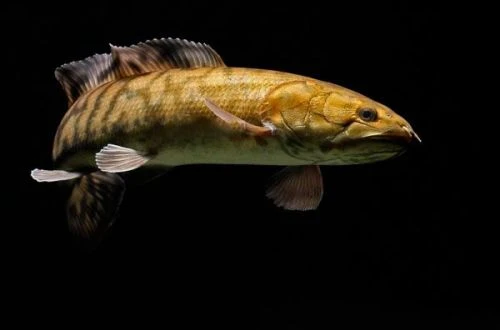
The mudfish, Amia or Bowfin, scientific name Amia calva, belongs to the family Amiidae. It is rarely chosen by hobbyists, partly because of its size and the need for large, often expensive aquariums. The species is a relict that has survived since the earliest times: the bowfin is the only living member of its family, and all its relatives are known solely from fossils.
Adults reach a length of 60–90 cm. The body is elongated, the head massive and the mouth large, studded with many sharp teeth. A long dorsal fin runs from the middle of the body to the rounded tail. The colouration is usually grey-brown with a characteristic dark pattern. Males are as a rule smaller than females and, when young, are distinguished by a black spot on the upper part of the caudal peduncle. The bowfin is an air-breathing fish, able to take up oxygen not only from the water but directly from the atmosphere. Thanks to this, Amia calva can survive for some time out of water. In a drought, when water bodies dry out completely, the fish buries itself in the substrate and enters a state of dormancy.
Amia calva comes from North America, where its range covers south-eastern Canada and the north-eastern United States. It can be found in swamps, lakes and river floodplains, as well as in slow-flowing waters. It particularly favours places with dense aquatic vegetation.
Despite its predatory way of life, this fish is calm and unaggressive in temperament. It coexists well with other species of comparable size. Bear in mind, however, that any smaller fish, as well as other tank inhabitants such as shrimp or snails, will be treated by the bowfin as potential food, so keeping them together is not acceptable.
Despite the impressive size of adults, the bowfin does not require an excessively large aquarium, as it is not a particularly active fish. The tank should hold at least 1000 litres. The decor is not critical, but conditions close to the natural ones are preferable. Such aquariums are usually given a soft sandy substrate, a few large pieces of driftwood and stones, and abundant floating and rooted vegetation. Keeping Amia calva presents no great difficulty provided the aquarium is fitted with equipment matched to its size, in particular a high-capacity filter and a system for draining and adding fresh water. It should be noted that setting up tanks of this kind is expensive, and they are often serviced not by the owners themselves but by specialists — although for some very wealthy enthusiasts this is not a problem.
A predator in nature, it feeds on almost everything it can catch - other fish, crustaceans, amphibians, etc. In a home aquarium, it can eat not only live food, but also fresh or frozen foods, for example, pieces of earthworms, mussels, shrimp, and fish. It is important to avoid feeding the meat of mammals and birds, as it contains lipids that Amia calva is unable to digest.
Amia calva does not reproduce in the aquarium. In the wild, spawning takes place annually. As the breeding season arrives, bowfins gather in large numbers in the shallows. The males build nests — shallow depressions — and defend them vigorously against rivals. Since males can outnumber females threefold, territorial clashes are frequent. Females choose the nests they like and deposit their eggs there, so a single nest may hold eggs from several females at different stages of development. Females take no part in caring for the offspring; that duty falls to the males, which stay by the clutch throughout the incubation period and go on guarding the young until they reach about 10 cm in length.
The bowfin is highly resilient and has a strong immune system, a result of its evolutionary adaptation to life in difficult, oxygen-poor still waters. No species-specific diseases have been recorded. In captivity most health problems arise from inadequate conditions that cause stress and weaken the fish. The main risks are poor water quality, accumulation of nitrogen compounds, and mechanical injuries from contact with decor or during intraspecific conflicts. Prevention comes down to keeping the parameters stable and providing a sufficiently large aquarium. Bear in mind that any damage to the skin or fins can become an entry point for secondary bacterial and fungal infections. If signs of illness appear — refusal to feed, a change in behaviour, or a film on the body — test the water for ammonia, nitrite and nitrate, and ensure good filtration and regular water changes.
When choosing a bowfin, assess the fish's activity and outward condition. A healthy specimen should show interest in its surroundings and have clean skin with no visible ulcers, spots, film or fin damage. The eyes should be clear, without cloudiness or unnatural bulging. Pay attention to its breathing: the fish should not stay at the surface constantly unless startled, and the gill covers should move rhythmically and symmetrically. Remember that the bowfin is a large predator with pronounced territorial behaviour. In shops these fish are often kept in cramped tanks, which causes stress and injuries from collisions with equipment or tank mates. Choose specimens that react normally to external stimuli and do not look emaciated. Since the species is a solitary hunter, if you buy several individuals you must plan in advance for keeping them apart to avoid cannibalism and aggression.
The essentials: size, tank volume, water parameters and care
An adult reaches 90 cm in length. Plan the tank around the maximum size: the fish quickly outgrows a cramped setup.
The recommended volume is 1000 L. A smaller tank speeds up nitrate build-up and raises stress levels.
Temperature 15–24 °C, pH 6–7.5, hardness 3–15 dGH. Stability matters more than exact values: sudden swings are harder on the fish than a small deviation from the ideal.
Around 30 years when kept properly. Lifespan depends directly on tank volume, water quality and a varied diet.
Temperament: predator, but semi-peaceful (gets along with large ones). This is a predatory species — any fish small enough to fit in its mouth will eventually be eaten.
Recommended setup: solitary + other species (large / compatible). Ignoring this is a common cause of stress and disease.
Diet type: meat / protein (live, frozen, fresh). Feed small portions that are finished within a couple of minutes — overfeeding does more harm than underfeeding.
The scientific name of the species is Amia calva, family Amiidae. It also appears in the literature as: Amia canina, Amia cinerea, Amia lentiginosa.
The water suits 196 of 208 plants in the catalogue — the easiest ones are shown first.
Afzelius's AnubiasAnacharisAnubiasBrazilian PennywortDwarf CloverDwarf CloverDwarf HygrophilaDwarf SagittariaDwarf ValGuppy GrassHornwortJava FernJava MossMoneywortMud SwordNarrow Leaf AnacharisNarrow-leaf CloverStringy MossSüsswassertangTaiwan MossTape GrassTemple PlantUssuri WatermilfoilWater Wisteria
Matched by family, categories and overlapping keeping conditions
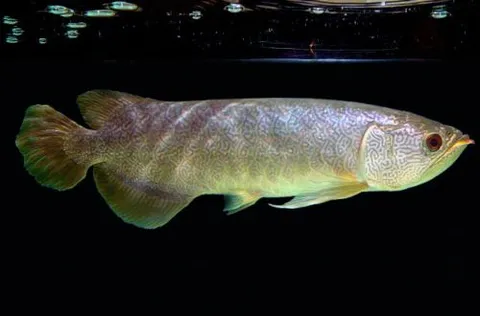
Scleropages inscriptus
The Myanmar arawana, scientific name Scleropages inscriptus, belongs to the family Osteoglossidae. This species is known for its considerable value, with individual specimens fetching tens of thousands of dollars. It is…
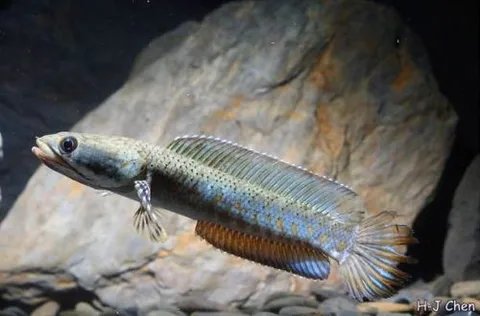
Channa pulchra
Channa pulchra, officially known by its scientific name Channa pulchra, belongs to the snakehead family (Channidae). This species was first described as new in 2007 by researcher R. Britz. Since the early 2010s, it has…
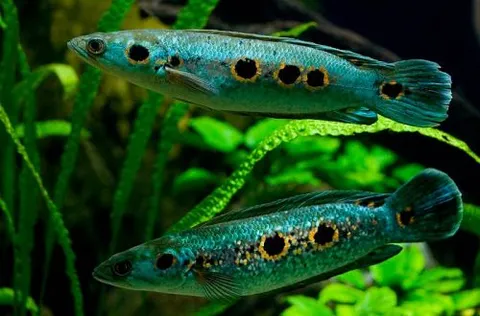
Channa pleurophthalma
The Ornate Snakehead (Channa pleurophthalma) is a species belonging to the family Channidae, or Snakeheads. Its scientific name is Channa pleurophthalma. A distinctive feature of its appearance is the expressive black…
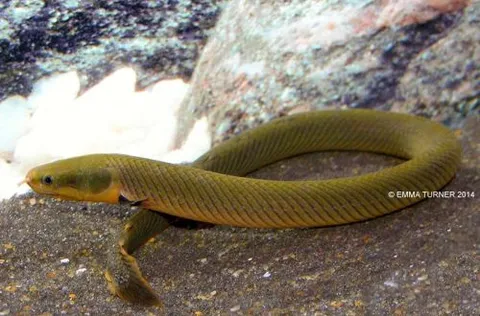
Erpetoichthys calabaricus
The scientific name Erpetoichthys calabaricus belongs to the family Polypteridae, known as the bichirs, and denotes the species known as the Reedfish or Ropefish. These amazing fish are the closest relatives of the…