Temperature25 – 28 °C
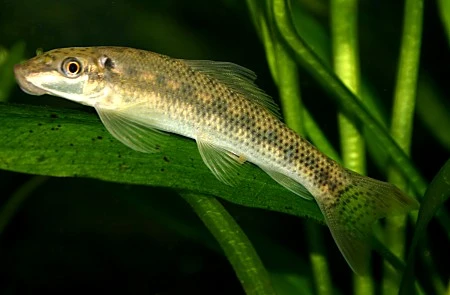
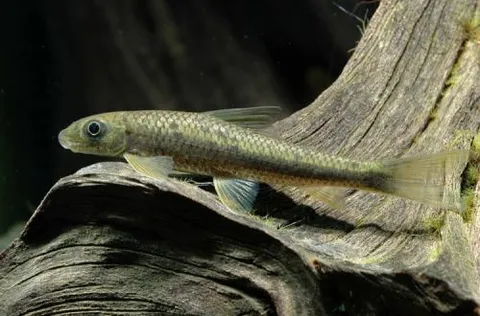
The Golden Gyrinocheilus, or Chinese Algae Eater (scientific name Gyrinocheilus aymonieri), belongs to the family Gyrinocheilidae. The appearance of this fish is not particularly striking, and in its native South-East Asia it is even eaten as food. Nevertheless, its ability to effectively clean aquariums of unwanted algae makes this species highly sought after by aquarists. It is perfectly suited for cohabitation with bright ornamental fish: some adorn the aquatic space, while others discreetly maintain its cleanliness.
This fish has an elongated body. In an aquarium it usually stays within 12–13 cm, but it can potentially reach 28 cm, which should be taken into account when choosing a tank size. A distinctive feature is its mouth, which is a sucker surrounded by small tubercles or “spikes.” This structure is ideally adapted for secure attachment to various surfaces, especially in conditions of fast currents. The fish's coloration is variable: most often, individuals with yellowish sides and a darker back are encountered. A dark line or stripe runs along the entire body, from head to tail, which can sometimes break into a series of black spots. There are various morphological forms, differing in color, such as golden, marbled, and albino. Visually, males can be distinguished from females by a greater number of tubercles or “spikes” around the mouth, which are particularly noticeable during the breeding season.
First described in 1883, the species is widely distributed in the Mekong, Chao Phraya, Mae Klong and Dong Nai basins, in Thailand, Laos, Cambodia and Vietnam. The trade names “Chinese” and “Indian” algae eater are misleading: the fish occurs naturally in neither country. From the middle of the twentieth century, specifically the 1950s, it began to be shipped to Europe as an aquarium fish; notably, in its native land this fish forms part of the local diet. Its natural habitat includes large and medium rivers, as well as plains flooded during the wet season. These fish are often found in small, well-lit streams and pools where algae grow abundantly. Thanks to a mouth resembling a sucker, the algae eater feeds efficiently on periphyton — a complex of algae, small bacteria and detritus. Adults also take the chance to feed on zooplankton and small insect larvae.
While young individuals are peaceful and get along well with various fish species, over time their behavior changes: the fish becomes territorial and may show aggression towards other aquarium inhabitants. Intraspecific aggression can be reduced somewhat by keeping a group of at least six individuals: a pecking order forms and weaker fish are targeted less often. Such a group, however, requires a very large aquarium. When keeping adult fish, it is recommended to choose active species that prefer to inhabit mainly the upper layers of the water. Coexistence with African cichlids is also possible.
These fish require high oxygen content in the water and the creation of artificial current. This is easily achieved by using a powerful filter combined with an aerator. Since the Chinese Algae Eater prefers bottom layers, regular cleaning of the substrate (approximately once every two weeks) will help prevent poisoning from organic decomposition products. It is important not to siphon decorative elements of the aquarium (snags, rocks, etc.), as a biological film forms on them, serving as an additional food source for the pet. The aquarium decor is recommended to approximate natural living conditions, using thickets of plants, soft sand, and scattered pieces of rock or large smooth stones on the bottom. Several caves or shelters can also be provided. Bright lighting for active algae growth, which is part of the fish's diet, is desirable but not a strict requirement.
Young individuals feed exclusively on plant-based food, consuming algae, as well as spinach leaves, lettuce, pieces of cucumber or zucchini, and dry commercial foods for herbivorous fish. The amount of supplementary feeding is determined by the volume of algae in the aquarium: with abundant growth on glass and decorations, the need for additional feeding decreases. If the aquarium looks perfectly clean and no traces of algae are visible, it means the fish has completely eaten them and needs additional food sources. With age, the Gyrinocheilus's diet begins to change, and it requires the inclusion of protein food, such as Artemia, Daphnia, bloodworms, or frozen foods. It is important to combine this type of feeding with plant-based food. If there is a lack of meaty products, the fish may attach itself to other aquarium inhabitants, eating their protective mucus.
Breeding this species in home aquariums is associated with significant difficulties, and successful cases are extremely rare and accidental.
The fish shows sensitivity to a number of medications that are usually well tolerated by most species in community tanks. In addition, digestive problems can arise if the fish eats the protective mucus from other aquarium inhabitants. Features.
When choosing a Gyrinocheilus, opt for active young individuals, as adult fish often exhibit pronounced territorial aggression. Carefully inspect the fish for the integrity of its skin and fins: the absence of wounds, ulcers, and film indicates good health. Avoid purchasing individuals with sunken bellies, which may indicate exhaustion or internal diseases. Keep in mind that fish may appear peaceful in the store, but their character changes with age, so plan compatibility with future tank mates in advance.
The essentials: size, tank volume, water parameters and care
An adult reaches 13–28 cm in length. Plan the tank around the maximum size: the fish quickly outgrows a cramped setup.
The recommended volume is 300 L. A smaller tank speeds up nitrate build-up and raises stress levels.
Temperature 25–28 °C, pH 6–8, hardness 5–19 dGH. Stability matters more than exact values: sudden swings are harder on the fish than a small deviation from the ideal.
Around 10 years when kept properly. Lifespan depends directly on tank volume, water quality and a varied diet.
Temperament: territorial (often aggressive). Keep this in mind when choosing tank mates.
Recommended setup: both solitary and in group (flexible). Ignoring this is a common cause of stress and disease.
Diet type: plant-based (algae, vegetables). Feed small portions that are finished within a couple of minutes — overfeeding does more harm than underfeeding.
The scientific name of the species is Gyrinocheilus aymonieri, family Gyrinocheilidae. It also appears in the literature as: Gyrinocheilops kaznakoi, Gyrinocheilus kaznakoi, Gyrinocheilus kaznakovi.
The water suits 185 of 208 plants in the catalogue — the easiest ones are shown first.
Afzelius's AnubiasAnacharisAnubiasBrazilian PennywortDwarf CloverDwarf CloverDwarf HygrophilaDwarf SagittariaDwarf ValGuppy GrassHornwortJava FernJava MossMoneywortMud SwordNair's LagenandraNarrow Leaf AnacharisNarrow-leaf CloverSüsswassertangTaiwan MossTape GrassTemple PlantUssuri WatermilfoilWater Wisteria
Matched by family, categories and overlapping keeping conditions
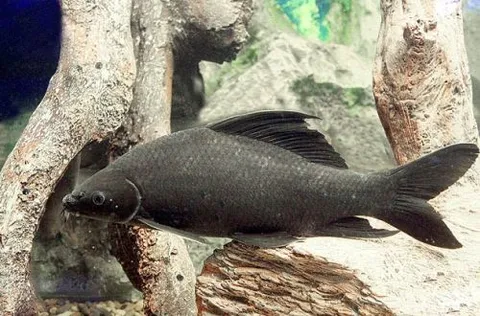
Labeo chrysophekadion
Labeo chrysophekadion, also known as the Black Labeo, belongs to the family Cyprinidae. Due to its impressive size and complex temperament, this species is quite demanding and not recommended for aquarium beginners.
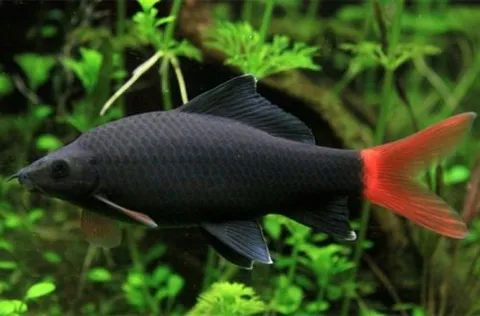
Epalzeorhynchos bicolor
Labeo Bicolor, also known as the Red-tailed Black Shark, is classified as Epalzeorhynchos bicolor and belongs to the family Cyprinidae. This attractive fish, known for its unpretentiousness and unique appearance, draws…
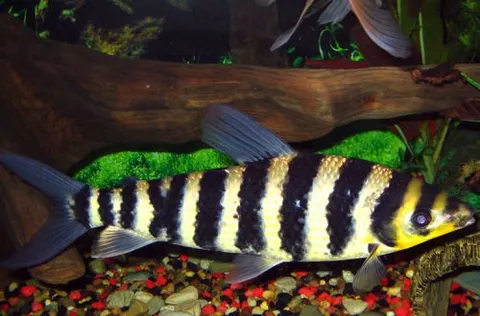
Leporinus fasciatus
The Banded Leporinus, scientifically known as Leporinus fasciatus, belongs to the Anostomidae family. For many years, this fish has attracted the attention of aquarists due to its characteristic alternating black and…
Tariqilabeo latius
Tariqilabeo latius, known as the Simple Algae Eater, belongs to the family Cyprinidae, or carps. This species is a close relative of the widely popular Siamese Algae Eater. Despite its unassuming coloration, it…