Temperature24 – 28 °C
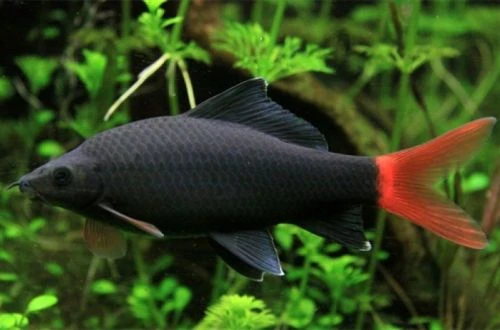
Labeo Bicolor, also known as the Red-tailed Black Shark, is classified as Epalzeorhynchos bicolor and belongs to the family Cyprinidae. This attractive fish, known for its unpretentiousness and unique appearance, draws attention with its contrasting, almost black body coloration and bright red elements. It is important to remember that due to its aggressiveness towards other species, it is not suitable for typical community tanks. It is worth noting that this ornamental species appears in trade quite rarely, which is due to the difficulties of breeding it in captivity.
This slender fish is characterized by an elongated body. Its lower lip is equipped with a sucker with horny plates, allowing it to effectively scrape algae and organic growths from various aquarium decorations. The main distinguishing feature is the black body coloration, contrasting with a bright red caudal fin. In females, the intensity of coloration is usually less pronounced. Artificially bred color variations also exist.
The species is endemic to Thailand, with historic records from the Mae Klong, Chao Phraya and Bangpakong rivers in the centre and west of the country. Its natural habitat is overgrown flowing water, usually no more than a metre deep. During the rainy season, they migrate to flooded forest areas and river floodplains, where their spawning presumably occurs. Human activity has disrupted their migration routes, which, in turn, has negatively affected the population size.
This fish leads a solitary lifestyle. With age, it develops territorial behavior, expressed in aggression towards fish of other species. Its own kind and similar-looking fishes — gyrinocheilus, garra and algae eaters — get the worst of it: the labeo harasses them constantly, so only a single specimen is kept per aquarium. Loaches are usually left in peace.
Labeo Bicolor does not have special requirements for the hydrochemical composition of the water, but its purity and quality must be maintained at a high level. It is recommended to renew at least a quarter of the water volume weekly, combining this with gravel vacuuming to remove organic residues such as uneaten food particles and excrement. Necessary equipment includes a powerful filter, heater, aerator, and lighting system. The aquarium can be decorated with a substrate of pebbles and gravel, adding several large boulders, and creating shelters from snags, roots, and tree branches, on which algae will grow with sufficient lighting, serving as an additional food source. Any rooted plants are suitable for landscaping.
The diet of labeos should preferably include a variety of live food, enriched with plant components. Daphnia, bloodworms, and brine shrimp can be offered, combined with high-quality dry foods such as flakes or granules. Plant products, for example, pieces of cucumber, peas, peeled zucchini, or spinach, as well as chopped fruits, will be an excellent addition. It is important to secure plant supplements to the bottom of the aquarium with a tie or rubber band, and replace them every 2–3 days to prevent rotting.
Breeding of this species is most often carried out for commercial purposes using hormonal injections. Obtaining offspring in home conditions is almost impossible.
Provided favorable keeping conditions, health problems in labeos generally do not arise. Diseases usually develop when conditions deteriorate, nutrition is insufficient or unbalanced, or through contact with infected fish. In addition, certain hereditary diseases may occur in some artificially bred color forms, such as the albino Labeo Bicolor.
When purchasing, choose active individuals with clean fins and no visible damage to the body. Avoid fish with sunken bellies or signs of unnatural emaciation, which may indicate chronic diseases or improper care in the store. Given the territorial nature of the species, it is better to acquire juveniles, as adult individuals adapt more slowly to a new aquarium and may show pronounced aggression towards tank mates from the first days. Before purchasing, it is recommended to observe the fish's behavior in the community tank: a healthy individual should show curiosity and actively move around, exploring the substrate and decorations. If the fish keeps to itself, constantly hides, or shows signs of suppression by its conspecifics, it is better to refrain from buying. Also pay attention to the conditions in the retail tank — water cleanliness and the absence of a large number of dead or sick fish in adjacent compartments are important indicators of the overall well-being of the system.
The essentials: size, tank volume, water parameters and care
An adult reaches 12 cm in length. Plan the tank around the maximum size: the fish quickly outgrows a cramped setup.
The recommended volume is 200 L. A smaller tank speeds up nitrate build-up and raises stress levels.
Temperature 24–28 °C, pH 6–7.5, hardness 5–15 dGH. Stability matters more than exact values: sudden swings are harder on the fish than a small deviation from the ideal.
Around 15 years when kept properly. Lifespan depends directly on tank volume, water quality and a varied diet.
Temperament: territorial (often aggressive). Keep this in mind when choosing tank mates.
Recommended setup: solitary. Ignoring this is a common cause of stress and disease.
Diet type: meat with plant additives (omnivores). Feed small portions that are finished within a couple of minutes — overfeeding does more harm than underfeeding.
The scientific name of the species is Epalzeorhynchos bicolor, family Cyprinids (Cyprinidae). It also appears in the literature as: Epalzeorhynchus bicolor, Labeo bicolor.
The water suits 196 of 208 plants in the catalogue — the easiest ones are shown first.
Afzelius's AnubiasAnacharisAnubiasBrazilian PennywortDwarf CloverDwarf CloverDwarf HygrophilaDwarf SagittariaDwarf ValGuppy GrassHornwortJava FernJava MossMoneywortMud SwordNair's LagenandraNarrow Leaf AnacharisNarrow-leaf CloverStringy MossSüsswassertangTaiwan MossTape GrassTemple PlantUssuri Watermilfoil
Matched by family, categories and overlapping keeping conditions
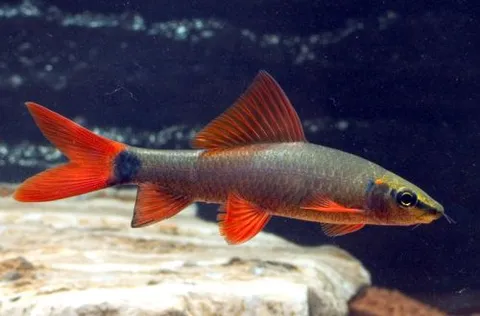
Epalzeorhynchos frenatum
The striking fish with the scientific name Epalzeorhynchos frenatum, known as the Green Labeo, belongs to the family Cyprinidae. Its distinguishing feature is its vibrant green body coloration, which contrasts…
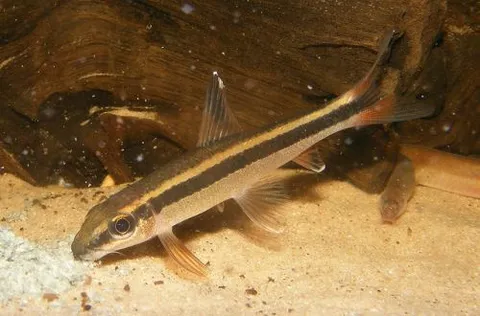
Epalzeorhynchos kalopterum
The Red-Finned Epalzeorhynchos, scientifically known as Epalzeorhynchos kalopterum, belongs to the carp family (Cyprinidae) and is often referred to as the Flying Fox. This active fish, while not boasting original…
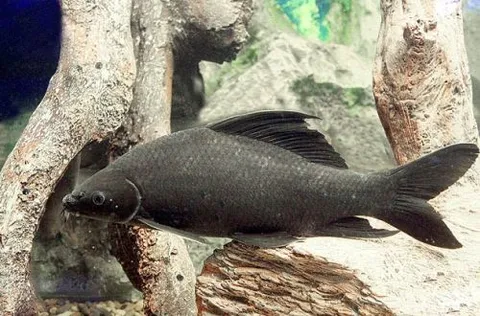
Labeo chrysophekadion
Labeo chrysophekadion, also known as the Black Labeo, belongs to the family Cyprinidae. Due to its impressive size and complex temperament, this species is quite demanding and not recommended for aquarium beginners.
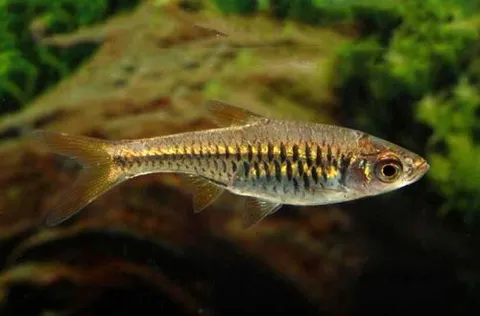
Rasbora reticulata
Rasbora reticulata, known as the Reticulated Rasbora, is a member of the carp family (Cyprinidae). This fish originates from Southeast Asia. It is found on Sumatra and on Nias Island, which lies to the west of it. It…