Temperature19 – 24 °C
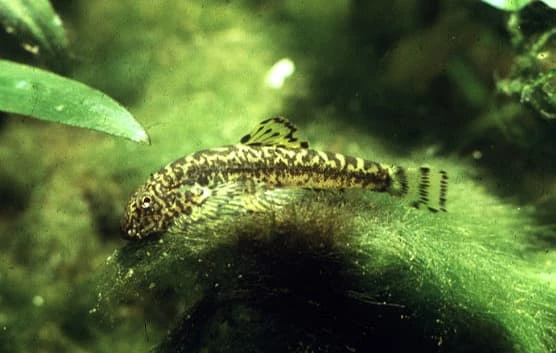
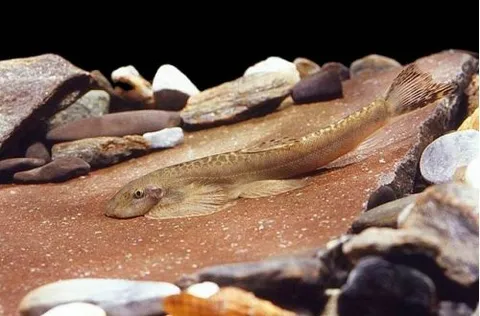
Pseudogastromyzon cheni, also known as the Chinese Pseudogastromyzon (scientific name Pseudogastromyzon cheni), is a representative of the family Balitoridae, or river loaches. These fish originate from river systems located in the mountainous regions of China.
Adult specimens of this fish can reach five to six centimeters in length. It is characterized by a flattened body and prominent large fins, which, however, are used not so much for swimming as for increasing the body's surface area. This allows the fish to more effectively resist strong water currents by pressing tightly against rocks and boulders. The coloration and pattern on the body of this fish can vary significantly depending on the specific geographical form. Most commonly, specimens with brown body tones and irregular yellow patterns are found. One of its recognizable features is the red edging present on the dorsal fin. There is some confusion in names due to the almost complete indistinguishability of Pseudogastromyzon cheni (P. cheni) and Pseudogastromyzon myersi (P. myersi). These two species are distinguished by specialists only by certain morphological features identified through measurements. Specifically, it is necessary to measure the distance from the beginning of the pectoral fin to the beginning of the pelvic fin (between points B and C). Then, a second measurement is taken: the distance from the beginning of the pelvic fin to the anus (between points B and A). If these two measured distances are equal, it is a specimen of P. myersi. If the first distance is greater than the second, the fish is P. cheni. It should be noted that for most aquarists, such fine differentiation is not of fundamental importance, as both species require absolutely identical keeping conditions.
The species inhabits mountain streams and small tributaries in southeastern China (Fujian province). It prefers shallow areas with fast currents, high levels of dissolved oxygen, and a rocky bottom consisting of boulders, gravel, and sand. Vegetation in its habitat is usually sparse, but biofilms of algae and microorganisms often develop on the rocks.
This species is considered relatively peaceful, although in the confined space of an aquarium, aggression between individuals over bottom territory may occur. In such conditions, competition between related species is also inevitable. Despite vying for favorable areas of the aquarium, these fish prefer to stay in groups. They coexist well with other non-aggressive species capable of adapting to similar keeping conditions, including turbulent currents and relatively cool water.
For a group of 6–8 individuals, the optimal aquarium volume starts from 100 liters. In this case, the bottom area is more important than the overall depth of the tank. When decorating, it is recommended to use a rocky substrate, large boulders, and natural driftwood. Plants are not a mandatory element, but if desired, aquatic ferns and mosses, which usually adapt successfully to moderate current conditions, can be added. For the long-term well-being of the fish, it is important to provide clean, oxygen-rich water and a moderate to strong current. A productive filtration system will effectively solve this task. The Chinese Pseudogastromyzon prefers relatively cool water with a temperature of 20–23°C, so a heater will not be needed in the aquarium. In their natural habitat, these fish feed on algal growths on rocks and the microorganisms living within them. In a home aquarium, it is recommended to use sinking plant-based foods, as well as protein supplements such as fresh or frozen bloodworms and brine shrimp.
In their natural habitat, these fish feed on algal growths on rocks and the microorganisms living within them. In a home aquarium, it is recommended to use sinking plant-based foods, as well as protein supplements such as fresh or frozen bloodworms and brine shrimp.
In an aquarium, breeding is possible by creating specific conditions that mimic natural ones. Males prepare spawning pits in the substrate, using their tails to wash away gravel from under stones. After spawning, the male fertilizes the eggs and covers them with a layer of gravel, after which parental care ceases. The incubation period lasts from one to two weeks, after which the fry begin to feed independently on microorganisms.
Fish are sensitive to water quality and oxygen levels. When kept in aquariums with weak currents or insufficient aeration, they quickly lose activity and become susceptible to infections. The main sign of distress is emaciation, often caused by a lack of natural periphyton and the absence of suitable supplementary food in their diet.
When purchasing, pay attention to the activity of the fish and the absence of hollow bellies, which is a clear sign of prolonged malnutrition. Healthy individuals should actively move across hard surfaces, demonstrating a pronounced ability to cling to glass or stones. Avoid acquiring fish with damaged fins or signs of apathy, as weakened individuals have difficulty adapting to new conditions.
The essentials: size, tank volume, water parameters and care
An adult reaches 5–6 cm in length. Plan the tank around the maximum size: the fish quickly outgrows a cramped setup.
The recommended volume is 100 L. A smaller tank speeds up nitrate build-up and raises stress levels.
Temperature 19–24 °C, pH 7–8, hardness 7–12 dGH. Stability matters more than exact values: sudden swings are harder on the fish than a small deviation from the ideal.
Around 8 years when kept properly. Lifespan depends directly on tank volume, water quality and a varied diet.
Temperament: semi-peaceful (including aggression during spawning / intraspecific conflicts). Keep this in mind when choosing tank mates.
Recommended setup: schooling (usually from 5–6 individuals and more). Ignoring this is a common cause of stress and disease.
Diet type: sinking (plant-based). Feed small portions that are finished within a couple of minutes — overfeeding does more harm than underfeeding.
The scientific name of the species is Pseudogastromyzon cheni, family River Loaches (Balitoridae).
The water suits 113 of 208 plants in the catalogue — the easiest ones are shown first.
African Onion PlantAfzelius's AnubiasAmazon FrogbitAmazon SwordAnacharisAnubiasArrowhead CryptAsian WatermossDwarf CloverDwarf CloverDwarf HygrophilaDwarf SagittariaDwarf ValGuppy GrassHornwortJava MossMoneywortMud SwordNarrow Leaf AnacharisNarrow-leaf CloverStringy MossTaiwan MossTape GrassUssuri Watermilfoil
Matched by family, categories and overlapping keeping conditions
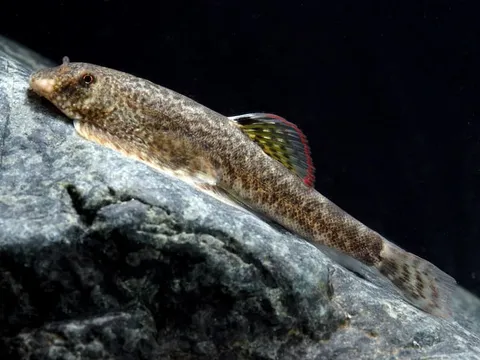
Pseudogastromyzon myersi
Myers's Hillstream Loach (Pseudogastromyzon myersi) belongs to the family Balitoridae, also known as river loaches. This fish is considered one of the most undemanding species for keeping in an aquarium environment that…
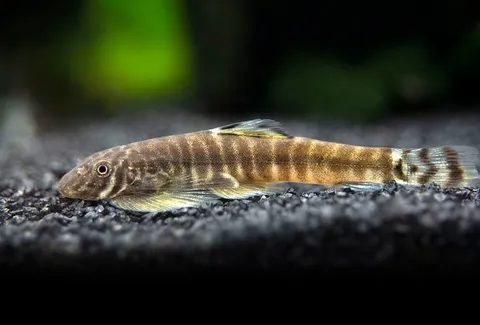
Pseudogastromyzon fasciatus
Pseudogastromyzon fasciatus, commonly known as the Banded Hillstream Loach, belongs to the family Balitoridae, which includes the hillstream loaches. This fish is native to southeastern China, where its natural habitat…
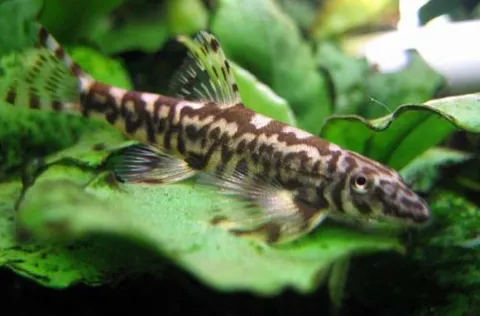
Liniparhomaloptera disparis
Liniparhomaloptera disparis, also known as Lina's Loach, belongs to the family Balitoridae, or river loaches. It was named after Shu-Yen Lin, a renowned Chinese ichthyologist. The natural habitat of this species covers…
Hemimyzon formosanus
The Formosa Loach, scientifically known as Hemimyzon formosanus, belongs to the family Balitoridae, which includes river loaches. This fish may not immediately captivate with its appearance, but it is primarily valued…