Temperature18 – 24 °C
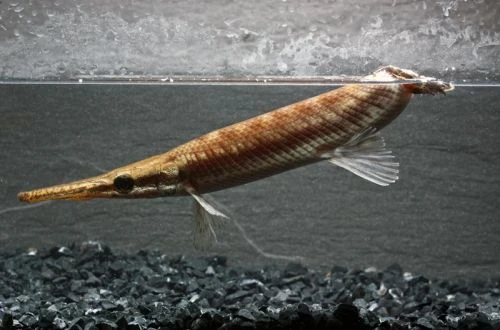
The family Lepisosteidae unites several closely related species, collectively known as Gars. These fish are rightly considered among the most ancient inhabitants of freshwaters, having survived practically in their pristine form since the age of dinosaurs. Their impressive size and distinctive appearance often attract the attention of creators of popular science programs on channels like BBC, National Geographic, and Discovery Channel, making Gars the stars of films. Although these giants are rarely kept in home aquariums, they can be found in large public aquariums or with particularly dedicated enthusiasts, which is why they are included in our review of unusual aquarium fish.
The size of adult individuals varies significantly depending on the species, sometimes exceeding 3 meters in length and reaching a weight of over 150 kg. Although the body pattern also differs, the fish are usually colored in gray or brown tones. A characteristic feature of Gars is an elongated, stretched body, and their fins, like those of pike, are shifted towards the tail. However, unlike pike, they have a very long snout studded with sharp, conical teeth. The scales of these fish are large and exceptionally strong, equipped with sharp protrusions, creating true armor and giving the entire group its name.
These fish are widely distributed in the tropical regions of Central and North America. They can be found in various bodies of water: lakes, rivers, swamps, as well as in the brackish waters of the Caribbean and along the Pacific coast. They prefer areas with moderate currents and an abundance of shelters. Excellent examples of such an environment can be found in the swampy areas of the Mississippi River basin in the United States.
Gars are predators that hunt from ambush in nature, making sharp lunges at their prey. They are territorial and aggressive fish, showing hostility towards both their own kind and other species comparable in size. Due to their large size and pronounced predatory behavior, it is recommended to keep them in species-specific aquariums individually. The activity of the fish is moderate; they can hang motionless in the water column or near the surface for long periods.
Gars are not fish for a home aquarium: they are suitable only for very large public installations. Juveniles up to 25 cm can be housed temporarily, for six to twelve months, in a tank of 250–400 litres, but they grow fast — some species add 25–30 cm in their first year. An adult spotted gar, the most 'aquarium-friendly' member of the family, needs a minimum of 1300–1500 litres, and realistically 2000–4000. The decisive dimension is not height but width and length: the ganoid scales make the body inflexible, so the fish needs room to turn around. The tank should be at least 180–250 cm long and 60–90 cm wide. Species of the genus Lepisosteus come from temperate North America and prefer 12–20 °C in the wild; in captivity they are usually kept at room temperature without a heater, whereas tropical Atractosteus require 18–24 °C. They accept a wide range of water parameters, and several species also tolerate brackish conditions. A heavy, tight-fitting cover is essential because gars do jump, but an air gap must be left between the cover and the water: their swim bladder works as a primitive lung, and without access to the surface the fish will drown even in perfectly oxygenated water. Keep the current gentle and the lighting subdued, and use powerful filtration, ideally a sump. The legal side matters too: in many US states, including California and Washington, keeping gars is prohibited or requires a permit, and comparable restrictions apply in other countries, so check local legislation before buying. Breeding in aquaria is essentially not practised: young fish are either caught in the wild or raised on specialised farms. The eggs deserve separate mention — they are toxic to all vertebrates except fish, humans included.
In the wild, gars are ambush predators: they hang motionless in the water column for long periods and then strike at prey with a sudden lunge. In the aquarium the diet is based on meaty frozen foods — prawns and lancefish, with whole fish for larger specimens. Newly acquired individuals often refuse non-living food, and a short fast usually helps to convert them. Juveniles are fed daily, adults no more than once or twice a week. Meat from warm-blooded animals such as beef heart or chicken must not be given: the lipids it contains are not metabolised by fish and lead to obesity and organ degeneration. Feeding live fish is justified only for an emaciated specimen and only briefly, since feeders introduce diseases and parasites. A separate hazard is thiaminase, an enzyme that destroys vitamin B1. It is especially abundant in cyprinids — that is, in the cheapest feeder fish: goldfish, carp, minnows and danios — as well as in mussels and shrimp. Vitamin B1 is water-soluble and is not stored in the body, so a chronic deficiency causes lethargy, weight loss, neurological disorders and death. Freezing does not destroy the enzyme. The best strategy is a varied diet and training the predator to accept, at least partly, quality pellets for large carnivorous fish.
Breeding gars in aquarium conditions is practically not carried out. In the natural environment, spawning occurs in spring in shallow areas with dense vegetation, onto which females lay adhesive eggs. An important biological feature of the species is the toxicity of the eggs, which serves as a protective mechanism for the offspring against predation. After hatching, the fry remain attached to the substrate by means of special organs until the yolk sac is absorbed.
Gars have a strong immune system but are susceptible to diseases typical for large freshwater fish when maintenance conditions are violated. These include bacterial infections, fungal skin lesions, and parasitic infestations. The main risk factors are poor water quality and high nitrate levels, which lead to weakening of the body, loss of appetite, lethargy, and the development of ulcers or fin rot. Prevention involves powerful filtration, regular water changes, and control of hydrochemical parameters.
When purchasing, choose active individuals with clean scales without visible damage, ulcers, or white spots. It is important to ensure that the fish shows no signs of emaciation and that the fins do not have signs of rot or deformation. Gars are long-lived and fast-growing predators, so before acquiring one, it is necessary to assess your readiness to provide them with a large volume aquarium. It is recommended to ask the seller about the fish's current diet, as accustoming them to non-live foods may take time.
The essentials: size, tank volume, water parameters and care
An adult reaches 90–300 cm in length. Plan the tank around the maximum size: the fish quickly outgrows a cramped setup.
The recommended volume is 1500 L. A smaller tank speeds up nitrate build-up and raises stress levels.
Temperature 18–24 °C, pH 6–8, hardness 5–25 dGH. Stability matters more than exact values: sudden swings are harder on the fish than a small deviation from the ideal.
Around 30 years when kept properly. Lifespan depends directly on tank volume, water quality and a varied diet.
Temperament: predator (dangerous to small, incompatible). This is a predatory species — any fish small enough to fit in its mouth will eventually be eaten.
Recommended setup: solitary. Ignoring this is a common cause of stress and disease.
Diet type: mixed diet (meat + plant-based). Feed small portions that are finished within a couple of minutes — overfeeding does more harm than underfeeding.
The scientific name of the species is Lepisosteidae, family Gars (Lepisosteidae). It also appears in the literature as: Callichthys aeneus, Corydoras aeheus, Corydoras aenaeus.
The water suits 196 of 208 plants in the catalogue — the easiest ones are shown first.
Afzelius's AnubiasAnacharisAnubiasBrazilian PennywortDwarf CloverDwarf CloverDwarf HygrophilaDwarf SagittariaDwarf ValGuppy GrassHornwortJava FernJava MossMoneywortMud SwordNarrow Leaf AnacharisNarrow-leaf CloverStringy MossSüsswassertangTaiwan MossTape GrassTemple PlantUssuri WatermilfoilWater Wisteria
Matched by family, categories and overlapping keeping conditions
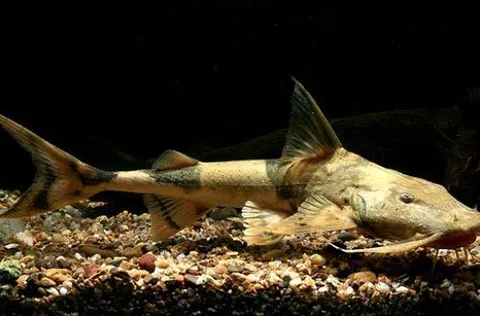
Bagarius bagarius
The Goonch, scientifically known as Bagarius bagarius, belongs to the family Sisoridae, or Asian hillstream catfishes. This species, distinguished by its impressive size and high maintenance costs, does not coexist well…
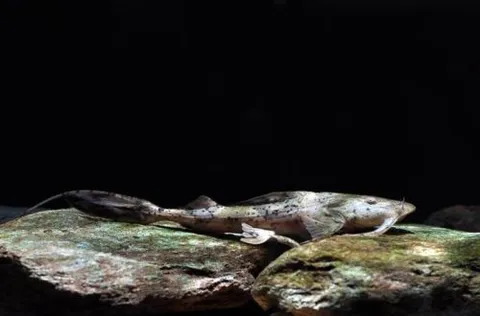
Bagarius yarrelli
The Bagarius Catfish, also known as the “Freshwater Sand Shark” or by its scientific name Bagarius yarrelli, belongs to the family Sisoridae (Bagridae, or mountain catfishes). This species is rarely encountered among…
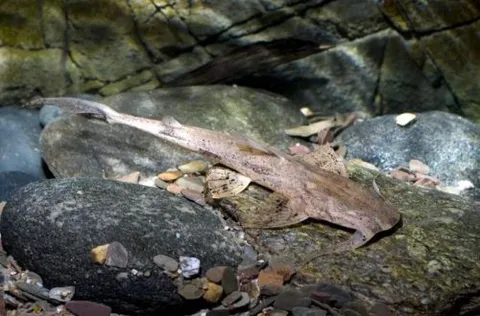
Bagarius suchus
Bagarius suchus, known as the Crocodile Catfish, belongs to the family Sisoridae, or Bagridae (mountain catfishes). This large predator is characterized by a complex temperament. Its keeping, if undertaken…
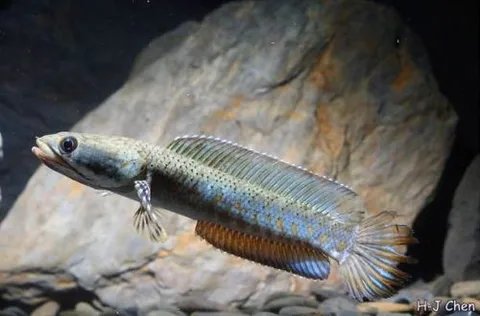
Channa pulchra
Channa pulchra, officially known by its scientific name Channa pulchra, belongs to the snakehead family (Channidae). This species was first described as new in 2007 by researcher R. Britz. Since the early 2010s, it has…