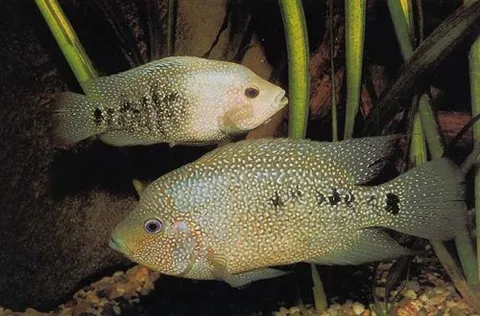
For keeping 2–3 fish, an aquarium of at least 250 liters will be optimal. The decor can simply include a sandy substrate and a few pieces of driftwood. Avoid adding small stones or pebbles to prevent them from getting stuck in the fish's mouth during feeding. Dim lighting is recommended. Aquatic plants are not an essential element, but if desired, undemanding and shade-loving varieties can be planted. If breeding is planned, one or two flat, large stones should be placed on the bottom, which can serve as potential spawning sites. Geophagus steindachneri requires high water quality with specific hydrochemical parameters — slightly acidic, with low carbonate hardness, and a significant content of tannins. In their natural environment, these substances are formed by the decomposition of leaves, branches, and roots of tropical trees. In an aquarium, tannins can be introduced using leaves from certain trees, but this method is not always optimal, as leaves can clutter the substrate, which serves as a 'dining table' for Geophagus. A more preferable option is to use special essences containing concentrated tannins, where a few drops can replace a handful of leaves. The filtration system plays a key role in maintaining high water quality. When feeding, the fish stir up suspended particles that can quickly clog the filter material, so consulting a specialist when choosing a filter is essential. They can help select a specific model and determine optimal placement to minimize clogging. Regular aquarium maintenance is also very important. At least once a week, 40–70% of the water volume should be replaced with fresh water, and organic waste, such as food remnants and excrement, should be systematically removed.