Temperature23 – 27 °C
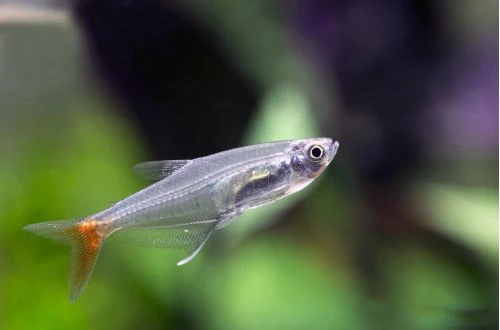
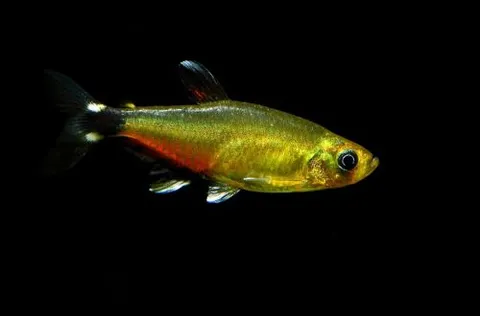
The Glass Tetra, scientifically known as Prionobrama filigera, is a member of the Characidae family. Its main feature is its almost completely transparent body, which contrasts with its bright red caudal fin. Another remarkable characteristic of this species is its excellent adaptability to various aquarium conditions, as well as its compatibility with many other varieties of tropical fish, making it an excellent choice for a community tank.
Adults typically reach about 6 cm in length. Their bodies are almost entirely transparent, allowing the spine and internal organs to be clearly visible. The only colored part is the red tail. Sexual dimorphism is subtle, but males can be distinguished by a slightly elongated, pointed edge on their anal fin, resembling a thorn.
This species is widely distributed throughout the Amazon basin, covering territories in Ecuador, Colombia, Peru, Bolivia, and Brazil. These fish prefer to stay in the upper water layers, inhabiting small streams, minor rivers, and channels connecting larger bodies of water; they are rarely found in the main channels of large rivers.
This is a peaceful, very active schooling species that should be kept in groups of 6–8 individuals. With fewer individuals, skirmishes between males for dominance may occur. Thanks to its excellent adaptability to various water conditions, the Glass Tetra coexists well with many other fish species of similar size and temperament. However, it is not recommended to keep them with surface-dwelling fish, such as Hatchetfish, to avoid unnecessary competition for food and territory.
For keeping 6–8 of these fish, an aquarium of at least 70 L will be required. The setup should include plenty of vegetation, but arranged so that there is enough open swimming space. Floating plants will also be very useful, providing fish with cover during times of stress. There are no special requirements for the lower, bottom layers of the aquarium, and they can be decorated as desired, for example, using a sandy substrate and various decorative elements such as driftwood, sunken ships, or castles. Water parameters such as pH and dGH can be within a fairly wide range, making this species tolerant to changes. To mimic natural habitat conditions, you can add a few fallen deciduous tree leaves and/or cones, as well as oak bark, to the bottom. Over time, the tannins dissolving in the water will give it a slight brownish tint. Leaves should be dried in advance, soaked until they sink, and only then placed in the aquarium. It is recommended to replace leaves every two weeks and cones once a month. A similar effect with less effort can be achieved by using a cloth bag filled with alder cones, or a filter with an alder cone filler. It is important to note that aquarium peat should be purchased exclusively from specialized pet stores, as it undergoes preliminary processing.
The Glass Tetra feeds from the water surface, so it should only be offered floating foods. In a home aquarium, it readily accepts all types of dry, frozen, and live foods. It is important to remember that the quality of nutrition directly affects the overall health and vibrancy of the fish's coloration, so it is recommended to use foods only from trusted and well-known manufacturers.
The Glass Tetra is an egg-laying species, but its parental instincts are weak, so eggs and newly hatched fry may be eaten by adult fish. For successful breeding, it is recommended to prepare a separate spawning aquarium. Usually, a tank of about 20 L is used for this purpose; its decoration is not critical. To protect future fry, the bottom can be covered with a fine mesh, a layer of glass marbles 1–2 cm in diameter, or dense thickets of low, fine-leaved plants and mosses. Before introducing the fish, the aquarium is filled with water from the main tank. Lighting should be subdued, and standard sponge air-lift filters and heaters are sufficient equipment. Spawning will be stimulated by establishing water parameters: pH in the range of 6.0–6.5 and dGH from 1 to 5, at a temperature of 25–26°C. The diet of the breeders should include a significant amount of protein-rich foods, such as bloodworms, daphnia, and brine shrimp. After some time, the females will become noticeably rounded, filled with eggs. Then, the females and the largest, most brightly colored males are transferred to the spawning tank. Once spawning is complete, the parents are returned to the community tank. Fry hatch from the eggs after 14–36 hours and begin actively swimming on day 3–4, after which they require specialized food for aquarium fish fry.
The best guarantee of fish health from any disease is a balanced aquarium biosystem with optimal keeping conditions. Therefore, if you notice changes in behavior, fish coloration, the appearance of uncharacteristic spots, or other symptoms, you should first check the water parameters, and only after that proceed with treatment measures.
When choosing a Glass Tetra, pay attention to the transparency of the body: in a healthy individual, it should be clear, without cloudy spots, ulcers, or visible parasites. The fish should actively swim in the water column and stay in a school, as solitary or apathetic behavior often indicates stress or illness. Avoid buying individuals with damaged fins or signs of emaciation, which manifest as a severely concave belly.
The essentials: size, tank volume, water parameters and care
An adult reaches 6 cm in length. Plan the tank around the maximum size: the fish quickly outgrows a cramped setup.
The recommended volume is 70 L. A smaller tank speeds up nitrate build-up and raises stress levels.
Temperature 23–27 °C, pH 6–8, hardness 2–30 dGH. Stability matters more than exact values: sudden swings are harder on the fish than a small deviation from the ideal.
Around 8 years when kept properly. Lifespan depends directly on tank volume, water quality and a varied diet.
Temperament: peaceful (regular). Keep this in mind when choosing tank mates.
Recommended setup: group (8–10 individuals). Ignoring this is a common cause of stress and disease.
Diet type: any (universal). Feed small portions that are finished within a couple of minutes — overfeeding does more harm than underfeeding.
The scientific name of the species is Prionobrama filigera, family Characidae. It also appears in the literature as: Aphyocharax analialbis, Aphyocharax analis, Aphyocharax filigerus.
The water suits 197 of 208 plants in the catalogue — the easiest ones are shown first.
Afzelius's AnubiasAnacharisAnubiasBrazilian PennywortDwarf CloverDwarf CloverDwarf HygrophilaDwarf SagittariaDwarf ValGuppy GrassHornwortJava FernJava MossMoneywortMud SwordNair's LagenandraNarrow Leaf AnacharisNarrow-leaf CloverStringy MossSüsswassertangTaiwan MossTape GrassTemple PlantUssuri Watermilfoil
Matched by family, categories and overlapping keeping conditions
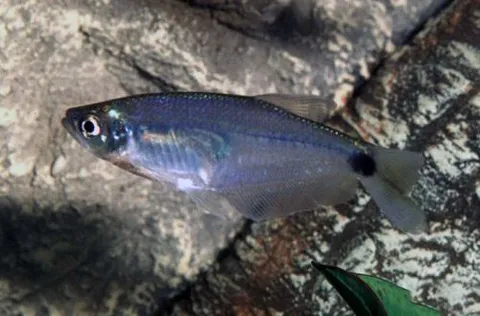
Paragoniates alburnus
Belonging to the family Characidae, the fish known as Paragoniates alburnus or Blue Glass Tetra is scientifically named Paragoniates alburnus. Its natural range covers territories in Brazil, Colombia, Bolivia, Ecuador,…
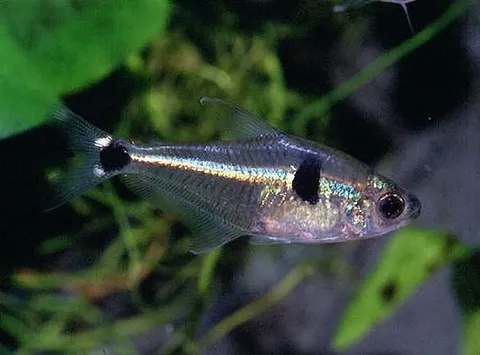
Phenacogaster calverti
The fish Phenacogaster calverti, known as Phenacogaster calverti, belongs to the family Characidae. Its natural habitat is the numerous coastal river systems of the Brazilian states of Ceará and Paraíba in the east of…
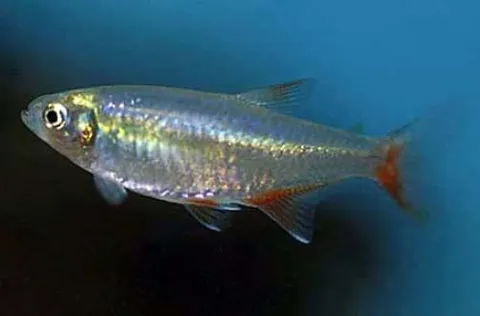
Aphyocharax anisitsi
The Red-Fin Tetra, also known as Aphyocharax with the scientific name Aphyocharax anisitsi, belongs to the family Characidae. Its first description was made by Eigenmann and Kennedy in 1903, following an expedition to…
Aphyocharax nattereri
Aphyocharax nattereri, also known as Natterer's Aphyocharax, belongs to the Characidae family. This species is not as commonly found in pet stores as its tetra relatives, yet it possesses no less attractiveness and…