Temperature23 – 28 °C
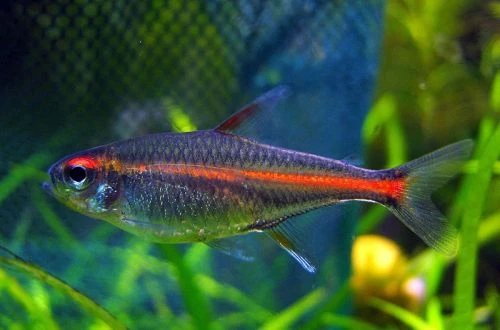
The Glowlight Tetra, or Hemigrammus erythrozonus by its scientific name, is a member of the Acestrorhamphidae family. It gets its name from the bright red-orange stripe running from its head to its caudal fin. These attractive fish, when grouped together, stand out noticeably among other species, and interestingly, their coloration only becomes more intense with age.
The Glowlight Tetra is a small species, not exceeding 4 cm in length. Outwardly, it resembles the Black Neon Tetra due to a similar horizontal luminous stripe, however, these are two completely different species. It is easily recognized by its almost transparent body. With age, the distinctive stripe becomes increasingly clear and pronounced.
The species Hemigrammus erythrozonus was described by researcher Durbin in 1909. These fish were first discovered in South America, specifically in the Essequibo River, located in Guyana. The Essequibo River, being the longest in Guyana, is home to many species. The tetra typically inhabits the tributaries of the main river channel. Here, the water has a dark brown hue due to the decomposition of organic matter. The fish move in groups, and their diet consists of worms, small crustaceans, and plant matter.
The Glowlight Tetra coexists well with other peaceful and small species. Such tankmates include livebearers, small cyprinids and characins, most Gouramis, and peaceful bottom dwellers. The fish feel best when kept in groups of at least 6 individuals.
The Glowlight Tetra is distinguished by its hardiness and unpretentiousness. The main condition for its keeping is water purity. To achieve the necessary water quality, it is recommended to change 30–50% of the volume every two weeks, along with an effective filtration system. Other equipment includes a heater, an air pump, and a lighting system set to dim light. In aquarium decoration, it is appropriate to use several groups of plants, including floating ones, but their quantity should not be excessive. Sandy substrate can be supplemented with artificial driftwood, caves, and other decorative elements.
Being omnivorous, these fish readily accept both dry commercial and live foods, as well as plant-based options. To ensure optimal balance in their bodies, it's important to offer high-quality dry foods, whether natural or frozen, and occasionally treat them to small worms or bloodworms. Like many Tetras, these aquatic inhabitants prefer to feed several times throughout the day, with each meal typically lasting about 3 minutes.
Successful breeding is achieved in a separate aquarium, which allows for optimal conditions and prevents other fish from eating the eggs. For a 40 L spawning tank, a heater and filter are sufficient. Lighting can be dim or even neglected, as the fish and their fry prefer subdued light. The water should be soft, acidic, or slightly acidic. The setup includes a sandy substrate and groups of rooted, fine-leaved plants. Spawning usually begins after several weeks of intensive feeding, when live food is added to the daily diet. The chances of reproduction increase when keeping about 12 individuals – 6 males and 6 females. When the belly of some fish becomes noticeably rounded, it means the female is full of eggs. She, possibly along with a male, should be transferred to a separate tank; it may be necessary to temporarily relocate several pairs. The female lays eggs on plant leaves, pressing her belly against them, with about 10 eggs attached at a time, which the male then fertilizes. After spawning is complete, the parents are removed from the aquarium. Fry appear after 24–36 hours and begin free-swimming on day 3–4. They should be fed micro-food and Artemia.
The Glowlight Tetra exhibits resistance to most diseases, provided that the required water quality for this species is maintained.
When choosing Glowlight Tetras, prioritize active individuals that swim in a school and display the characteristic bright longitudinal stripe. Avoid fish with signs of emaciation, sunken bellies, fin damage, or atypical spots on the body. In the store, the fish should appear lively, and their coloration should be vibrant and clear. Since this is a schooling species, it is recommended to purchase a group of 6–10 individuals to minimize stress during relocation and adaptation to a new aquarium.
The essentials: size, tank volume, water parameters and care
An adult reaches 4 cm in length. Plan the tank around the maximum size: the fish quickly outgrows a cramped setup.
The recommended volume is 60 L. A smaller tank speeds up nitrate build-up and raises stress levels.
Temperature 23–28 °C, pH 6–8, hardness 5–12 dGH. Stability matters more than exact values: sudden swings are harder on the fish than a small deviation from the ideal.
Around 5 years when kept properly. Lifespan depends directly on tank volume, water quality and a varied diet.
Temperament: peaceful (regular). Keep this in mind when choosing tank mates.
Recommended setup: schooling (usually from 5–6 individuals and more). Ignoring this is a common cause of stress and disease.
Diet type: mixed diet (meat + plant-based). Feed small portions that are finished within a couple of minutes — overfeeding does more harm than underfeeding.
The scientific name of the species is Hemigrammus erythrozonus, family Acestrorhamphidae. It also appears in the literature as: Hemigrammus erthrozonus.
The water suits 197 of 208 plants in the catalogue — the easiest ones are shown first.
Afzelius's AnubiasAnacharisAnubiasBrazilian PennywortDwarf CloverDwarf CloverDwarf HygrophilaDwarf SagittariaDwarf ValGuppy GrassHornwortJava FernJava MossMoneywortMud SwordNair's LagenandraNarrow Leaf AnacharisNarrow-leaf CloverStringy MossSüsswassertangTaiwan MossTape GrassTemple PlantUssuri Watermilfoil
Matched by family, categories and overlapping keeping conditions
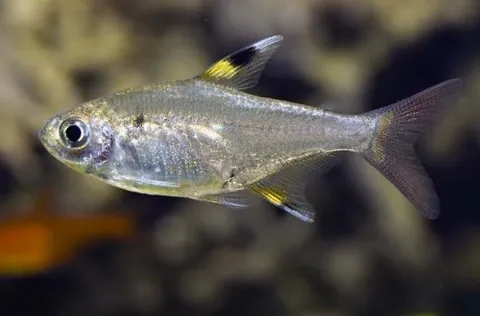
Pristella maxillaris
The Albino Pristella, also known as the Albino X-Ray Tetra, scientifically classified as Pristella maxillaris, belongs to the Acestrorhamphidae family. This species is considered one of the most common and accessible…
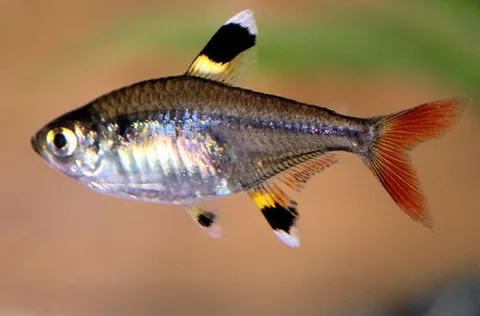
Pristella maxillaris
The Pristella Tetra, also known as the X-ray Tetra or Golden Pristella Tetra (scientific name Pristella maxillaris), belongs to the family Acestrorhamphidae. A distinguishing feature of this fish is its remarkable…
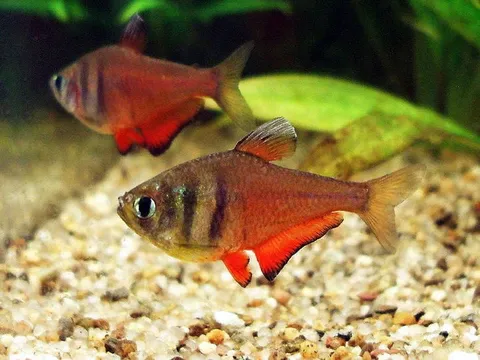
Hyphessobrycon flammeus
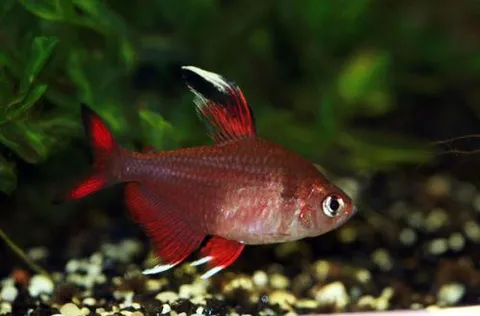
Hyphessobrycon flammeus, also known as the Flame Tetra or Red Tetra, belongs to the family Acestrorhamphidae. These fish are distinguished by their beautiful fiery coloration. However, when purchased from pet stores,…
Megalamphodus rosaceus
The Rosy Tetra, also known as the Rosaceus Tetra (Megalamphodus rosaceus), belongs to the family Acestrorhamphidae and makes an excellent addition to a community of peaceful aquarium inhabitants. This fish shows…