Temperature24 – 28 °C
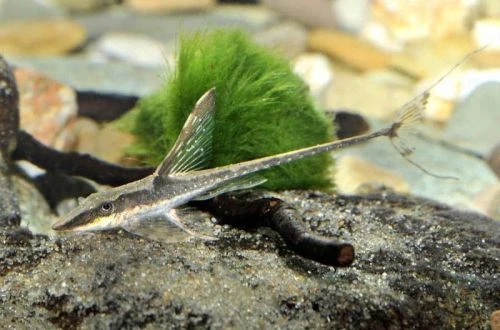
The Golden Sturisoma, scientifically known as Sturisomatichthys aureus (formerly Sturisoma aureum), is a member of the armored catfish family (Loricariidae). This species originates from South America, where it is found in the Magdalena River basin, which flows through Colombia. These fish prefer river sections with strong currents and rocky bottoms, often hiding among submerged snags.
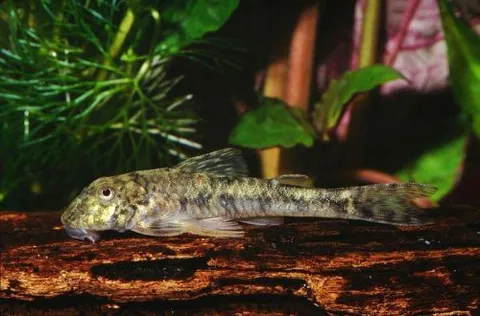
Adults of this catfish can reach a length of up to 20 cm. Their body is exceptionally slender and elongated, topped with a large, pointed head. The appearance of the sturisoma resembles a thin twig or stick, which provides excellent camouflage among the snags on the bottom. The fins of these fish are large, with thickened first rays that have transformed into sharp spines. The coloration is usually gray, and the belly has a silvery hue with a golden sheen.
The species is endemic to Colombia, inhabiting the basins of the Magdalena, San Jorge, Cesar, Sinu, Baudó, and Ranchería rivers. In nature, it lives in bodies of water with clean, oxygen-rich water. It prefers areas with moderate to fast currents, rocky bottoms, and the presence of submerged snags, among which the fish find shelter. Water parameters in its natural habitat correspond to tropical freshwater systems with high flow rates.
The Golden Sturisoma exhibits a peaceful, somewhat timid, and shy disposition. It is unable to compete for territory or food with more robust bottom dwellers. These fish prefer to be in a group rather than live alone. When choosing tank mates, it is recommended to opt for calm, non-aggressive species of comparable size that inhabit the mid-water column or the surface.
For a group of 3–4 catfish, an aquarium with a volume of 250–300 liters will be required. In the aquarium's setup, it is important to provide numerous shelters, such as natural or artificial snags, as well as dense plant thickets and other decor. The fish prefer subdued lighting, so their greatest activity is observed after the lights are turned off. For successful long-term keeping, it is necessary to maintain clean, well-oxygenated water. Notably, despite its tropical origin, the Golden Sturisoma tolerates high temperatures poorly. It is important to avoid prolonged temperatures above 26°C. The hydrochemical composition of the water can vary within a fairly wide range, which simplifies water preparation during aquarium maintenance.
This species is herbivorous. In their natural habitat, they feed on algal growth from rocks and snags, also consuming small organisms inhabiting these algae. In a home aquarium, the main food will be specialized plant-based foods, such as flakes, granules, and tablets. Additionally, fresh pieces of green vegetables, such as cucumber and spinach, should be added to the diet. It is important not to limit the diet exclusively to plant-based food; products with protein supplements, such as regular dry sinking foods, should also be offered regularly.
Under favorable keeping conditions and a balanced diet, breeding is not uncommon. These catfish prove to be caring parents. The female attaches the eggs to any hard surface, such as the side wall of the aquarium. After fertilization, the male remains near the clutch throughout the incubation period, guarding his future offspring.
The Golden Sturisoma is extremely sensitive to water quality and the accumulation of organic waste. With poor filtration or infrequent water changes, the fish are susceptible to bacterial infections affecting the skin and fins. They also tolerate sharp fluctuations in environmental parameters poorly. The main preventive measure is to maintain a clean substrate, ensure powerful aeration, and regularly change the water. The presence of a large number of infusoria in the aquarium often provokes the development of diseases.
When selecting individuals, attention should be paid to the fish's activity and the absence of external damage. Healthy sturisomas should have tightly clamped fins, clean coloration without spots or ulcers, and active breathing movements. Avoid purchasing fish with sunken bellies, which may indicate emaciation or internal parasitic infections. In the store, it is important to assess the fish's behavior: healthy individuals usually attach themselves to glass or decorations, actively scraping off biofilm, and should not appear apathetic or lie motionless on the bottom.
The essentials: size, tank volume, water parameters and care
An adult reaches 20 cm in length. Plan the tank around the maximum size: the fish quickly outgrows a cramped setup.
The recommended volume is 250 L. A smaller tank speeds up nitrate build-up and raises stress levels.
Temperature 24–28 °C, pH 6.6–7.6, hardness 5–19 dGH. Stability matters more than exact values: sudden swings are harder on the fish than a small deviation from the ideal.
Around 8 years when kept properly. Lifespan depends directly on tank volume, water quality and a varied diet.
Temperament: peaceful (regular). Keep this in mind when choosing tank mates.
Recommended setup: small group (3–4 individuals). Ignoring this is a common cause of stress and disease.
Diet type: plant-based (algae, vegetables). Feed small portions that are finished within a couple of minutes — overfeeding does more harm than underfeeding.
The scientific name of the species is Sturisomatichthys aureus, family Armored Catfishes (Loricariidae). It also appears in the literature as: Loricaria aurea, Sturisoma aureum.
The water suits 196 of 208 plants in the catalogue — the easiest ones are shown first.
Afzelius's AnubiasAnacharisAnubiasBrazilian PennywortDwarf CloverDwarf CloverDwarf HygrophilaDwarf SagittariaDwarf ValGuppy GrassHornwortJava FernJava MossMoneywortMud SwordNair's LagenandraNarrow Leaf AnacharisNarrow-leaf CloverStringy MossSüsswassertangTaiwan MossTape GrassTemple PlantUssuri Watermilfoil
Matched by family, categories and overlapping keeping conditions
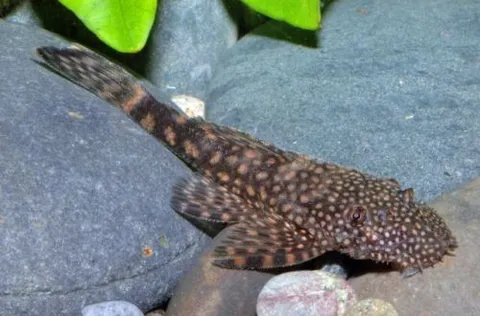
Ancistrus cirrhosus
The Dark Ancistrus, also known as the Bristlenose Pleco (Ancistrus cirrhosus), possesses a rather unusual appearance that might remind one of something shaggy. This fish can remain motionless for long periods, which,…
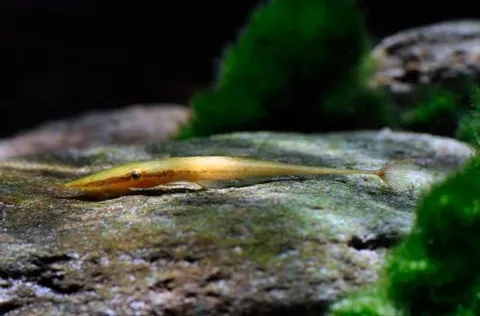
Acestridium dichromum
The Whiptail Catfish, or Acestridium dichromum, belongs to the family Loricariidae, which includes armored catfish. This species first became available to aquarists in the late 1990s, making it relatively new to the…
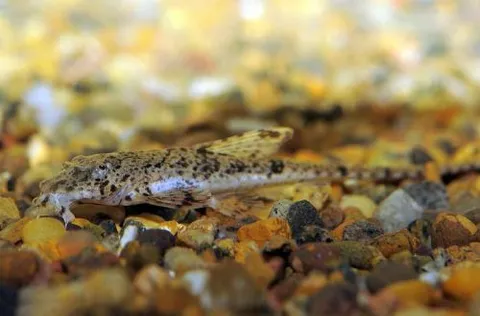
Rineloricaria microlepidogaster
The fish known as the Golden Loricarid or Six-banded Loricarid, scientifically named Rineloricaria microlepidogaster, is a member of the Armored Catfish family (Loricariidae). This catfish originates from South America.…
Parotocinclus jumbo
Parotocinclus jumbo, or the jumbo dwarf suckermouth catfish, belongs to the armored catfish family (Loricariidae). It is noteworthy that "jumbo" translates to "giant," which at first glance may seem unexpected, as the…