Armored Catfish (Callichthyidae)

Gosse's Corydoras

Corydoras gossei

Gosse's Corydoras belongs to the family Callichthyidae (armoured catfishes). The scientific name is Corydoras gossei. It is named after Dr. J. P. Gosse, who collected the type specimen. The fish comes from South America, specifically from the Mamoré River basin on the border between northeastern Bolivia and Rondônia State in Brazil.

Tank
from 80 L (21 gal)
Temperature
24 – 28 °C (75 – 82 °F)
Size in aquarium
5 cm (2 in)
Acidity
pH 6–7.5
Natural rangeRange on the map
  • Mamoré River basin
  • Rondônia area
  • Bolivia
  • Brazil

Tank conditions

Plan the tank stocking
Temperature
24 – 28 °C (75 – 82 °F)
Water pH
Slightly acidic (6) – Neutral (7.5)
Water dH
Very soft (1) – Medium hardness (10)
Water salinity
no salt (freshwater)
Size in aquarium
5 cm (2 in)
Lifespan
8 years
Temperament
Peaceful (regular)
Toward small fish
not a predator
Required aquarium volume
from 80 L (21 gal)
Lighting
dimmed
Substrate
sandy (regular, light)
Water flow
weak or moderate
Swimming level
near the bottom
Feeding
Sinking (any)
Keeping
Small group 5–6 individuals
  • Lifespan. A lifespan to expect under good care, not a measured value: it depends heavily on tank volume, water quality and diet — and for selectively bred forms, on their origin as well.
  • Toward small fish. Based on the Predators category in the catalog or the temperament in the species parameters. “A risk to small fish” means the species is not a predator by habit, yet will swallow any fish that fits in its mouth.
  • Required aquarium volume. This is a husbandry recommendation, not a measured value: the volume depends on the keeping mode (small group (5–6 individuals)), footprint, decor and tank mates.

Care and keeping

Description

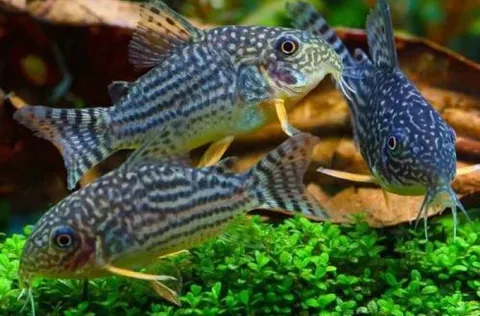
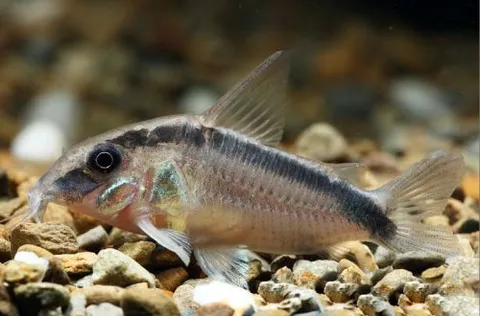
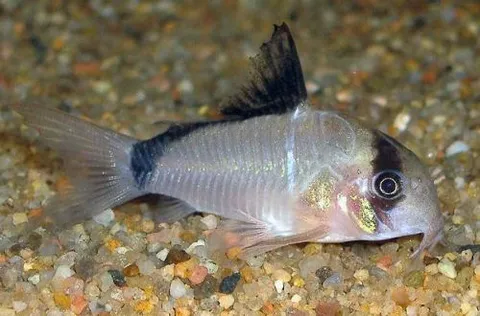
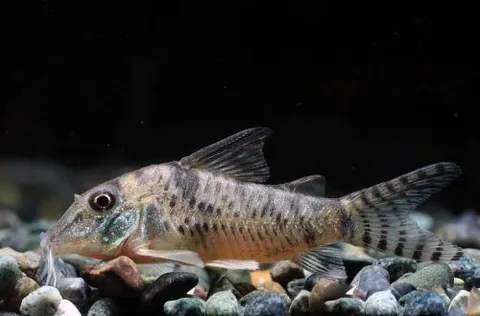
Gosse's Corydoras grows to about 5 cm in length. The body is brown, with a dark-yellow belly. Light spots form a pattern across the body. The fins are semi-transparent, and the tail fin shows brownish bands.

Habitat

Gosse's Corydoras inhabits the Mamoré River basin on the border of Brazil (Rondônia State) and northeastern Bolivia. In nature it lives in shallow river and stream sections with slow water flow, sandy or silted bottoms, and dense aquatic vegetation. The water in these habitats is usually soft and slightly acidic.

Behavior and Compatibility

This is a peaceful and sociable species, most active as part of a group. In the aquarium, keep a school of at least 4–6 individuals; solitary fish become stressed. Gosse's Corydoras spends most of its time on the bottom, actively searching the substrate for food, and gets along well with any non-aggressive fish of comparable size.

Care and Maintenance

Gosse's Corydoras is undemanding and easy to keep. It coexists well with other fish, has no special requirements for water composition or diet, and adapts successfully to most freshwater aquariums. It suits both beginners and experienced aquarists. A tank of 80 litres or more is optimal for a group of 4–6 individuals. Since the fish spends most of its time on the bottom, pay special attention to the lower level when decorating. Use a substrate of sand or fine gravel. The substrate particles must have no sharp edges, to avoid damaging the fish's sensitive barbels. Provide several hiding places. Good refuges include driftwood, dense plant growth, and various decorative elements. The rest of the design depends on your preference. The key is to maintain stable water conditions within acceptable ranges of pH and dGH, and to prevent organic waste from accumulating. Equip the tank with an efficient filter and maintain it regularly: do a partial water change weekly, remove uneaten food, droppings and rotting plant matter. Gosse's Corydoras is omnivorous and eats most popular dry and freeze-dried foods (flakes, granules, tablets), as well as live and frozen foods such as daphnia, brine shrimp and bloodworm. For a complete diet, combine different food types. This species is known for its peaceful and friendly nature, thriving alongside many other non-aggressive fish of comparable size. It prefers to live in a group, so keep at least 4–6 individuals together.
Diet

The species is omnivorous. In the aquarium, it readily eats quality sinking dry foods, specialized tablets for bottom-feeders, and frozen or live foods such as bloodworm, daphnia and brine shrimp. To maintain good health, vary the diet and avoid feeding only leftovers that fall from the middle and upper levels.

Breeding and Reproduction

Breeding occurs through spawning, often triggered by a large water change with cooler water, mimicking the rainy season. Females lay eggs on plant leaves, decorations or the aquarium glass. Use a group with more males than females. After spawning, remove the parents, as they may eat the eggs. The fry hatch after several days and should be fed brine shrimp nauplii or specialized fry foods.

Diseases

The fish are sensitive to water quality and substrate cleanliness; poor conditions can damage the sensitive barbels, opening the way to bacterial infection. Maintain low levels of organic waste through regular substrate siphoning and water changes. With proper care, the species has robust health and resistance to typical diseases.

How to choose

When buying, choose active fish with clean fins, no spots on the body, and intact barbels. Avoid fish showing lethargy, skin damage, or an unnaturally hollow belly. Healthy Gosse's Corydoras should show interest in foraging in the substrate and stay together as a group without appearing fearful or listless.

Compatibility

There are no pair reviews for this species yet — check tankmates in the matcher.

All tankmates

Plants and this fish

Matching water does not mean the plant will stay intact.

Frequently asked questions

The essentials: size, tank volume, water parameters and care

How big does Gosse's Corydoras get?

An adult reaches 5 cm in length. Plan the tank around the maximum size: the fish quickly outgrows a cramped setup.

What size aquarium does Gosse's Corydoras need?

The recommended volume is 80 L. A smaller tank speeds up nitrate build-up and raises stress levels.

What water parameters does Gosse's Corydoras need?

Temperature 24–28 °C, pH 6–7.5, hardness 1–10 dGH. Stability matters more than exact values: sudden swings are harder on the fish than a small deviation from the ideal.

How long does Gosse's Corydoras live?

Around 8 years when kept properly. Lifespan depends directly on tank volume, water quality and a varied diet.

Is Gosse's Corydoras aggressive?

Temperament: peaceful (regular). Keep this in mind when choosing tank mates.

How many Gosse's Corydoras should be kept together?

Recommended setup: small group (5–6 individuals). Ignoring this is a common cause of stress and disease.

What does Gosse's Corydoras eat?

Diet type: sinking (any). Feed small portions that are finished within a couple of minutes — overfeeding does more harm than underfeeding.

What is the scientific name of Gosse's Corydoras?

The scientific name of the species is Corydoras gossei, family Armored Catfish (Callichthyidae).

Similar fishes

Matched by family, categories and overlapping keeping conditions

Meta Corydoras

Meta Corydoras

Corydoras metae

Armored Catfish (Callichthyidae)

Corydoras metae is known to aquarists as the meta corydoras, bandit cory, or black-mask catfish, and belongs to the family Callichthyidae. This species lives exclusively in the Río Meta basin, a left tributary of the…

Goldstripe Corydoras

Goldstripe Corydoras

Corydoras aurofrenatus

Armored Catfish (Callichthyidae)

Corydoras aurofrenatus, known as the Goldstripe Corydoras, belongs to the family Callichthyidae, or Armored Catfishes. Its name is due to the unique pigmentation on its head and body, which shimmers with gold. The…

Sterba's Corydoras

Sterba's Corydoras

Corydoras sterbai

Armored Catfish (Callichthyidae)

Sterba's Corydoras, scientifically known as Corydoras sterbai, belongs to the family Callichthyidae, also called Armored or Callichthid Catfish. This fish originates from South America, specifically found in the Guaporé…

Corydoras arcuatus

Corydoras arcuatus

Corydoras arcuatus

Armored Catfish (Callichthyidae)

Corydoras arcuatus, also known as the Arched Cory or Skunk Cory, is scientifically classified as Corydoras arcuatus and belongs to the Callichthyidae family. Its natural range extends across almost the entire upper…

Other scientific names and conservation status

Categories
Corydoras
Conservation status
Least concernLC