Temperature20 – 27 °C
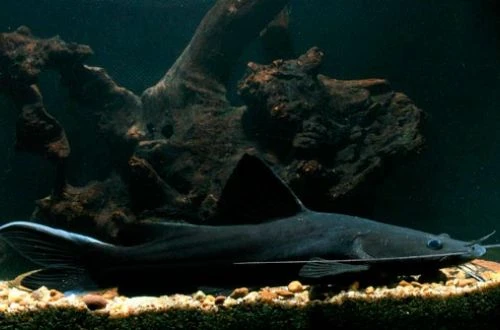
Hemibagrus wyckii, also known as the Asian Redtail Catfish, belongs to the family Bagridae, commonly known as Bagrid Catfishes. Although juveniles can occasionally be found for sale, their acquisition is not recommended. This species of catfish is aggressive, reaches significant sizes, and can live for over ten years in an aquarium, making it an unsuitable choice for inexperienced aquarists.
Adults of this species can grow up to 70 cm in length. The body structure of the fish is typical for most catfishes: it is elongated, with a large head, a wide mouth, and well-developed long barbels. The coloration is predominantly black, with a gray tail whose edges have a lighter shade.
The natural habitat of this species covers Southeast Asia, with a wide distribution in the central regions of Indochina, including Laos, Vietnam, Cambodia, and Thailand, as well as in the western part of Indonesia. These catfishes prefer the main river channels, including areas with strong currents, and during the rainy season, which lasts from July to October, they migrate to temporarily flooded areas of tropical forests.
This is an aggressive, territorial species. It can attack even fish of similar or larger size, not to mention smaller inhabitants. Hemibagrus wyckii shows no fear of humans and can attack a hand during aquarium maintenance.
Hemibagrus wyckii requires an aquarium of significant volume, exceeding 1,000 liters, which makes it an extremely rare inhabitant of amateur collections. Only a few, exceptionally wealthy aquarist enthusiasts can afford to house such a huge tank, the weight of which (with water, decor, and equipment) can be several tons. When selecting decor, the features of its natural habitat and the impressive size of the fish are taken into account. A sand-gravel mixture with the addition of large stones and massive snags is used as substrate. Lighting should be subdued. To maintain high water quality, complex filtration and life support systems are necessary, which, along with other equipment, can occupy the space of a small room.
Being a carnivorous species, its diet in the natural environment consists of other fish and crustaceans. In a home aquarium, pieces of white fish meat, shrimp, or mussels can be used as the main diet. It is important to remember that any small tank mates will become its prey. Feeding is done 1–2 times a week, and it is unacceptable to include animal products such as chicken or beef in the diet.
Breeding of this species has not been recorded in home aquariums. In commercial aquaculture in Southeast Asia, artificial insemination is practiced using hormonal stimulation and the method of obtaining eggs by stripping females. Natural spawning in captivity is considered impractical due to the aggressive behavior and enormous size of the broodstock.
Under favorable conditions, fish rarely experience health deterioration. The onset of diseases usually indicates problems in husbandry, such as polluted water, poor quality food, or injuries. In most cases, eliminating the root cause leads to recovery, but sometimes medication may be required.
When choosing a fish, it should be noted that this is an extremely aggressive predator, not suitable for keeping in ordinary home aquariums. Healthy individuals should be active, have clean fins without signs of erosion, intact barbels, and no visible body damage. Avoid buying fish with signs of emaciation or unnatural behavior, as the species requires specific conditions and huge volumes of water, which is often ignored in retail outlets.
The essentials: size, tank volume, water parameters and care
An adult reaches 70 cm in length. Plan the tank around the maximum size: the fish quickly outgrows a cramped setup.
The recommended volume is 1000 L. A smaller tank speeds up nitrate build-up and raises stress levels.
Temperature 20–27 °C, pH 6–8, hardness 1–21 dGH. Stability matters more than exact values: sudden swings are harder on the fish than a small deviation from the ideal.
Around 15 years when kept properly. Lifespan depends directly on tank volume, water quality and a varied diet.
Temperament: aggressive / incompatible / unfriendly. Keep this in mind when choosing tank mates.
Recommended setup: solitary. Ignoring this is a common cause of stress and disease.
Diet type: sinking (meat / protein). Feed small portions that are finished within a couple of minutes — overfeeding does more harm than underfeeding.
The scientific name of the species is Hemibagrus wyckii, family Bagridae (naked catfishes). It also appears in the literature as: Bagrus wyckii, Macrones wyckii, Mystus wyckii.
The water suits 197 of 208 plants in the catalogue — the easiest ones are shown first.
Afzelius's AnubiasAnacharisAnubiasBrazilian PennywortDwarf CloverDwarf CloverDwarf HygrophilaDwarf SagittariaDwarf ValGuppy GrassHornwortJava FernJava MossMoneywortMud SwordNair's LagenandraNarrow Leaf AnacharisNarrow-leaf CloverStringy MossSüsswassertangTaiwan MossTape GrassTemple PlantUssuri Watermilfoil
Matched by family, categories and overlapping keeping conditions
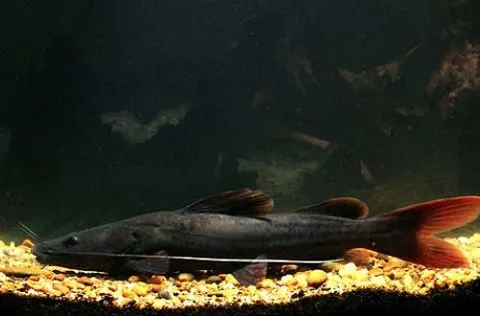
Hemibagrus wyckioides
The Asian Red-tailed Catfish, known scientifically as Hemibagrus wyckioides, is a member of the Bagridae family (Bagrid Catfishes). This is a very large and aggressive predatory fish, rarely suitable for beginner…
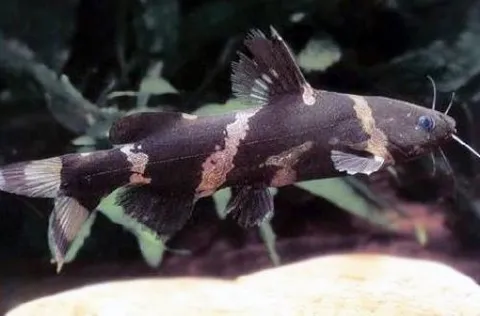
Pseudomystus siamensis
Pseudomystus siamensis, known by the common names Asian Bumblebee Catfish, Siamese Orca Catfish, or simply Siamese Catfish, belongs to the Bagridae family. This small and rather attractive Asian catfish has no special…
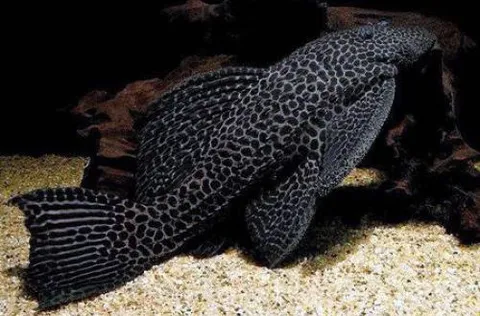
Megalancistrus parananus
Megalancistrus parananus, or the Giant Parana Ancistrus, belongs to the armored catfish family (Loricariidae). Its name accurately conveys the scale of this fish, as its length can exceed half a meter. Such impressive…
Phalacronotus apogon
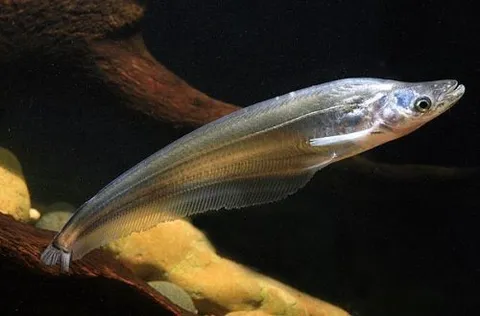
The scientific name Phalacronotus apogon, or Phalacronotus, belongs to the family Siluridae. As a rule, this species is not classified as an aquarium fish due to its significant size. Its primary use is in large public…