Temperature20 – 26 °C
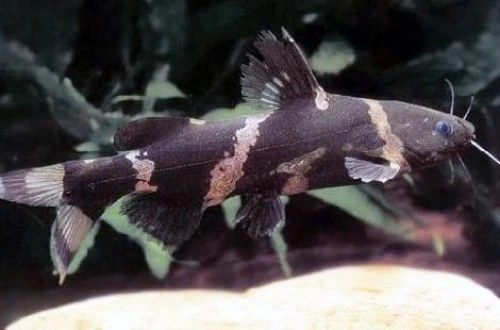
Pseudomystus siamensis, known by the common names Asian Bumblebee Catfish, Siamese Orca Catfish, or simply Siamese Catfish, belongs to the Bagridae family. This small and rather attractive Asian catfish has no special requirements for keeping conditions and gets along well with most medium and large-sized fish. The only feature worth noting is its predominantly carnivorous diet.
Adults can reach a length of approximately 15 cm. Their coloration is predominantly dark, chocolate-brown, with characteristic several vertical and diagonal yellowish stripes. This pattern feature served as the basis for one of its common names — "bumblebee catfish." Sexual dimorphism in this species is weakly expressed: males are distinguished by brighter and more contrasting coloration, while females usually appear somewhat stockier than their partners.
Its natural habitat is the extensive Mekong River basin, one of the largest in Southeast Asia, stretching across the territories of modern-day Thailand, Laos, Cambodia, and Vietnam. The catfish prefers waters with a slow current, finding refuge among submerged trees and their roots. During the day, it usually hides in secluded places, emerging to forage at night.
Provided there are no very small fish in the aquarium, there will be no compatibility issues with other species. The catfish gets along perfectly with large and medium-sized cyprinids, peaceful cichlids, and many others. However, intraspecific competition for territory can occur, and if there is insufficient free space, skirmishes between individuals may arise.
For keeping a single catfish, an aquarium of at least 100 liters is required. Given its shy and nocturnal lifestyle, dim lighting and the presence of various shelters such as snags, ceramic pots, or sections of plastic pipes are preferable for decoration. If keeping several catfish, it is important to provide several zones with shelters so that each individual can establish its own territory. The substrate can be any soft type; plants are not an essential element, but if desired, shade-tolerant and unpretentious species, as well as mosses, can be used. When placing equipment, ensure that heaters are away from shelters and not directly inside them to avoid accidental overheating of the catfish. Otherwise, the Asian Bumblebee Catfish demonstrates high unpretentiousness and adaptability to various water conditions, being found in nature even in brackish systems.
This species is carnivorous, and in a certain sense, it can be considered a miniature predator. The Siamese Catfish actively hunts small fish, aquatic insects and their larvae, as well as worms and crustaceans. In an aquarium environment, it can be accustomed to consuming fresh meat products and frozen foods, such as freshwater shrimp meat, mussels, small pieces of white fish, or earthworms. However, feeding with meat from warm-blooded animals should be avoided, as it is poorly digested and can lead to digestive problems. They must not be fed mammalian or avian meat: the lipids it contains cannot be properly metabolised by the fish and lead to excess fat deposits and even organ degeneration.
In natural conditions, the breeding season coincides with the onset of the rainy season, when significant changes in water composition occur, which serves as a stimulus for spawning. In an aquarium environment, recreating these natural cycles without the use of hormonal injections, which are used in fish farms, is practically impossible.
The main cause of health problems in these fish is an unsuitable habitat. At the first signs of illness, water parameters should be checked immediately to ensure there are no high concentrations of harmful substances (such as ammonia, nitrites, nitrates, and others). In case of deviations, the parameters must be normalized, and only then should treatment begin.
When choosing a Siamese Catfish, attention should be paid to the fish's activity in the evening, as it is a nocturnal species. A healthy individual should have a clear, contrasting pattern without skin damage, as this species has no scales and is sensitive to external injuries. Avoid specimens with signs of emaciation, sunken flanks, or damaged fins. In the store, it is important to clarify whether the fish shows excessive aggression towards its conspecifics and to ensure there is no white film or ulcers on the body, which may indicate bacterial infections due to improper keeping conditions.
The essentials: size, tank volume, water parameters and care
An adult reaches 12–15 cm in length. Plan the tank around the maximum size: the fish quickly outgrows a cramped setup.
The recommended volume is 100 L. A smaller tank speeds up nitrate build-up and raises stress levels.
Temperature 20–26 °C, pH 5.8–7.8, hardness 5–25 dGH. Stability matters more than exact values: sudden swings are harder on the fish than a small deviation from the ideal.
Around 6 years when kept properly. Lifespan depends directly on tank volume, water quality and a varied diet.
Temperament: semi-peaceful (dangerous to smaller ones). Not a predatory species, but small fish that fit in its mouth will eventually be eaten.
Recommended setup: both solitary and in group (flexible). Ignoring this is a common cause of stress and disease.
Diet type: sinking (meat / protein). Feed small portions that are finished within a couple of minutes — overfeeding does more harm than underfeeding.
The scientific name of the species is Pseudomystus siamensis, family Bagridae (naked catfishes). It also appears in the literature as: Leiocassis albicollaris, Leiocassis bicolor, Leiocassis siamensis.
The water suits 197 of 208 plants in the catalogue — the easiest ones are shown first.
Afzelius's AnubiasAnacharisAnubiasBrazilian PennywortDwarf CloverDwarf CloverDwarf HygrophilaDwarf SagittariaDwarf ValGuppy GrassHornwortJava FernJava MossMoneywortMud SwordNair's LagenandraNarrow Leaf AnacharisNarrow-leaf CloverStringy MossSüsswassertangTaiwan MossTape GrassTemple PlantUssuri Watermilfoil
Matched by family, categories and overlapping keeping conditions
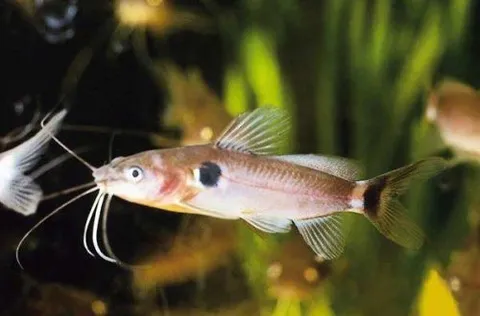
Mystus nigriceps
The Reddish Mystus Catfish, scientifically known as Mystus nigriceps, belongs to the Bagridae family, or naked catfishes. This fish has long been popular with aquarists, although until the 1940s it was often mistakenly…
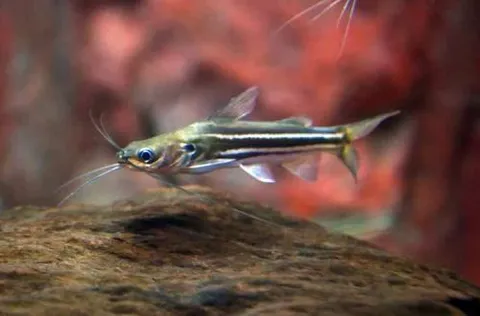
Mystus vittatus
The Striped Mystus, scientifically known as Mystus vittatus, is a member of the Bagridae family. Its habitat range is wide, covering South Asia, including Pakistan, India, Sri Lanka, Nepal, and Bangladesh. This fish can…
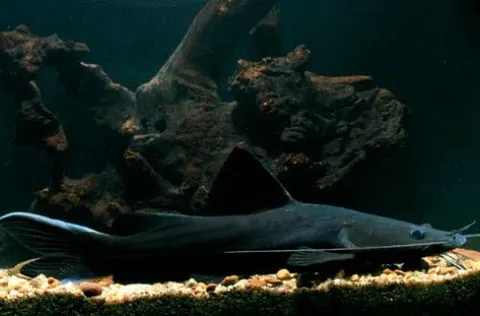
Hemibagrus wyckii
Hemibagrus wyckii, also known as the Asian Redtail Catfish, belongs to the family Bagridae, commonly known as Bagrid Catfishes. Although juveniles can occasionally be found for sale, their acquisition is not…
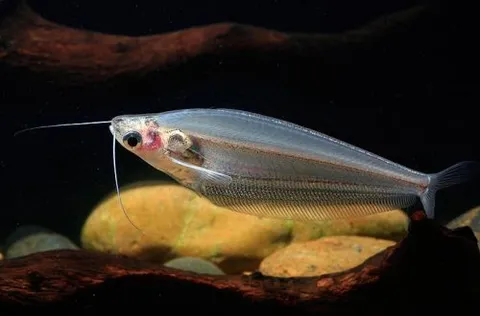
Kryptopterus bicirrhis
Kryptopterus bicirrhis, known as the Two-barbel Indian Glass Catfish, belongs to the family Siluridae (Catfishes). It is not commonly found in aquariums, although the name "glass catfish" is sometimes mistakenly applied…