Temperature20 – 26 °C
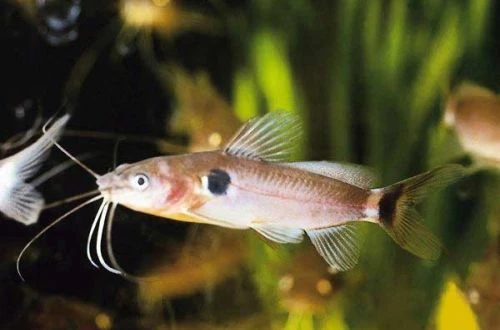
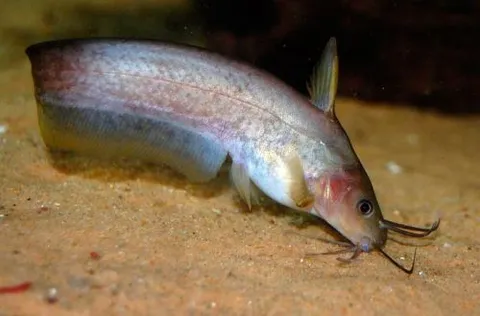
The Reddish Mystus Catfish, scientifically known as Mystus nigriceps, belongs to the Bagridae family, or naked catfishes. This fish has long been popular with aquarists, although until the 1940s it was often mistakenly identified as Mystus micracanthus. The catfish inhabits Southeast Asia, being widely distributed throughout the vast Mekong River basin, as well as in continental Malaysia and Indonesia.
Adult specimens typically do not exceed 19 cm in length, though in aquarium conditions they more often grow up to 15 cm. The genus name Mystus goes back to the Greek mystax, "moustache", referring to the catfish's long and very sensitive barbels. The body coloration is reddish, complemented by two large black spots: one located just behind the gills, and the second at the base of the tail.
The Reddish Mystus inhabits Southeast Asia, including the Mekong River basin, Malaysia, and Indonesia. In nature, this species inhabits lowland rivers, streams, and peat swamps. The fish prefer areas with soft substrate where they can actively feed and burrow.
By nature, this species is peaceful, not prone to aggression, and lacks territorial claims. It coexists well with other aquarium inhabitants of comparable size. The Reddish Mystus Catfish prefers to live in a group of its own kind. It is important to consider the feeding habits of this catfish: it is omnivorous and not picky about food, which can lead to the accidental consumption of smaller aquarium neighbors. Thus, any fish small enough to fit into its mouth is at risk.
For keeping 3–4 catfish, an aquarium of at least 250 liters is considered optimal. The fish is undemanding regarding keeping conditions, provided that hydrochemical parameters and temperature remain within acceptable limits. Aquarium decor also does not play a decisive role. However, it should be noted that some aquarists have observed the catfish's ability to uproot poorly rooted plants. This usually happens when the fish is searching for food in the bottom layers. Being an omnivorous species, the catfish is not picky about food and readily picks up anything edible it finds on the bottom. It is worth noting separately that smaller fish, including fry, may accidentally become part of its diet.
This species is omnivorous and not particularly finicky about food, readily consuming anything it can find on the bottom. As mentioned earlier, it is not excluded that smaller fish and fry may also become part of its diet.
Reliable information on captive breeding is unavailable. All specimens presented in the aquarium trade are wild-caught. Biologically, the species is oviparous, and a distinct spawning process characteristic of the Bagridae family is presumed, but successful cases of offspring production in aquarium conditions have not been documented.
No diseases that affect only this species have been described. Under suitable conditions — clean water, a balanced diet and calm tank mates — health problems usually do not arise. The most common cause of illness is a decline in conditions: it weakens the immune system, and the fish becomes vulnerable to infections that are always present in an aquarium. At the first signs of trouble — lethargy, wasting, refusal of food or clamped fins — check the basic water parameters and the levels of ammonia, nitrite and nitrate first. Restoring acceptable conditions often lets the fish recover on its own. Catfish of this group have naked, scaleless skin and are therefore more sensitive to medication than most aquarium fish. Products based on malachite green and copper should be used with care and at about half the dose stated on the packaging.
When purchasing, it should be noted that this species is a predator and may pose a threat to small aquarium inhabitants. Healthy specimens should show activity during twilight hours, have clean skin without visible ulcers, coatings, or fin damage. It is recommended to avoid purchasing emaciated fish, as many specimens for sale are wild-caught and may be weakened by transportation.
The essentials: size, tank volume, water parameters and care
An adult reaches 15–19 cm in length. Plan the tank around the maximum size: the fish quickly outgrows a cramped setup.
The recommended volume is 250 L. A smaller tank speeds up nitrate build-up and raises stress levels.
Temperature 20–26 °C, pH 6–7, hardness 5–19 dGH. Stability matters more than exact values: sudden swings are harder on the fish than a small deviation from the ideal.
Around 8 years when kept properly. Lifespan depends directly on tank volume, water quality and a varied diet.
Temperament: semi-peaceful (dangerous to smaller ones). Not a predatory species, but small fish that fit in its mouth will eventually be eaten.
Recommended setup: small group (3–4 individuals). Ignoring this is a common cause of stress and disease.
Diet type: meat with plant additives (omnivores). Feed small portions that are finished within a couple of minutes — overfeeding does more harm than underfeeding.
The scientific name of the species is Mystus nigriceps, family Bagridae (naked catfishes). It also appears in the literature as: Bagrus micracanthus, Bagrus nigriceps, Hypselobagrus micracanthus.
The water suits 33 of 208 plants in the catalogue — the easiest ones are shown first.
African Water FernAmazon FrogbitAnubiasAsian WatermossBlue BuceBuceChristmas MossDwarf African FernFloating CrystalwortFloating Water SpriteGiant VallisneriaGlobefruit LudwigiaGreater DuckweedJapanese RushJava FernJava MossJungle ValNair's LagenandraPelliaSchismatoglottisStringy MossSüsswassertangTaiwan MossWater Spangles
This fish digs through the substrate and pulls rooted plants out.
African Onion PlantAfzelius's AnubiasAmazon SwordAnacharisArrowhead CryptBalansa Water TrumpetBanana PlantBarth's SwordBeckett's Water TrumpetBladderwort CarpetBog MossBoivin's AponogetonBolivian Chain SwordBrazilian PennywortBroad-leaf Water SpriteBrookweedBrown's LimnophilaCardinal PlantCaribbean MintCarolina Micro SwordCognac AmmanniaCongo AnubiasCreeping JennyCreeping RushCreeping SpotflowerCreeping StaurogyneCrinkled AponogetonCupheaCutleaf WatermilfoilCylindricfruit LudwigiaDark SwordDelta ArrowheadDense MayacaDitch StonecropDwarf AmbuliaDwarf Baby TearsDwarf CloverDwarf CloverDwarf HairgrassDwarf Hygrophila
Matched by family, categories and overlapping keeping conditions
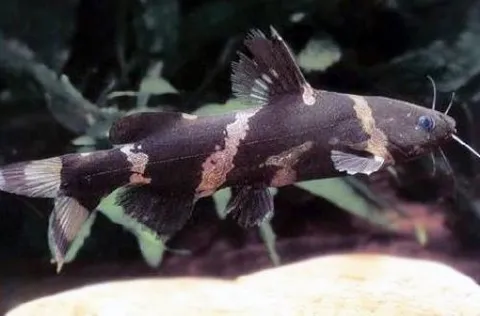
Pseudomystus siamensis
Pseudomystus siamensis, known by the common names Asian Bumblebee Catfish, Siamese Orca Catfish, or simply Siamese Catfish, belongs to the Bagridae family. This small and rather attractive Asian catfish has no special…
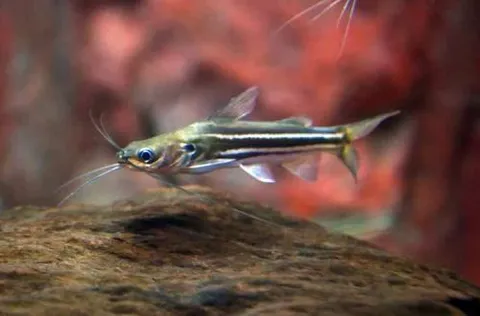
Mystus vittatus
The Striped Mystus, scientifically known as Mystus vittatus, is a member of the Bagridae family. Its habitat range is wide, covering South Asia, including Pakistan, India, Sri Lanka, Nepal, and Bangladesh. This fish can…
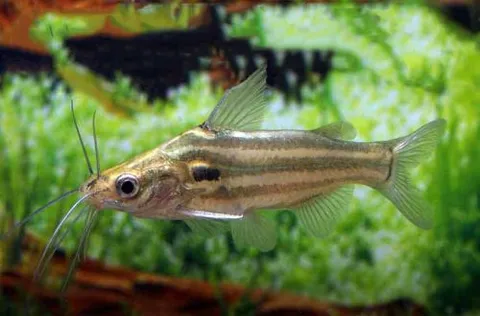
Mystus tengara
Mystus tengara, known by its scientific name, belongs to the Bagridae family (Bagrid Catfishes). This catfish originates from South Asia and can be found in the river systems of Pakistan, India, Nepal, and Bangladesh.
Neosilurus brevidorsalis
A representative of the Plotosidae family, known as Eel-tailed Catfish, the Australian Catfish (scientific name Neosilurus brevidorsalis) is a rather exotic guest from Australia. It is not often encountered in amateur…