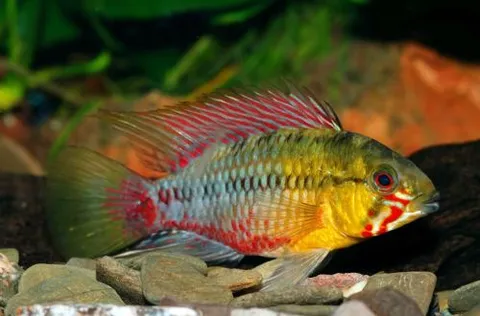
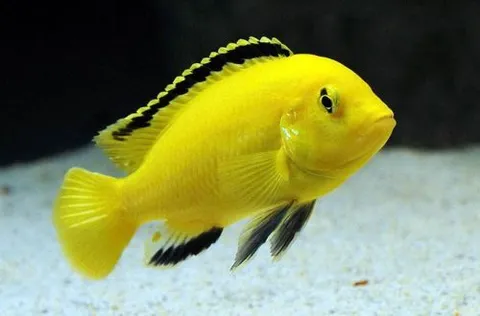
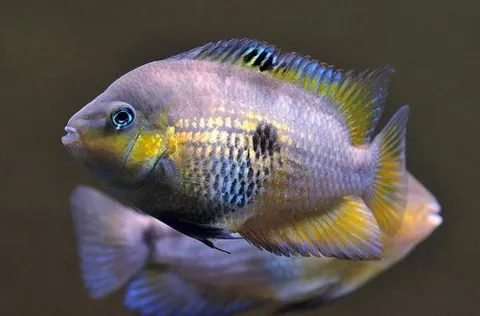
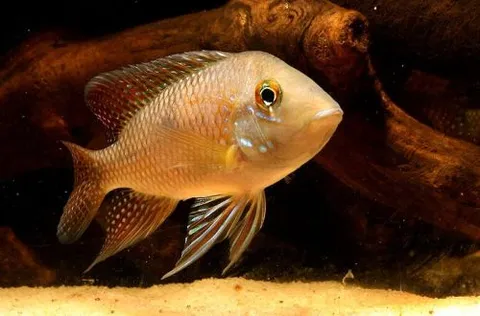
The fish form a strong monogamous pair, which, under favorable conditions, is capable of regularly producing offspring. Pair formation is only possible within a school. As they mature, the male and female choose a partner and remain faithful for a long time. In a suitable environment and with a balanced diet, angelfish can lay up to several hundred eggs, attaching them to broad plant leaves, such as Cryptocoryne or Echinodorus. Thanks to well-developed parental instincts, the clutch is under the reliable protection of the adult fish. However, if spawning occurs in a community tank, there is a risk that the eggs and newly hatched fry may be eaten by more active neighbors. Another common problem in very warm aquariums is the appearance of fungus on the eggs. To prevent diseases and protect against predation by other fish, it is recommended to transfer the plants with the clutch and the adult fish to a separate tank. It is advisable to perform this transfer long before spawning begins. The incubation period lasts 2 days, after which the fry will feed on the yolk sac reserves for another week, and then begin to swim freely in search of food. They should be fed specialized fry foods.