Temperature20 – 28 °C
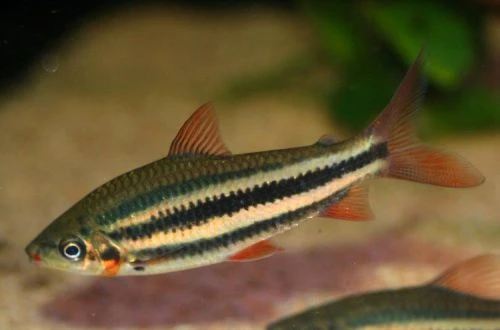
Leporinus arcus, also known as the Red-lipped Leporinus, belongs to the family Anostomidae. This is a rather large fish with modest coloration and a challenging temperament, requiring a spacious aquarium. All these characteristics make it not very popular among aquarists, and it is not recommended for beginners.
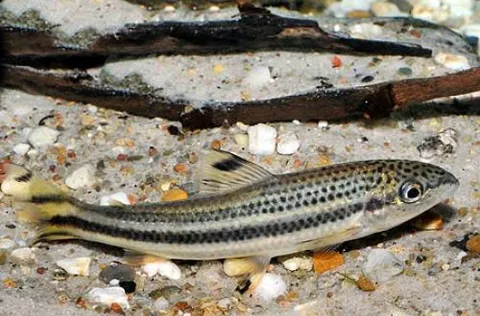
These individuals grow to 25–30 cm in length. Sexual dimorphism is weakly expressed, and males and females are practically indistinguishable externally. The body has a characteristic pattern of two dark stripes that run from head to tail on a light background. The back is dark gray. Red pigmentation is noticeable on the head and around the mouth, which gave the species its name — Red-lipped Leporinus.
Its natural habitat is in South America, where it is found in numerous river systems, including the Orinoco, in the territories of Venezuela, Guyana, Suriname, and French Guiana. These fish inhabit various biotopes: they can be found in rivers with moderate currents, as well as in calm floodplain lakes and swamps.
The behavior of these fish can vary depending on the number of individuals kept together. Solitary Red-lipped Leporinus can sometimes exhibit aggression, chasing smaller tank mates. However, when kept in groups of 3–4 individuals, they become significantly more tolerant of other fish of comparable or slightly smaller size.
For the successful keeping of a group of 3–4 such fish, an aquarium of at least 700 liters will be required. The decor is chosen arbitrarily and usually includes a sandy substrate, large boulders, driftwood, and floating plants. Rooted vegetation may be damaged, which is due to the dietary characteristics of Leporinus arcus. Long-term and successful keeping of the fish is only possible with the maintenance of stable water conditions within acceptable temperature and hydrochemical parameters. For this, the aquarium is equipped with the necessary equipment, primarily filtration systems, and regular maintenance is carried out: weekly partial water changes with fresh water, timely removal of organic waste, and monitoring of nitrogen cycle product concentrations and other parameters. Given the large size of adult individuals, the water should be well saturated with oxygen, so additional aeration will be very useful.
The Red-lipped Leporinus is an omnivorous species; in the wild, its diet consists mainly of algae, invertebrates, and organic detritus, which it collects from the bottom. In a home aquarium, it readily accepts various types of food, including dry flakes, pellets, frozen, and live foods. It is important to ensure a sufficient content of plant components in its diet.
Aquarium breeding is not documented. In this genus spawning in the wild is linked to migration and rising water during the rainy season: the fish release adhesive eggs and do not guard them. In captivity maturation stops at the pre-spawning stage, and in the farming of related Leporinus species fry are obtained through hormonal induction. No external sexual differences have been described.
This hardy and unpretentious species thrives in a suitable environment. However, deteriorating water quality, namely high levels of pollution, inevitably weakens the fish's immune system, making Leporinus arcus vulnerable to various infections. As a rule, moving the fish to optimal aquarium conditions helps the symptoms of the disease disappear. If the symptoms persist, medication may be required.
When purchasing, choose active individuals with clean fins and no visible skin damage. It is important to assess the fish's behavior in the store: a healthy leporinus shows curiosity, does not constantly hide, and does not show signs of exhaustion or apathy. It is recommended to clarify the keeping conditions and diet with the seller, as adaptation to new conditions in the aquarium requires a stable biological environment. Avoid purchasing individuals with signs of body deformation or an unnaturally swollen abdomen.
The essentials: size, tank volume, water parameters and care
An adult reaches 25–30 cm in length. Plan the tank around the maximum size: the fish quickly outgrows a cramped setup.
The recommended volume is 700 L. A smaller tank speeds up nitrate build-up and raises stress levels.
Temperature 20–28 °C, pH 6–7.5, hardness 1–12 dGH. Stability matters more than exact values: sudden swings are harder on the fish than a small deviation from the ideal.
Around 8 years when kept properly. Lifespan depends directly on tank volume, water quality and a varied diet.
Temperament: semi-peaceful (including aggression during spawning / intraspecific conflicts). Keep this in mind when choosing tank mates.
Recommended setup: small group (3–4 individuals). Ignoring this is a common cause of stress and disease.
Diet type: plant-based with meat additives. Feed small portions that are finished within a couple of minutes — overfeeding does more harm than underfeeding.
The scientific name of the species is Leporinus arcus, family Anostomidae.
The water suits 197 of 208 plants in the catalogue — the easiest ones are shown first.
Afzelius's AnubiasAnacharisAnubiasBrazilian PennywortDwarf CloverDwarf CloverDwarf HygrophilaDwarf SagittariaDwarf ValGuppy GrassHornwortJava FernJava MossMoneywortMud SwordNair's LagenandraNarrow Leaf AnacharisNarrow-leaf CloverStringy MossSüsswassertangTaiwan MossTape GrassTemple PlantUssuri Watermilfoil
Matched by family, categories and overlapping keeping conditions
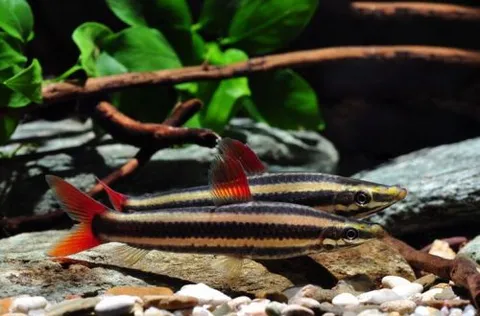
Anostomus anostomus
Anostomus anostomus, or the Common Anostomus, belongs to the family Anostomidae. This fish is one of the two most recognizable representatives of its family, along with the Threespot Anostomus. Its keeping is relatively…
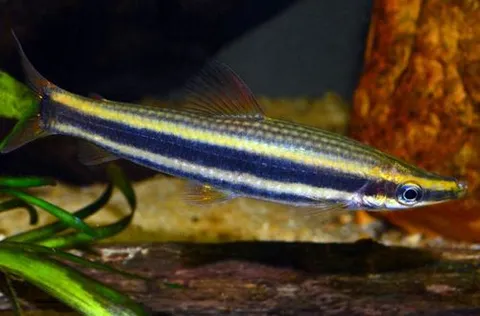
Anostomus ternetzi
Anostomus ternetzi, or Ternetz's Anostomus, belongs to the family Anostomidae. This species was named after the Swiss ichthyologist Carl Ternetz (1870–1928), who collected the holotype. Along with the Common Anostomus,…
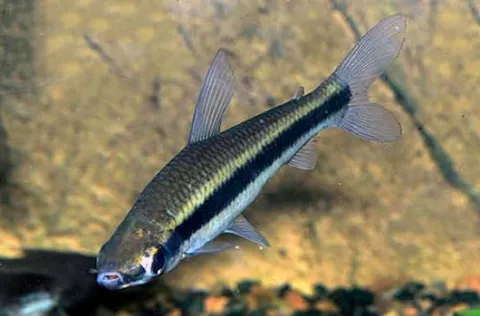
Laemolyta taeniata
Laemolyta taeniata, also known as the striped laemolyta, belongs to the family Anostomidae. It is quite rare in aquariums. Often, it arrives in batches with more brightly colored fish species, but due to its unassuming…
Leporellus vittatus
Leporinus vittatus, a representative of the family Anostomidae, known scientifically as Leporellus vittatus, is a large fish with a distinctive character and rather modest coloration. Its keeping requires a spacious…