Temperature22 – 26 °C
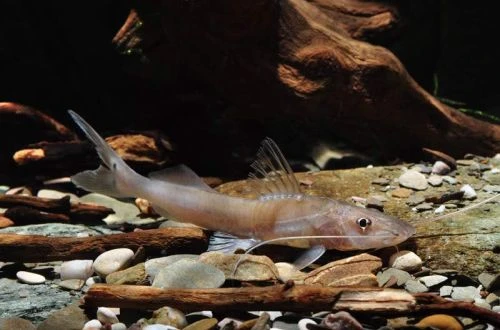
Belonging to the family Pimelodidae, the catfish Megalonema platycephalum, known as the long-whiskered catfish, is distributed throughout South America. Its habitats include the lower Amazon River in the northeastern part of the continent, as well as the Orinoco and Essequibo river basins.
The elongated body of this fish, topped with a flattened head, reaches approximately 30 cm in length when mature. A distinctive feature is its long, filamentous barbels, which serve as an important tool for orientation and foraging in murky bottom waters. The coloration typically shows uniform gray or silvery tones, accompanied by translucent fins. The only noticeable color feature is a small black spot located at the base of the caudal fin.
The species inhabits tropical freshwater bodies in South America. Its range covers the Amazon, Orinoco, and Essequibo river basins, as well as coastal rivers in Guyana. The fish prefer flowing waters and are found in various parts of river systems, where they adhere to conditions characteristic of a tropical climate.
Despite its generally peaceful nature, this catfish species tends to damage the fins of other fish due to its natural diet. For this reason, it is recommended to refrain from keeping it with most other species. If cohabitation is necessary, choose fish of comparable or slightly larger size that swim in the middle and upper water layers. Among bottom dwellers, suitable neighbors may include non-territorial catfish with reliable protection, such as representatives of the family Doradidae.
For the comfortable existence of a single catfish, an aquarium of at least 250 liters will be required; in this case, the bottom area will be more important than the height of the water column. The decor can be anything you choose, but dense plant thickets and various shelters in the form of driftwood are especially welcome. The fish prefers soft, slightly acidic water. It is important to note that a high-protein diet requires the installation of a powerful filtration system, as well as regular partial water changes and the removal of organic waste.
In its natural habitat, the catfish's diet includes aquatic invertebrates such as insects, crustaceans, shrimp, and snails. Sometimes it may also feast on the scales and fins of other fish. In a home aquarium, it should be offered live, fresh, or frozen foods: quality pieces of shrimp meat, earthworms, or large bloodworms. In addition, the menu can be supplemented with high-protein dry sinking foods.
There is no information on breeding. This is a nocturnal riverine pimelodid catfish; its reproduction has been described neither in the wild nor in aquaria. No external sexual characters are reported, and all fish in the trade are wild-caught.
No diseases that affect only this species have been described. Under suitable conditions — clean water, a balanced diet and calm tank mates — health problems usually do not arise. The most common cause of illness is a decline in conditions: it weakens the immune system, and the fish becomes vulnerable to infections that are always present in an aquarium. At the first signs of trouble — lethargy, wasting, refusal of food or clamped fins — check the basic water parameters and the levels of ammonia, nitrite and nitrate first. Restoring acceptable conditions often lets the fish recover on its own. Catfish of this group have naked, scaleless skin and are therefore more sensitive to medication than most aquarium fish. Products based on malachite green and copper should be used with care and at about half the dose stated on the packaging.
When choosing specimens, attention should be paid to the integrity of the fins and the absence of skin damage. A healthy fish should be active, have clear eyes, and even breathing. It is important to consider that the species reaches significant sizes, so it is necessary to assess in advance the possibility of providing a suitable aquarium volume for an adult specimen.
The essentials: size, tank volume, water parameters and care
An adult reaches 30 cm in length. Plan the tank around the maximum size: the fish quickly outgrows a cramped setup.
The recommended volume is 250 L. A smaller tank speeds up nitrate build-up and raises stress levels.
Temperature 22–26 °C, pH 5.5–7, hardness 2–12 dGH. Stability matters more than exact values: sudden swings are harder on the fish than a small deviation from the ideal.
Around 10 years when kept properly. Lifespan depends directly on tank volume, water quality and a varied diet.
Temperament: predator, but semi-peaceful (gets along with large ones). This is a predatory species — any fish small enough to fit in its mouth will eventually be eaten.
Recommended setup: solitary. Ignoring this is a common cause of stress and disease.
Diet type: sinking (meat / protein). Feed small portions that are finished within a couple of minutes — overfeeding does more harm than underfeeding.
The scientific name of the species is Megalonema platycephalum, family Pimelodidae (Long-whiskered Catfishes).
The water suits 198 of 208 plants in the catalogue — the easiest ones are shown first.
Afzelius's AnubiasAnacharisAnubiasBrazilian PennywortDwarf CloverDwarf CloverDwarf HygrophilaDwarf SagittariaDwarf ValGuppy GrassHornwortJava FernJava MossMoneywortMud SwordNair's LagenandraNarrow Leaf AnacharisNarrow-leaf CloverStringy MossSüsswassertangTaiwan MossTape GrassTemple PlantUssuri Watermilfoil
Matched by family, categories and overlapping keeping conditions
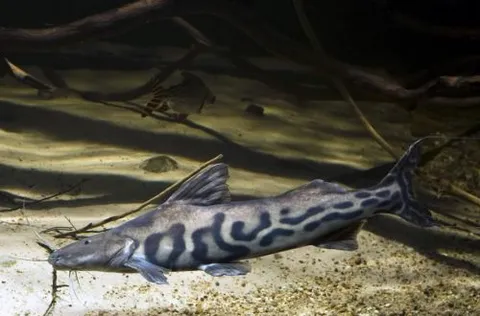
Brachyplatystoma juruense
The Striped Brachyplatystoma, also known as the Golden Zebra Catfish (scientific name Brachyplatystoma juruense), belongs to the family Pimelodidae, which includes flat-headed catfish. This large predatory fish inhabits…
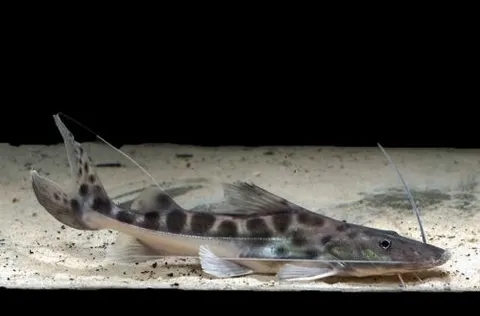
Brachyplatystoma filamentosum
Piraiba, also known by its scientific name Brachyplatystoma filamentosum, belongs to the family Pimelodidae, or long-whiskered catfish (flat-headed catfish). It is one of the largest freshwater fish, rarely encountered…
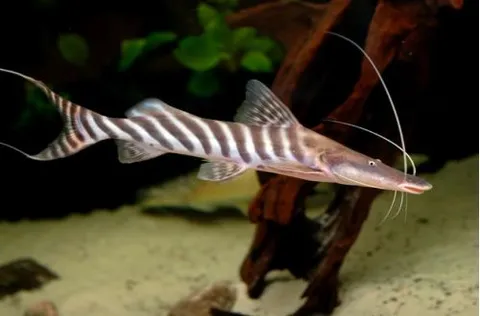
Brachyplatystoma tigrinum
Brachyplatystoma tigrinum, also known as the Tiger Catfish, is a member of the family Pimelodidae (long-whiskered or flat-headed catfish). This large and impressive fish is compatible with other freshwater species,…
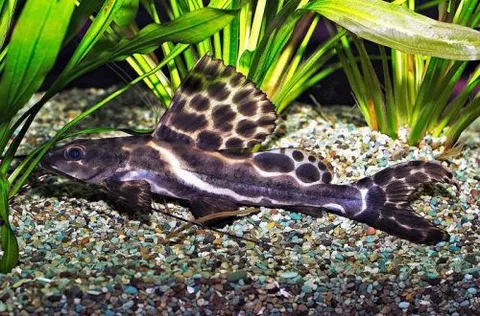
Leiarius pictus
The Sailfin Catfish, also known by its scientific name Leiarius pictus or Marbled Catfish, belongs to the family Pimelodidae. This catfish is distinguished by its beauty and unpretentiousness, but its impressive size…