Temperature24 – 28 °C
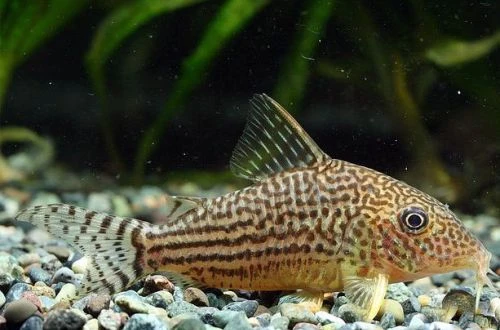
The scientific name Corydoras haraldschultzi indicates that the Mosaic Corydoras, or Harald Schultz's Corydoras, belongs to the family Callichthyidae. The catfish received one of its names thanks to the Brazilian fish exporter Harald Schultz, who made this species popular in aquaristics. This species originates from the Guaporé River basin (Portuguese: Rio Guaporé), located in the Amazon. The river flows through both Brazil and Bolivia, forming a natural border between these countries in certain sections. It inhabits small tributaries of larger rivers, as well as streams, backwaters, and small lakes that form when forest areas are flooded. The aquatic environment in these places is characterized by a high content of dissolved tannins, which gives it a characteristic rich brown hue.
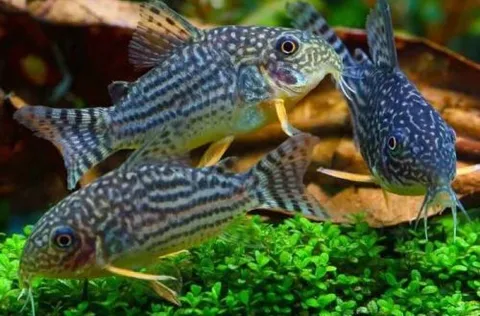
Adults can reach approximately 8 cm in length. The body pattern is formed by numerous dark speckles, many of which merge, creating an intricate ornament and forming irregular stripes. The main body color has a slight pinkish tint, most noticeable in the abdominal area. Sexual dimorphism in this species is weakly expressed; males are almost indistinguishable from females, except that females may be slightly larger.
The Mosaic Corydoras inhabits South America, primarily in the Guaporé River basin, which flows through Brazil and Bolivia. In nature, it lives in slow-flowing tributaries, streams, flooded forest areas, and small floodplain bodies of water. The water in these biotopes is often saturated with tannins, which gives it a characteristic brown hue.
A peaceful and schooling fish, primarily active in the lower water layers. For comfortable well-being and to reduce stress levels, a group of 4–6 or more individuals should be kept. It coexists well with other non-aggressive fish species that are suitable in size and keeping conditions.
For keeping a school, an aquarium of at least 100 liters is recommended. Soft sand is essential as a substrate, as sharp particles can damage the fish's sensitive barbels. The decor should include live plants, driftwood, and smooth stones to create hiding places. Lighting is preferably subdued or moderate. Quality filtration with a weak current and regular partial water changes are necessary.
An omnivorous fish, feeding in nature on worms, small crustaceans, insects, and plant detritus. In the aquarium, it accepts any specialized sinking foods for bottom-dwelling fish. The diet should be varied with high-quality dry, frozen, or live foods, such as bloodworms or Artemia.
Reproduction occurs by spawning. In aquarium conditions, the process is considered challenging. Spawning is often stimulated by imitating natural changes in water parameters, such as a drop in temperature and the addition of fresh, soft water. Eggs are laid among dense vegetation or on cleaned surfaces; the fish do not exhibit parental care for their offspring.
The species is sensitive to water purity and substrate quality. Under poor keeping conditions, damage to the barbels and the development of bacterial infections are possible. Prevention includes maintaining stable water parameters, using a soft substrate, and regular siphoning of the bottom to prevent the accumulation of organic waste.
When purchasing, choose active fish without visible fin damage, sores, or spots on the body. It is important to ensure that the individuals have intact barbels, as their absence is a sign of improper keeping. Healthy fish should show interest in searching for food on the aquarium bottom.
The essentials: size, tank volume, water parameters and care
An adult reaches 6–8 cm in length. Plan the tank around the maximum size: the fish quickly outgrows a cramped setup.
The recommended volume is 100 L. A smaller tank speeds up nitrate build-up and raises stress levels.
Temperature 24–28 °C, pH 5.5–7.5, hardness 2–10 dGH. Stability matters more than exact values: sudden swings are harder on the fish than a small deviation from the ideal.
Around 5 years when kept properly. Lifespan depends directly on tank volume, water quality and a varied diet.
Temperament: peaceful (regular). Keep this in mind when choosing tank mates.
Recommended setup: small group (5–6 individuals). Ignoring this is a common cause of stress and disease.
Diet type: sinking (any). Feed small portions that are finished within a couple of minutes — overfeeding does more harm than underfeeding.
The scientific name of the species is Corydoras haraldschultzi, family Armored Catfish (Callichthyidae).
The water suits 197 of 208 plants in the catalogue — the easiest ones are shown first.
Afzelius's AnubiasAnacharisAnubiasBrazilian PennywortDwarf CloverDwarf CloverDwarf HygrophilaDwarf SagittariaDwarf ValGuppy GrassHornwortJava FernJava MossMoneywortMud SwordNair's LagenandraNarrow Leaf AnacharisNarrow-leaf CloverStringy MossSüsswassertangTaiwan MossTape GrassTemple PlantUssuri Watermilfoil
Matched by family, categories and overlapping keeping conditions
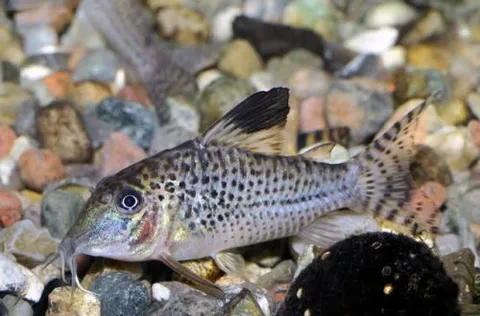
Corydoras acutus
Corydoras acutus, also known as the Black-spotted Corydoras, belongs to the family Callichthyidae (Armored Catfishes) and bears the scientific name Corydoras acutus. Both of its names accurately reflect its…
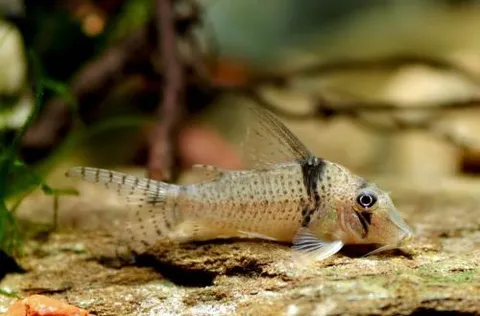
Corydoras pastazensis
The Pastaza Corydoras, also known as the Pastaza Cory catfish, bears the scientific name Corydoras pastazensis and belongs to the family Callichthyidae (Armored or Callichthid catfishes). This fish was named after the…
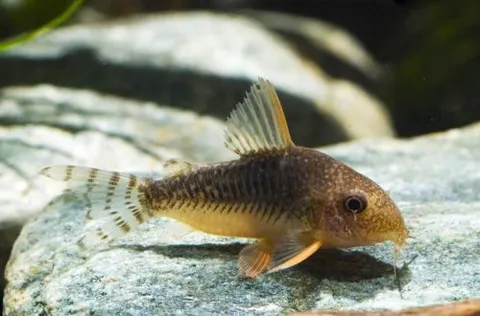
Corydoras gossei
The scientific name Corydoras gossei belongs to the family Callichthyidae (Armored Catfishes), and this species is known as Gosse's Corydoras or Gosse's Cory. The fish was named in honour of Dr J. P. Gosse, who…
Corydoras sterbai
Sterba's Corydoras, scientifically known as Corydoras sterbai, belongs to the family Callichthyidae, also called Armored or Callichthid Catfish. This fish originates from South America, specifically found in the Guaporé…