Temperature21 – 28 °C
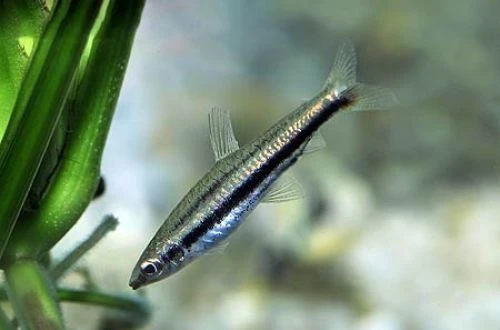
Nannostomus marilynae, known by its scientific name, belongs to the family Lebiasinidae. It was named in honour of Marilyn Sohner Weitzman, the wife of the scientist who described this species. In aquaristics, these fish are quite rare among hobbyists, which is explained by their modest coloration and certain difficulties in breeding.
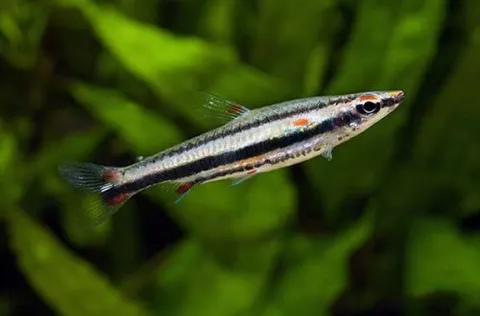
Adults can exceed 3 cm in length. Sexual dimorphism in these fish is weakly expressed; males and females have minor differences that are difficult to notice with the naked eye. The body coloration varies from gray to silvery, with a thin dark stripe running from head to tail. The fins and caudal part remain translucent.
The natural habitat of this species is in South America, in the upper reaches of the Rio Negro river, which flows through the northern part of Amazonas state in Brazil. They prefer to settle in small tributaries, slow-flowing streams, as well as in backwaters and marshy areas along the banks. Places with abundant aquatic vegetation and numerous submerged snags and tree roots, which create shelters, are particularly attractive to them.
These fish are peaceful and calm, but due to their small size, they cannot successfully compete with larger and more active species, so cohabitation with them is undesirable. Nannostomus marilynae get along well with other species of similar size that prefer to inhabit the middle or bottom layers of the aquarium. Rasboras, small Tetras, and similar fish make excellent tankmates. For their well-being, it is recommended to keep them in a school of at least 10 individuals. With fewer numbers, these Nannostomus may exhibit excessive shyness.
For the comfortable keeping of a school of 10 Nannostomus marilynae, an aquarium of at least 40–50 liters is recommended. The aquascape should include areas with dense aquatic vegetation and use a dark substrate. Floating plants, as well as driftwood and a layer of dried leaves on the bottom, will create a more natural environment. Leaves not only serve a decorative function but also contribute to changes in water chemistry, bringing it closer to the fish's natural habitat conditions, by releasing tannins as they decompose. Maintaining stable water parameters within the acceptable range of hydrochemical values and temperatures is a key condition for the long-term and successful keeping of Nannostomus marilynae. This is achieved not only by installing the necessary equipment but also by regular aquarium maintenance, including partial water changes and the removal of food remnants and other organic waste.
In nature, this species is omnivorous, feeding on small invertebrates and zooplankton. In aquarium conditions, the fish accept most types of commercially available foods. To maintain vibrant coloration and health, it is recommended to include high-quality dry foods in their diet, supplemented with small live or frozen foods such as Artemia or insect larvae. Feeding should be done in small portions several times a day, considering the fish's small mouth size.
Breeding Nannostomus marilynae is possible in a home aquarium, although it involves certain difficulties. The main problems include the tendency of adult fish to eat their own fry, as well as difficulties in feeding very small fry. In an artificial environment, there is no pronounced breeding season. In a large group consisting of dozens of individuals, fry can appear quite frequently, as females spawn at different times. During spawning, females scatter their eggs among plant thickets, after which they show no parental care. As mentioned, given the opportunity, the fish may eat the eggs or newly hatched fry. To preserve the offspring, it is recommended to transfer them or the unhatched eggs to a separate aquarium with similar water parameters. Fry should be fed specialized powdered foods, suspensions, and, if possible, infusoria.
Health problems in these fish arise only in the presence of injuries or keeping in unsuitable conditions, which leads to a weakening of the immune system and the subsequent occurrence of various diseases. At the first signs of illness, it is necessary first to check the water parameters for exceeding permissible values or the presence of toxic substances (such as nitrites, nitrates, ammonia). If deviations are found, all indicators should be normalized, and then treatment should begin.
When selecting individuals, attention should be paid to their activity and the integrity of their skin. Healthy fish stay in a school, have clean fins without signs of damage, white patches, or ulcers. Avoid purchasing fish that appear emaciated, have sunken bellies, or show signs of apathy, constantly hiding in the corner of the aquarium. It is advisable to acquire a group of 10 or more individuals at once, as Nannostomus become timid and prone to stress when kept alone or in small numbers.
The essentials: size, tank volume, water parameters and care
An adult reaches 3 cm in length. Plan the tank around the maximum size: the fish quickly outgrows a cramped setup.
The recommended volume is 54 L. A smaller tank speeds up nitrate build-up and raises stress levels.
Temperature 21–28 °C, pH 4–6.5, hardness 1–9 dGH. Stability matters more than exact values: sudden swings are harder on the fish than a small deviation from the ideal.
Around 4 years when kept properly. Lifespan depends directly on tank volume, water quality and a varied diet.
Temperament: peaceful (regular). Keep this in mind when choosing tank mates.
Recommended setup: large group (10+ individuals). Ignoring this is a common cause of stress and disease.
Diet type: any (universal). Feed small portions that are finished within a couple of minutes — overfeeding does more harm than underfeeding.
The scientific name of the species is Nannostomus marilynae, family Lebiasinidae.
The water suits 197 of 208 plants in the catalogue — the easiest ones are shown first.
Afzelius's AnubiasAnacharisAnubiasBrazilian PennywortDwarf CloverDwarf CloverDwarf HygrophilaDwarf SagittariaDwarf ValGuppy GrassHornwortJava FernJava MossMoneywortMud SwordNair's LagenandraNarrow Leaf AnacharisNarrow-leaf CloverStringy MossSüsswassertangTaiwan MossTape GrassTemple PlantUssuri Watermilfoil
Matched by family, categories and overlapping keeping conditions
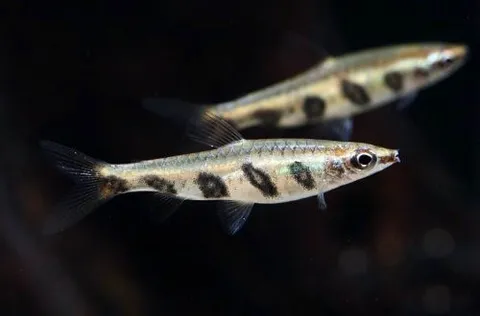
Nannostomus espei
Nannostomus espei, known as the Banded Pencilfish, belongs to the family Lebiasinidae. It is quite popular in the aquarium hobby, but its widespread distribution is hindered by certain difficulties in breeding. However,…
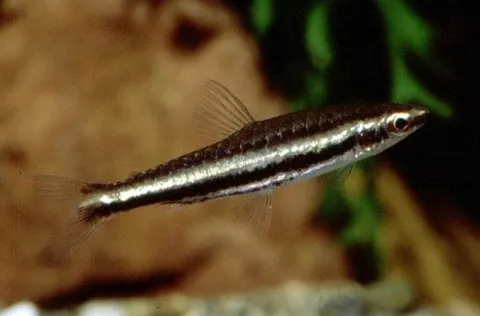
Nannostomus digrammus
Nannostomus digrammus, known as the two-striped nannostomus, is a member of the Lebiasinidae family. It is not frequently encountered by hobbyists in the aquarium trade, usually arriving in shipments with other…
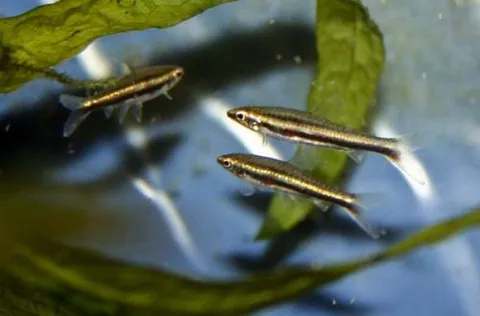
Nannostomus minimus
Nannostomus minimus, with the Latin name Nannostomus minimus, belongs to the family Lebiasinidae. It is quite rare among amateur aquarists. These fish are often found as incidental bycatch in shipments with other…
Nannostomus trifasciatus
The three-lined pencilfish, scientifically known as Nannostomus trifasciatus, is a popular and well-known aquarium fish from the family Lebiasinidae. This species is easy to keep and breed, coexisting well with other…