Temperature20 – 28 °C
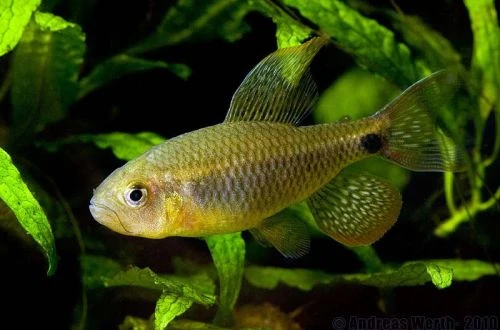
The Ornate Crenuchus, scientifically known as Crenuchus spilurus, is a native member of the family Crenuchidae. This unique and attractive fish stands out among most characins due to its pronounced sexual dimorphism and significantly developed parental instincts, which are atypical for the group. Despite being a miniature predator, this species exhibits a very friendly disposition.
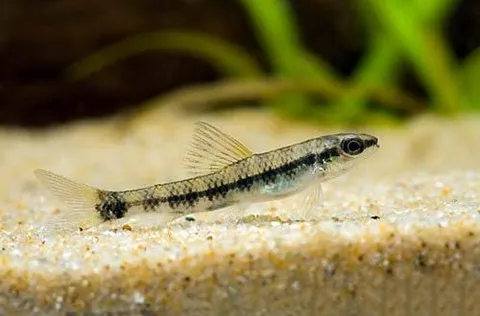
Adult Ornate Crenuchus typically do not exceed 7 cm in length. Males differ from females not only in their larger size but also in their brighter coloration and enlarged dorsal and anal fins. Their primary color palette includes dark shades—greys, browns, and reddish-browns—which can vary depending on their specific region of origin. A characteristic feature is a large black spot located at the base of the caudal fin.
Initially, its natural range was thought to be limited to the Essequibo River basin in Guyana, the largest river in this South American country. However, subsequent research has shown that Crenuchus spilurus is widely distributed throughout the Amazon and Orinoco basins, and also found in numerous coastal rivers of Suriname and French Guiana. These fish inhabit streams, channels, and small rivers flowing through humid tropical forests, and are often found in flooded forest areas during high water.
Although the Ornate Crenuchus is a predator, this species is known for its peaceful and even timid nature. However, the situation changes dramatically when encountering a very small fish, which can quickly become its prey. During the breeding season, their behavior changes: the fish become aggressive, select a territory, and fiercely defend it from potential rivals. In most cases, it is limited to a display of strength, and direct clashes do not occur. Active and larger tank mates, on the contrary, are completely safe; rather, they are capable of intimidating the Ornate Crenuchus. It is recommended to keep this species in a small group—for example, one male and several females—in a species-specific aquarium, or in the company of some callichthyid or loricariid catfishes.
For keeping the Ornate Crenuchus, an aquarium of at least 90 liters is suitable. A sandy substrate is desirable for the setup. Hiding places can be created from natural or artificial driftwood, as well as fragments of tree branches. Lighting should be subdued, and shade-loving, undemanding aquatic plants, ferns, or mosses should be chosen accordingly. Floating vegetation also helps create additional shading in the aquarium. In their natural habitat, the riverbeds and streams where the Ornate Crenuchus lives are often covered with fallen leaves and branches of shrubs and trees. To simulate such conditions, deciduous leaves or cones can be placed on the aquarium bottom. As they decompose, the water acquires a characteristic light brown tint. It is important to note that leaves should be pre-dried and soaked for several days until they sink before being placed in the aquarium. They need to be replaced weekly. Water parameters for these fish require acidic pH values and very low carbonate hardness (dGH), while an acceptable temperature range is between 20–28°C. Regularly clean the substrate of organic debris, including uneaten food and excrement, and perform weekly 15–20% water changes with fresh water.
This species is carnivorous, and in its natural environment, the Ornate Crenuchus feeds on small invertebrates and various zooplankton. In aquarium conditions, it is recommended to offer them live or frozen foods, such as Artemia, Daphnia, bloodworms, Moina, or grindal worms. It should be noted that if given the opportunity, these fish can also eat small fish.
Spawning in Ornate Crenuchus occurs in hiding places, such as caves or accumulations of fallen leaves, with temporary pairs forming during the breeding season. The male takes on the care of the eggs and guards them until the fry hatch. Breeding is possible in a community tank, but only if no other fish species are present. Under favorable conditions, the male selects a specific territory, at the center of which is a hiding place—this could be a pile of leaves or a decorative cave (for example, in the form of a sunken ship or castle), where he persistently invites the female. If a cave is used, the eggs are attached to its inner arch. After spawning, the male remains to protect the future offspring, while the female leaves the clutch and no longer shows interest in it. Fry appear after 36–48 hours, and within a week, they begin to swim freely in search of food. From this point, the male's parental instincts gradually fade. The fry should be moved to a separate tank, filled with water from the main aquarium and set up according to the species' keeping requirements. An important point: for the filtration system, it is advisable to use simple sponge air-lift or undergravel filters to prevent accidental suction of the fry. Feeding should be done with specialized micro-foods.
Most health problems in the Ornate Crenuchus are usually associated with unsuitable keeping conditions and insufficient or unbalanced nutrition. At the first signs of any disease, it is primarily necessary to check the condition and quality of the water, correct the parameters to normal if necessary, and only then proceed with treatment.
When purchasing, choose active specimens with clean fins and no visible damage or spots on the body. Since many specimens come from the wild, it is important to ask the seller if the fish are adapted to prepared foods, as wild individuals often refuse dry mixes. Avoid buying fish from aquariums with signs of disease in other inhabitants or with a large number of dead individuals in the system. A healthy Crenuchus should have clear eyes and natural coloration appropriate for the species.
The essentials: size, tank volume, water parameters and care
An adult reaches 7 cm in length. Plan the tank around the maximum size: the fish quickly outgrows a cramped setup.
The recommended volume is 90 L. A smaller tank speeds up nitrate build-up and raises stress levels.
Temperature 20–28 °C, pH 4–6.5, hardness 1–5 dGH. Stability matters more than exact values: sudden swings are harder on the fish than a small deviation from the ideal.
Around 4 years when kept properly. Lifespan depends directly on tank volume, water quality and a varied diet.
Temperament: predator, but semi-peaceful (gets along with large ones). This is a predatory species — any fish small enough to fit in its mouth will eventually be eaten.
Recommended setup: harem (1 male and several females). Ignoring this is a common cause of stress and disease.
Diet type: meat / protein (live, frozen, fresh). Feed small portions that are finished within a couple of minutes — overfeeding does more harm than underfeeding.
The scientific name of the species is Crenuchus spilurus, family Crenuchidae.
The water suits 197 of 208 plants in the catalogue — the easiest ones are shown first.
Afzelius's AnubiasAnacharisAnubiasBrazilian PennywortDwarf CloverDwarf CloverDwarf HygrophilaDwarf SagittariaDwarf ValGuppy GrassHornwortJava FernJava MossMoneywortMud SwordNair's LagenandraNarrow Leaf AnacharisNarrow-leaf CloverStringy MossSüsswassertangTaiwan MossTape GrassTemple PlantUssuri Watermilfoil
Matched by family, categories and overlapping keeping conditions
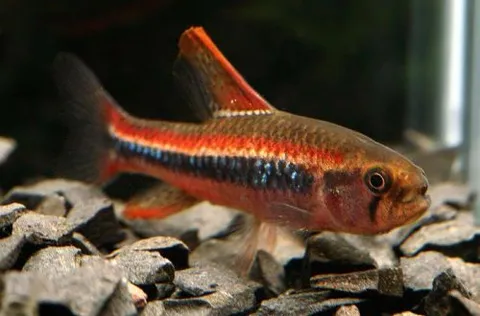
Poecilocharax weitzmani
Poecilocharax weitzmani, also known as the Black Morpho Tetra or Weitzman's Pencilfish, belongs to the family Crenuchidae. It is rarely found in home aquariums due to its high level of care difficulty. This species is…
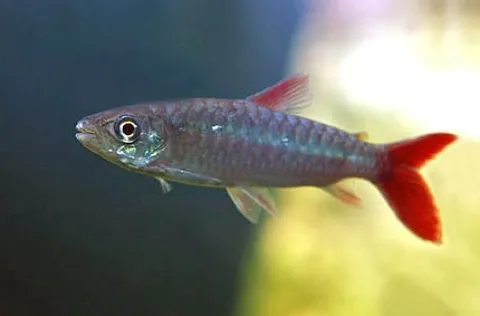
Chalceus macrolepidotus
The Red-tailed Chalceus, or Chalceus macrolepidotus by its scientific name, belongs to the family Chalceidae. This rather large predatory species, while not a true aggressor, will not miss an opportunity to snack on…
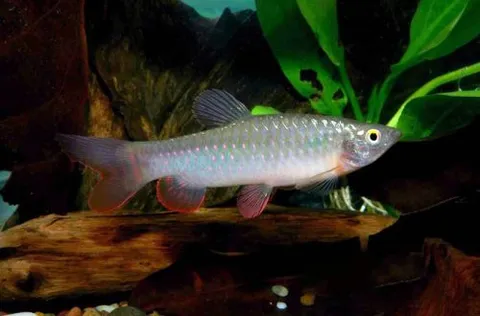
Copeina guttata
The Trout Copeina, scientifically known as Copeina guttata, is a member of the Lebiasinidae family. This fish is not particularly suitable for inexperienced aquarists, as it requires careful attention to water quality…
Characidium fasciatum
The Characidium fasciatum, scientifically known as Characidium fasciatum, is a member of the family Crenuchidae. Its modest coloration has led to its low popularity among aquarium enthusiasts. Nevertheless, this species…