Temperature16 – 28 °C
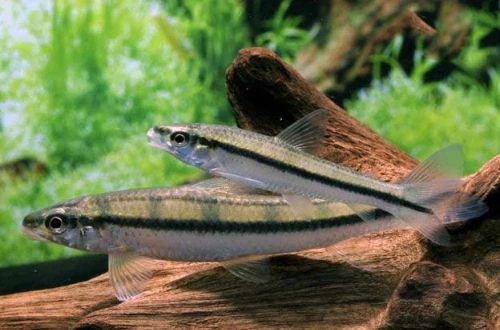
Apareiodon affinis, formerly known as Parodon affinis, belongs to the family Parodontidae and is commonly known as the simple Parodon. These fish originate from South America, specifically from the vast La Plata region – an estuary formed by the confluence of the Uruguay and Paraná rivers. This estuary extends 320 km to the Atlantic Ocean, and the city of Buenos Aires is located on its banks.
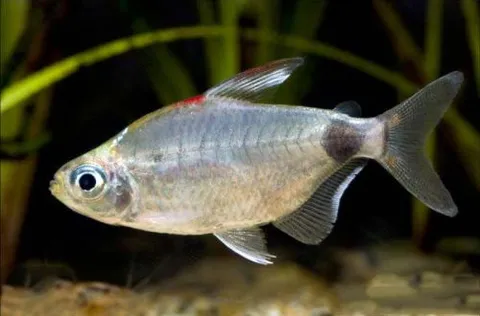
Adults of this species typically reach 8–14 cm in length; specimens of up to 18 cm have been recorded in the wild. The appearance of these fish is quite subdued: they are colored in gray tones with a silvery belly and have a distinct black stripe running along the body. From an aquaristic perspective, their coloration is not striking.
The species inhabits the La Plata River basin, including areas of southern Brazil, Paraguay, and northern Argentina. In nature, it is found in both stagnant waters and fast-flowing rivers. The fish prefer to stay in the bottom layers, using the special structure of their pectoral fins to attach themselves to the substrate. In their biotopes, they often frequent areas with abundant aquatic macrophytes and a rocky or sandy bottom, where they scrape off algal growth.
These active and mobile fish exhibit social behavior, preferring to live in schools of 5–6 individuals. They get along well with other non-aggressive species of comparable size.
For a small school of Parodon affinis, an aquarium volume of 150 to 200 liters is optimal. The setup should ideally include both open areas for free swimming and secluded spots, created, for example, from natural driftwood and dense plant thickets. Keeping these fish is not particularly difficult. Originating from subtropical regions, they are well adapted to a wide range of temperatures (16–28°C), which allows them to be kept even in aquariums without additional heating. However, it is important to avoid sudden temperature fluctuations. Water hydrochemical parameters are also not strictly critical. The main requirement is to maintain water purity and oxygen saturation. A productive filtration system will successfully solve this problem, provided regular aquarium maintenance, including partial water changes and cleaning the substrate from organic deposits.
The diet of these fish can consist of various popular dry foods with a high content of plant components. In addition, they readily feed on algae, which often forms on the surface of driftwood and other decorative elements.
In natural conditions, reproduction occurs through external fertilization without parental care for eggs or offspring. The species is not migratory. Scientific data indicate a complex sex determination system that can vary depending on the population. In aquarium conditions, breeding this species is difficult and requires specific conditions that mimic seasonal changes in tropical rivers.
No specific species-specific diseases have been recorded for this member of the family. Like other characiforms, the fish are sensitive to water quality and dissolved oxygen levels. The main risks are associated with improper keeping conditions: accumulation of organic waste, sharp fluctuations in pH or hardness parameters. Prevention involves regular water changes, effective filtration, and maintaining a stable hydrochemical regime.
When purchasing, pay attention to the fish's activity and the integrity of its skin. A healthy specimen should show interest in foraging for food on the bottom and rocks, have no visible fin damage, ulcers, or whitish patches on the body. It is important to ensure there are no signs of emaciation, as fish of this family require a diet based on plant components. Avoid purchasing individuals that appear lethargic or have an unnaturally bloated belly.
The essentials: size, tank volume, water parameters and care
An adult reaches 8–14 cm in length. Plan the tank around the maximum size: the fish quickly outgrows a cramped setup.
The recommended volume is 150 L. A smaller tank speeds up nitrate build-up and raises stress levels.
Temperature 16–28 °C, pH 6–7.2, hardness 4–15 dGH. Stability matters more than exact values: sudden swings are harder on the fish than a small deviation from the ideal.
Around 8 years when kept properly. Lifespan depends directly on tank volume, water quality and a varied diet.
Temperament: peaceful, active/mobile. Keep this in mind when choosing tank mates.
Recommended setup: small group (5–6 individuals). Ignoring this is a common cause of stress and disease.
Diet type: plant-based (algae, vegetables). Feed small portions that are finished within a couple of minutes — overfeeding does more harm than underfeeding.
The scientific name of the species is Apareiodon affinis, family Parodontidae. It also appears in the literature as: Apareiodon paraguayensis, Parodon affinis, Parodon paraguayensis.
The water suits 197 of 208 plants in the catalogue — the easiest ones are shown first.
Afzelius's AnubiasAnacharisAnubiasBrazilian PennywortDwarf CloverDwarf CloverDwarf HygrophilaDwarf SagittariaDwarf ValGuppy GrassHornwortJava FernJava MossMoneywortMud SwordNair's LagenandraNarrow Leaf AnacharisNarrow-leaf CloverStringy MossSüsswassertangTaiwan MossTape GrassTemple PlantUssuri Watermilfoil
Matched by family, categories and overlapping keeping conditions
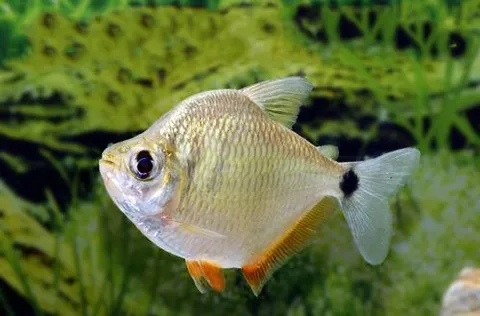
Tetragonopterus argenteus
Tetragonopterus, scientifically known as Tetragonopterus argenteus, belongs to the family Characidae. This fish has a high and robust body, compressed laterally, resembling a rhombus in shape. A characteristic feature…
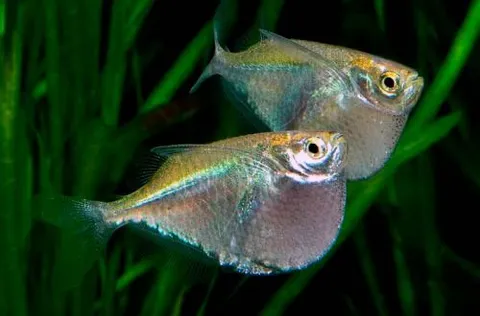
Thoracocharax securis
A member of the family Gasteropelecidae, the Platinum Hatchetfish (scientific name Thoracocharax securis) originates from South America. These fish inhabit the vast Amazon River basin, where they are more commonly found…
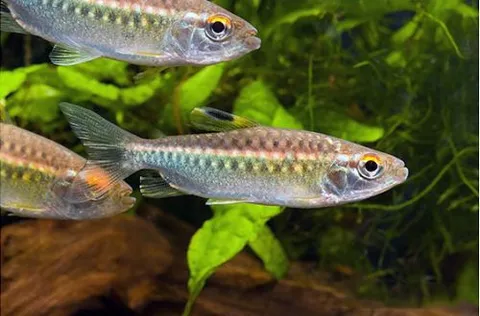
Arnoldichthys spilopterus
The African Red-Eyed Tetra, scientifically known as Arnoldichthys spilopterus, belongs to the family Alestidae (African Tetras). This hardy and undemanding fish, both in terms of care and breeding, is distinguished by…
Bathyaethiops breuseghemi
Breuseghem's Tetra, scientifically known as Bathyaethiops breuseghemi, is a member of the family Alestidae, or African Tetras. Its homeland is the African continent, where it is found in the middle Congo River basin, in…