Temperature23 – 27 °C
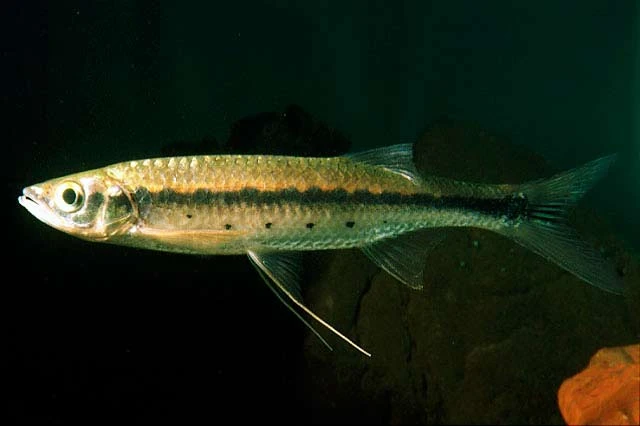
Luciosoma trinema, or the Pike Barb, belongs to the Cyprinidae family. Its natural habitat is Southeast Asia, specifically found in the river systems of the islands of Kalimantan (Borneo) and Sumatra. These fish prefer to live in dense thickets of aquatic vegetation, finding refuge among fallen leaves and snags on the riverbed.
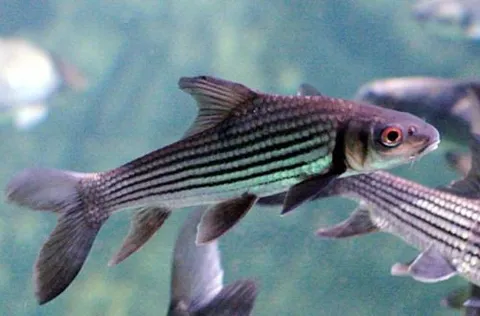
Adults of this fish can reach 25 cm in length. The Pike Barb's body is elongated and appears very streamlined. Its fins are located closer to the caudal part, allowing for powerful and fast bursts during hunting. A distinctive feature is the pelvic fins with elongated, filamentous first rays. The body coloration is notable for a wide black stripe running along the lateral line, and below it, parallel, six spots can be seen on the belly.
The species inhabits waters of Southeast Asia, including the Malay Peninsula, Sumatra, and Borneo. In nature, it is found mainly in river mainstreams and tributaries with slow currents, where it stays in the bottom layers of the water among submerged snags and fallen leaves. It prefers tropical conditions with water temperatures of 24–27°C, pH values of 6.5–7.0, and soft to moderately hard water (5–8 dH).
Despite its predatory nature, this fish is generally quite peaceful. It poses a threat only to very small aquatic fauna, such as Rasboras. The Pike Barb coexists well with other active fish of similar size. However, it should be noted that slow-moving tank mates may lose in competition for food. These fish prefer to stay in a group.
For a group of 2–3 fish, the minimum aquarium size should ideally start from 500 liters. In terms of decor, it is preferable to arrange hiding places at the lower level; these can be, for example, snags or dense thickets of rooted plants. Lighting should be kept subdued. Floating plants can also be used as an additional source of shade. Ideal conditions for keeping this fish are soft, slightly acidic water, which should be rich in tannins. Tannins can enter the water from special suspensions, as well as from natural elements such as snags or leaves of certain trees. Poor water quality is often the result of untimely removal of food residues and excrement. It is important to remember that when maintaining an aquarium, one should not rely entirely on the filtration system. A crucial procedure is also the weekly partial water change with fresh water, accompanied by the removal of accumulated waste.
The Pike Barb is a carnivorous species. In their natural environment, they feed on insects, worms, other invertebrates, and small fish or fry. Before purchasing, it is necessary to ask the supplier what these fish are usually fed. They may already be adapted to alternative foods, such as dry pellets for carnivorous fish, which can be an excellent substitute for live foods.
There is no information on aquarium breeding. This is an active, shoaling fish of the upper water layers; like other cyprinids of similar build it spawns in open water and gives no care to its offspring. A large adult size and the need for a long tank with current make breeding attempts rare.
No diseases that affect only this species have been described. Under suitable conditions — clean water, a balanced diet and calm tank mates — health problems usually do not arise. The most common cause of illness is a decline in conditions: it weakens the immune system, and the fish becomes vulnerable to infections that are always present in an aquarium. At the first signs of trouble — lethargy, wasting, refusal of food or clamped fins — check the basic water parameters and the levels of ammonia, nitrite and nitrate first. Restoring acceptable conditions often lets the fish recover on its own.
When purchasing, select active individuals with clean fins and no skin damage. The fish has an elongated body and a pointed head, which makes it outwardly similar to other members of the genus Luciosoma, so it is important to ensure correct species identification. Given the predatory nature of the species in the wild, it is recommended to observe their behavior in the store to rule out signs of emaciation or stress caused by improper keeping conditions.
The essentials: size, tank volume, water parameters and care
An adult reaches 25 cm in length. Plan the tank around the maximum size: the fish quickly outgrows a cramped setup.
The recommended volume is 500 L. A smaller tank speeds up nitrate build-up and raises stress levels.
Temperature 23–27 °C, pH 6.5–7, hardness 5–8 dGH. Stability matters more than exact values: sudden swings are harder on the fish than a small deviation from the ideal.
Around 7 years when kept properly. Lifespan depends directly on tank volume, water quality and a varied diet.
Temperament: semi-peaceful (dangerous to smaller ones). Not a predatory species, but small fish that fit in its mouth will eventually be eaten.
Recommended setup: both solitary and in group (flexible). Ignoring this is a common cause of stress and disease.
Diet type: meat / protein (live, frozen, fresh). Feed small portions that are finished within a couple of minutes — overfeeding does more harm than underfeeding.
The scientific name of the species is Luciosoma trinema, family Cyprinids (Cyprinidae). It also appears in the literature as: Leuciscus trinema.
The water suits 196 of 208 plants in the catalogue — the easiest ones are shown first.
Afzelius's AnubiasAnacharisAnubiasBrazilian PennywortDwarf CloverDwarf CloverDwarf HygrophilaDwarf SagittariaDwarf ValGuppy GrassHornwortJava FernJava MossMoneywortMud SwordNair's LagenandraNarrow Leaf AnacharisNarrow-leaf CloverStringy MossSüsswassertangTaiwan MossTape GrassTemple PlantUssuri Watermilfoil
Matched by family, categories and overlapping keeping conditions
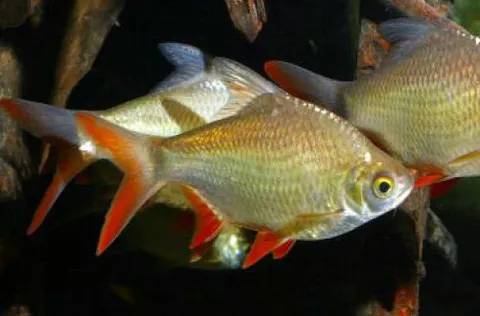
Barbonymus altus
The Red-tailed Barb, scientifically known as Barbonymus altus, is a member of the Cyprinidae family. This hardy fish, capable of reaching 20 cm in length, fits perfectly into large aquariums. It is often chosen for…
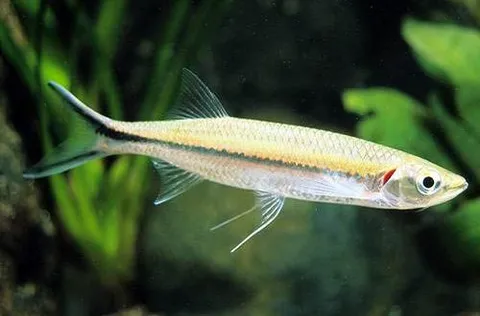
Luciosoma spilopleura
The fish, known scientifically as Luciosoma spilopleura, or the dark-sided luciosoma, belongs to the Carp family (Cyprinidae). The true Luciosoma spilopleura is almost never seen in the hobby: fish sold under this name…
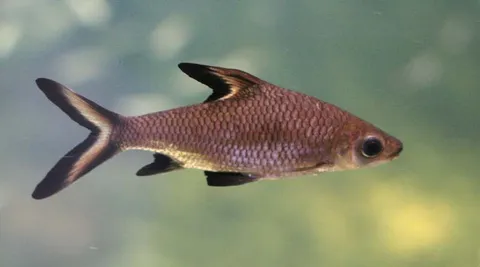
Balantiocheilos melanopterus
The Tricolor Shark, also known as the Bala Shark, bears the scientific name Balantiocheilos melanopterus and belongs to the family Cyprinidae. Its name is due to its external resemblance to predatory sharks, although in…
Probarbus jullieni
Jullien's Golden Carp, known by its scientific name Probarbus jullieni, belongs to the family Cyprinidae, or carps. Its natural habitat includes the extensive river systems of Southeast Asia, including the Mekong and…