Temperature25 – 28 °C
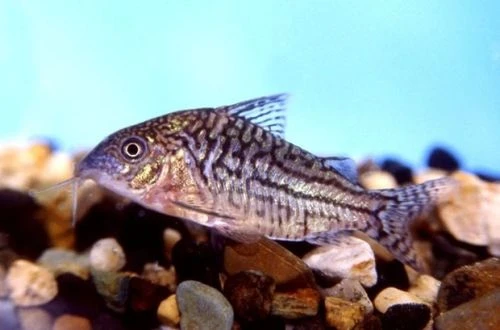
Corydoras pinheiroi, also known as Pinheiro's Corydoras, belongs to the family Callichthyidae (Armored Catfishes). It was named in honor of Mario Pinheiro, a prominent Brazilian patron who actively supported scientific expeditions exploring the flora and fauna of the Amazon.
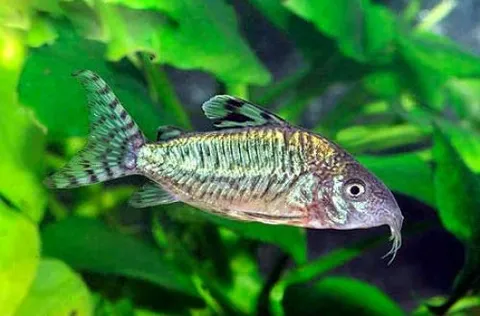
Adults of this species reach up to 6 cm in length. Pinheiro's Corydoras is characterized by the typical stocky corydoras body shape, protected by rows of bony plates, as well as sharp spines in the rays of the pectoral fins. It differs from Corydoras sterbai by having a larger reticulated pattern on its body, although the overall pattern is similar.
This fish originates from South America, specifically from the basins of large eastern tributaries of the Amazon, such as the Madeira and Mamoré rivers. It can be found in the Brazilian states of Rondônia and Amazonas, where it inhabits numerous streams, small rivers, and channels, often venturing into flooded areas of humid tropical forests.
This peaceful and friendly fish will fit perfectly into most freshwater aquariums. It should be kept separately from territorial or aggressive species. In their natural habitat, they live in large schools, so it is recommended to keep a group of at least six individuals. Their activity increases under subdued lighting.
An optimal aquarium for a group of six fish should have a volume of 80 liters. For decoration, a sandy substrate, dense thickets of aquatic plants, and several shelters made of smooth stones and natural driftwood are preferred. To maintain their health, it is necessary to provide a slight current and additional aeration of the water. An important aspect of long-term keeping is preventing the accumulation of organic waste at the bottom of the aquarium. Contaminated substrate can pose a threat to corydoras, causing various diseases. When cleanliness is maintained, Pinheiro's Corydoras is considered an undemanding species. These fish adapt well to various conditions, although they prefer shaded areas with soft, slightly acidic water. Their diet can include most known foods. Live, frozen, fresh, or dry crustaceans and small invertebrates (zooplankton), such as artemia, bloodworms, daphnia, and gammarus, make an excellent choice.
Popular foods will be acceptable for these fish. Live, frozen, fresh, or dry crustaceans and other small invertebrates belonging to zooplankton, such as artemia, bloodworms, daphnia, gammarus, and similar, would be an ideal choice.
This species is not frequently encountered in home aquariums, so reliable information about its breeding in artificial conditions is practically nonexistent. Nevertheless, given its close kinship with other representatives of the genus Corydoras, a very high probability of successful reproduction can be assumed.
Like other members of the family, this species lacks scales, which makes it extremely sensitive to water quality and certain medications. Corydoras are susceptible to bacterial infections if their skin or barbels are damaged, which often happens when using unsuitable substrate with sharp edges. As a preventative measure, it is necessary to maintain substrate cleanliness, regularly perform water changes, and avoid using salt in the aquarium, as it is detrimental to these fish.
When selecting individuals, attention should be paid to the integrity of the fins and the absence of visible sores or redness on the body. A healthy fish should be active, well-fed, and have intact, long barbels, which are essential for finding food. Avoid purchasing fish that appear emaciated, lethargic, or show signs of skin damage, as such individuals often struggle to adapt to new conditions after transport.
The essentials: size, tank volume, water parameters and care
An adult reaches 6 cm in length. Plan the tank around the maximum size: the fish quickly outgrows a cramped setup.
The recommended volume is 80 L. A smaller tank speeds up nitrate build-up and raises stress levels.
Temperature 25–28 °C, pH 6–7.2, hardness 3–15 dGH. Stability matters more than exact values: sudden swings are harder on the fish than a small deviation from the ideal.
Around 4 years when kept properly. Lifespan depends directly on tank volume, water quality and a varied diet.
Temperament: peaceful (regular). Keep this in mind when choosing tank mates.
Recommended setup: small group (5–6 individuals). Ignoring this is a common cause of stress and disease.
Diet type: sinking (any). Feed small portions that are finished within a couple of minutes — overfeeding does more harm than underfeeding.
The scientific name of the species is Corydoras pinheiroi, family Armored Catfish (Callichthyidae).
The water suits 185 of 208 plants in the catalogue — the easiest ones are shown first.
Afzelius's AnubiasAnacharisAnubiasBrazilian PennywortDwarf CloverDwarf CloverDwarf HygrophilaDwarf SagittariaDwarf ValGuppy GrassHornwortJava FernJava MossMoneywortMud SwordNair's LagenandraNarrow Leaf AnacharisNarrow-leaf CloverSüsswassertangTaiwan MossTape GrassTemple PlantUssuri WatermilfoilWater Wisteria
Matched by family, categories and overlapping keeping conditions
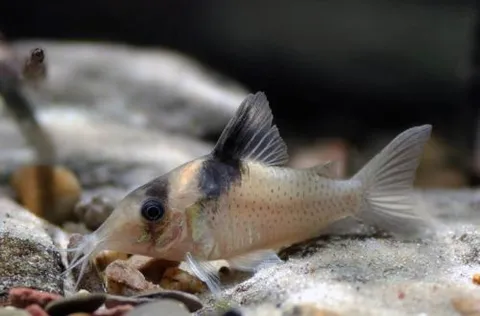
Corydoras amandajanea
Amanda Jane's Corydoras, scientifically known as Corydoras amandajanea, belongs to the family Callichthyidae, which comprises armored or callichthyid catfishes. This species was named in honour of Mrs Amanda Jane Sands;…
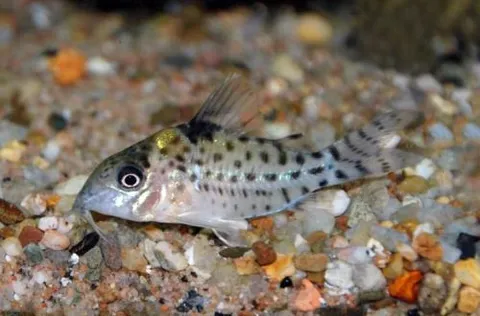
Corydoras ambiacus
The scientific name Corydoras ambiacus is applied to the Corydoras ambiacus catfish, or Cory Ambiacus catfish, which belongs to the family Callichthyidae (Armored or Callichthyid Catfish). Its homeland is South America,…
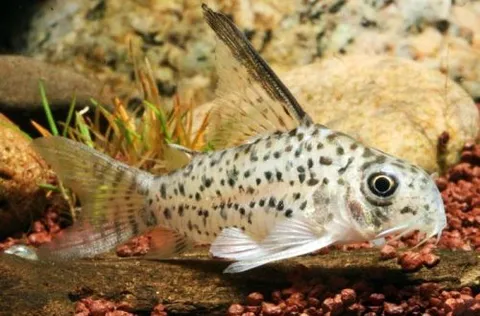
Corydoras armatus
Corydoras armatus, also known as the Armored Corydoras, belongs to the family Callichthyidae (armored catfish), and its scientific name is Corydoras armatus. The word “armatus” itself comes from Latin and translates as…
Corydoras geryi
The Bolivian Corydoras, scientifically known as Corydoras geryi, belongs to the family Callichthyidae (Armored Catfishes). This fish originates from South America, with its natural habitat concentrated in the Mamoré…