Temperature22 – 28 °C
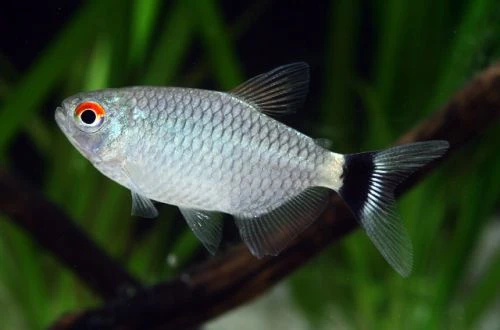
The Filomena, also known as the Red-Eyed Tetra or Moenkhausia Red-Eye (scientific name Bario sanctaefilomenae), belongs to the family Acestrorhamphidae. This species enjoys well-deserved popularity among aquarists worldwide, being one of the most accessible and sought-after. Its unpretentiousness in keeping allows it to adorn any aquarium, making it an ideal choice for beginner enthusiasts.
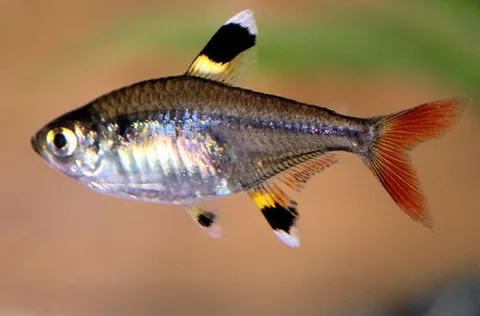
The Filomena has a body structure typical of most Tetras. Adults reach a length of no more than 7 cm. Its coloration is silvery, with rather large scales, and its fins are transparent. The base of the tail is adorned with characteristic yellow and black stripes. The main distinguishing feature, which served as the basis for the species' name, is the bright red pigmentation of the eyeball. No pronounced sexual dimorphism is observed in this species. The only thing that may be noticeable in adult females is a slightly larger abdomen.
This species is widespread in the river systems of South America, in the tropical zone. This fish is found in Brazil, Peru, Paraguay, Bolivia, and other countries. It prefers clean rivers with dense vegetation, located under the canopy of the tropical forest. It is noteworthy that today most of the fish that end up on pet store shelves are supplied from Asia.
These fish are active swimmers, peaceful and friendly. However, their high mobility can create some obstacles for cohabitation with slow-moving species. It is advisable to choose tank mates with a similar temperament. This is a schooling species, so they should be kept in groups of at least 5 individuals.
The fish feel good in a fairly wide range of water parameters, so there is no need for special water preparation. It is enough to simply collect water and let it stand for a couple of days. The essential equipment will include a filter, heater, aerator, and a low-power lighting system. When installing a filter in the aquarium, it is important to direct the outlet nozzles (the openings from which purified water exits) towards the glass. This will prevent the creation of a strong current, to which Red-Eyed Tetras are not accustomed. In the aquarium design, it is recommended to prefer dense thickets of plants located along the walls, thereby leaving a free zone in the central part. Floating plants can provide additional shading. Dark gravel is suitable as a substrate, and several shelters can be created using snags, wooden parts, or artificial elements such as a sunken ship or castle.
All kinds of dry commercial feeds and meat analogs are readily included in the diet of these fish. To maintain optimal nutrition, it is recommended to offer granules or flakes three times a day, in small portions. Once or twice a week, it is desirable to supplement the menu with bloodworms, mosquito larvae, or daphnia. If live foods are not a convenient option, preference should be given to dry formulations enriched with protein components or freeze-dried meat products.
Successful breeding can be ensured in a separate tank of 40 L or more. The water for spawning should be soft and slightly acidic. The equipment will require a simple air-driven filter, a heater, an aerator, and a low-power lighting system. The aquarium design must include plants with small leaves. The more fish in the group, the higher the probability of pair formation and subsequent spawning. If serious breeding is planned, the minimum number of individuals of one species should be at least 12. Adding meat products or live food to the daily diet serves as an excellent stimulus for spawning to begin. The fish form a pair and begin courtship, swimming next to each other. At this moment, the pair should be moved to a separate aquarium, where the female will lay eggs after some time, attaching them to plant leaves. After this, the parents are returned to the main aquarium, and the lighting in the spawning tank must be turned off. It is important to ensure minimal light in the early stages of fry development. Fry appear after 24-36 hours, and by 3-4 days, they begin to swim freely. Initially, they should be fed micro-food or infusoria. After a couple of weeks, the light can be turned on, and, depending on their size, larger food particles can be offered.
These fish are hardy and adapt well to various conditions. Health problems usually arise only with a significant deterioration in water quality.
When purchasing, choose active, mobile individuals with clean scales and undamaged fins. Avoid fish with signs of lethargy, whitish plaque on the body, or an unnaturally bloated abdomen. Since the species is schooling, it is recommended to acquire a group of 6–8 individuals at once, as solitary keeping or too small a group often leads to shyness or aggression towards tank mates.
The essentials: size, tank volume, water parameters and care
An adult reaches 7 cm in length. Plan the tank around the maximum size: the fish quickly outgrows a cramped setup.
The recommended volume is 106 L. A smaller tank speeds up nitrate build-up and raises stress levels.
Temperature 22–28 °C, pH 6–8, hardness 5–19 dGH. Stability matters more than exact values: sudden swings are harder on the fish than a small deviation from the ideal.
Around 5 years when kept properly. Lifespan depends directly on tank volume, water quality and a varied diet.
Temperament: peaceful (regular). Keep this in mind when choosing tank mates.
Recommended setup: schooling (usually from 5–6 individuals and more). Ignoring this is a common cause of stress and disease.
Diet type: any (universal). Feed small portions that are finished within a couple of minutes — overfeeding does more harm than underfeeding.
The scientific name of the species is Bario sanctaefilomenae, family Acestrorhamphidae. It also appears in the literature as: Tetragonopterus sanctae, Tetragonopterus sanctaefilomenae.
The water suits 197 of 208 plants in the catalogue — the easiest ones are shown first.
Afzelius's AnubiasAnacharisAnubiasBrazilian PennywortDwarf CloverDwarf CloverDwarf HygrophilaDwarf SagittariaDwarf ValGuppy GrassHornwortJava FernJava MossMoneywortMud SwordNair's LagenandraNarrow Leaf AnacharisNarrow-leaf CloverStringy MossSüsswassertangTaiwan MossTape GrassTemple PlantUssuri Watermilfoil
Matched by family, categories and overlapping keeping conditions
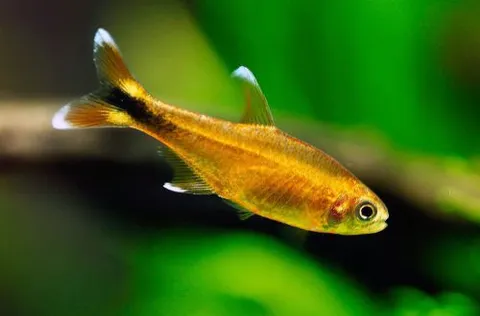
Hasemania nana
The Copper Tetra, also known as Hasemania (scientific name — Hasemania nana), belongs to the family Acestrorhamphidae. This fish is considered an excellent choice for a community tank. Its popularity is due to its…
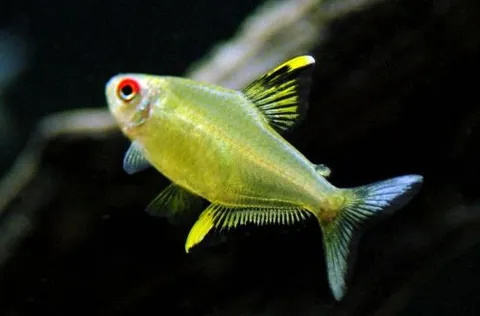
Hyphessobrycon pulchripinnis
The Lemon Tetra, or Hyphessobrycon pulchripinnis, is a representative of the Acestrorhamphidae family. This fish attracts attention with both its appearance and behavior. Its coloration, ranging from yellow to lemon,…
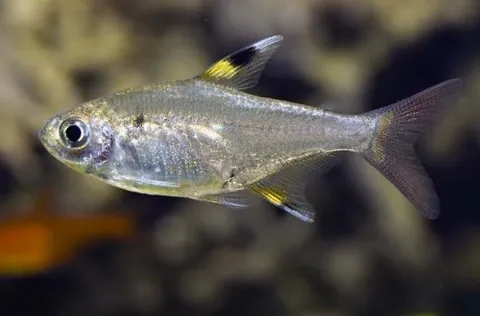
Pristella maxillaris
The Albino Pristella, also known as the Albino X-Ray Tetra, scientifically classified as Pristella maxillaris, belongs to the Acestrorhamphidae family. This species is considered one of the most common and accessible…
Pristella maxillaris
The Pristella Tetra, also known as the X-ray Tetra or Golden Pristella Tetra (scientific name Pristella maxillaris), belongs to the family Acestrorhamphidae. A distinguishing feature of this fish is its remarkable…