Temperature20 – 26 °C
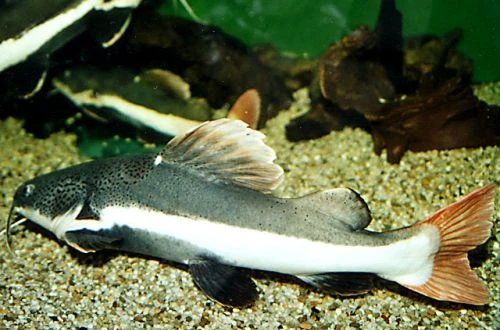
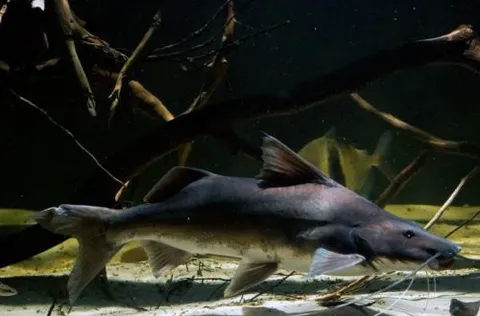
The Redtail Catfish, also known as the Flat-headed Catfish, has the scientific name Phractocephalus hemioliopterus and belongs to the family Pimelodidae. This very large representative of the order Siluriformes is rarely kept in home aquariums. It is distinguished by its unique coloration: a bright red tail and a light belly.
The distribution of this fish covers the river basins of the Amazon and Orinoco, where it prefers to inhabit deep backwaters. The upper part of the catfish's body is dark gray with small dark spots, while the belly remains white. A reddish tint is also observed on the tips of the dorsal and pelvic fins, and its tail has a rich red color. This catfish reaches impressive sizes; adult specimens can grow up to 130 cm in length.
The Redtail Catfish is endemic to South America, inhabiting the basins of the Amazon, Orinoco, and Essequibo rivers. It is found in various biotopes, including large rivers, channels, lagoons, backwaters, and areas of flooded forests. It is a bottom-dwelling fish that prefers slow currents and murky waters with an abundance of snags and submerged vegetation. In nature, this species demonstrates high adaptability to changes in environmental conditions characteristic of the seasonal flooding cycles of tropical forests.
This catfish coexists well with fish of similar size; however, aquarium species of such dimensions are extremely rare. Any fish significantly smaller than it will be considered potential food.
Keeping this species in an aquarium is fraught with great difficulties due to its size and need for significant swimming space, so the minimum aquarium volume should be no less than 10368 liters. The Flat-headed Catfish prefers the bottom layers of water and subdued lighting. An important condition is the presence of shelters, where the fish spends most of its time, especially in adulthood. The catfish will actively defend its refuge from any encroachment by other aquarium inhabitants.
Although the Redtail Catfish is an omnivorous species, its dietary preferences lean towards meaty products, particularly live food such as other fish. Young individuals eagerly consume various dry commercial foods and live food, including worms and insect larvae. As they mature, their diet changes, and the catfish begins to actively hunt small fish. Feeding intervals also increase with age: young fish require daily feeding, while adults eat once or twice a week, which is associated with their carnivorous diet and sedentary lifestyle. They must not be fed mammalian or avian meat: the lipids it contains cannot be properly metabolised by the fish and lead to excess fat deposits and even organ degeneration.
Under amateur aquarium conditions, breeding this species is practically impossible due to the colossal size of the breeders and the need for enormous volumes of water. In nature, sexual maturity occurs when they reach a length of about 75-80 cm. Spawning is timed to the beginning of the rainy season and rising water levels. For commercial purposes in tropical regions, breeding is carried out in large earthen ponds with the use of hormonal stimulation to synchronize the process.
The fish has strong immunity but is extremely sensitive to water quality and keeping conditions. The main causes of diseases are poor filtration, accumulation of organic waste, and overfeeding, leading to obesity and degeneration of internal organs. Typical problems for large catfish include bacterial infections of the skin, fins, and external parasite infestations due to stress or weakened immunity. The use of live foods of questionable origin increases the risk of introducing infections.
When choosing, attention should be paid to the fish's overall activity, clean skin, and the absence of damage to its barbels. It is important to consider that fry are often sold that grow very quickly and require huge aquariums or specialized pools. It is recommended to clarify the keeping conditions at the store and check the individual's appetite. Avoid purchasing fish with signs of emaciation, sunken bellies, or unnatural behavior, as this often indicates adaptation problems or internal diseases.
The essentials: size, tank volume, water parameters and care
An adult reaches 130 cm in length. Plan the tank around the maximum size: the fish quickly outgrows a cramped setup.
The recommended volume is 10368 L. A smaller tank speeds up nitrate build-up and raises stress levels.
Temperature 20–26 °C, pH 6.5–8, hardness 3–12 dGH. Stability matters more than exact values: sudden swings are harder on the fish than a small deviation from the ideal.
Around 15 years when kept properly. Lifespan depends directly on tank volume, water quality and a varied diet.
Temperament: predator, but semi-peaceful (gets along with large ones). This is a predatory species — any fish small enough to fit in its mouth will eventually be eaten.
Recommended setup: solitary. Ignoring this is a common cause of stress and disease.
Diet type: meat / protein (live, frozen, fresh). Feed small portions that are finished within a couple of minutes — overfeeding does more harm than underfeeding.
The scientific name of the species is Phractocephalus hemioliopterus, family Pimelodidae (Long-whiskered Catfishes). It also appears in the literature as: Phractocephalus bicolor, Pimelodus grunniens, Rhamdia grunniens.
The water suits 197 of 208 plants in the catalogue — the easiest ones are shown first.
Afzelius's AnubiasAnacharisAnubiasBrazilian PennywortDwarf CloverDwarf CloverDwarf HygrophilaDwarf SagittariaDwarf ValGuppy GrassHornwortJava FernJava MossMoneywortMud SwordNair's LagenandraNarrow Leaf AnacharisNarrow-leaf CloverStringy MossSüsswassertangTaiwan MossTape GrassTemple PlantUssuri Watermilfoil
Matched by family, categories and overlapping keeping conditions
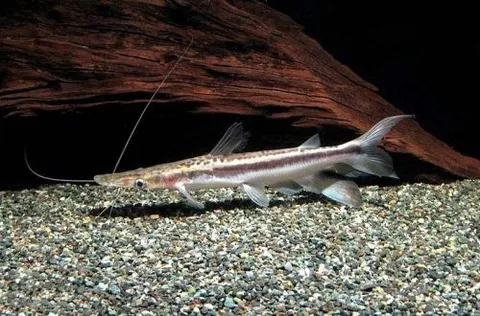
Sorubim lima
Sorubim lima, known as the Paddle-nosed Catfish, is a member of the family Pimelodidae (Long-whiskered Catfishes). This catfish originates from South America, where it is considered one of the continent's most common…
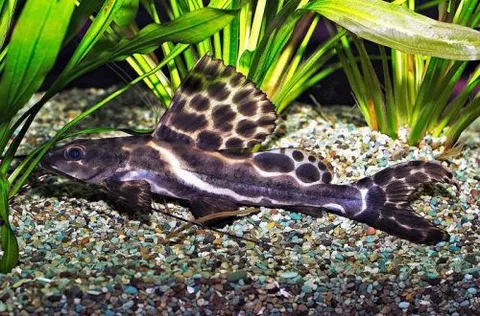
Leiarius pictus
The Sailfin Catfish, also known by its scientific name Leiarius pictus or Marbled Catfish, belongs to the family Pimelodidae. This catfish is distinguished by its beauty and unpretentiousness, but its impressive size…
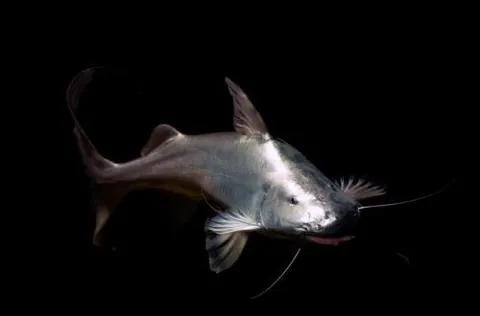
Brachyplatystoma rousseauxii
Dourada, known scientifically as Brachyplatystoma rousseauxii, belongs to the family Pimelodidae, also called pimelodid or flat-headed catfishes. This large predatory fish is highly valued by the local population as an…
Brachyplatystoma vaillantii
The large predatory fish known as the Lau-Lau Catfish, or Brachyplatystoma vaillantii, belongs to the family Pimelodidae, also known as the Pimelodids or flat-headed catfishes. It is virtually impossible to encounter it…