Temperature18 – 25 °C
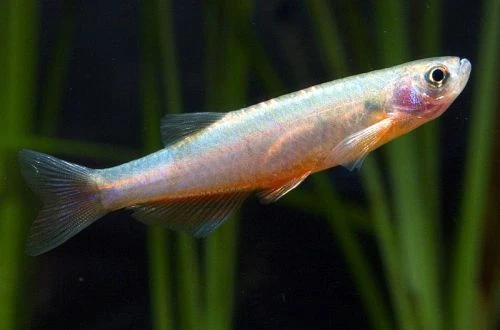
The Rosy Danio, scientifically known as Danio roseus, belongs to the family Cyprinidae (Carps). This fish is a relatively recent addition to the aquarium hobby but has quickly gained popularity. Its care and breeding are straightforward, as it is hardy and coexists well with most other freshwater inhabitants.
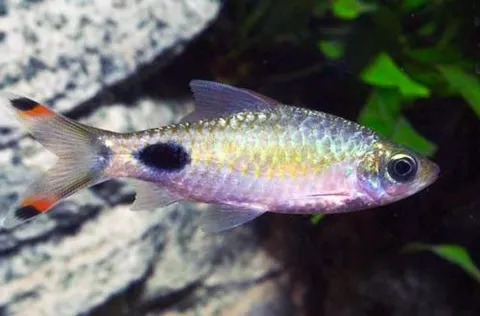
Adults grow to about 5 cm in length. Their bodies are slender and uniformly pink, with the back having a darker shade and a noticeable bluish tint. Sexual dimorphism in these fish is not pronounced; males are difficult to distinguish from females. However, females, especially during spawning, may appear slightly larger.
The natural habitat of this species spans Southeast Asia, including Myanmar, Laos, and northern Thailand. The Rosy Danio inhabits small streams and brooks with moderate currents, often found in the shade of tropical forests. These locations are characterized by slightly turbid waters, rocky substrates, and rather sparse aquatic vegetation.
This is a peaceful and active fish that prefers to live in shoals of 8 to 10 individuals. Keeping them in smaller numbers can lead to the fish becoming timid, lethargic, and their lifespan may noticeably decrease. They are well compatible with other non-aggressive freshwater species of similar size. However, it is worth noting that the high activity of Rosy Danios can sometimes cause discomfort for slower tank mates.
For long-term and comfortable keeping of Rosy Danios, an aquarium of at least 80 liters is recommended. The choice of decorations is not a critical aspect; these fish show excellent well-being even in minimalist pet store conditions. The main condition is to provide sufficient swimming space, so do not overload the aquarium with numerous decorative elements or allow excessive growth of aquatic vegetation. It is important to remember that although conditions in nature can be variable, sharp and significant fluctuations in temperature and hydrochemical water parameters (pH / dGH) are highly undesirable in an artificial environment. Aquarium care includes standard and simple procedures. Among the most important are: weekly partial water changes with fresh water, systematic removal of organic waste (such as uneaten food and metabolic products), regular equipment maintenance, and monitoring and maintaining stable water hardness and alkalinity. It should be noted that these fish are prone to jumping, so an aquarium lid is desirable.
This species does not have special dietary requirements. In aquarium conditions, various dry foods, such as flakes or pellets, can be used. To enrich the daily diet, if possible, it can be supplemented with live or frozen foods, such as bloodworms, daphnia, or artemia.
Breeding this species is not difficult. Spawning can occur quite frequently under favorable conditions. The fish scatter their eggs on the substrate or in dense plant thickets. The incubation period is 24 to 36 hours, depending on the water temperature. A couple of days later, the fry begin to swim independently. It is important to note that the parents do not care for their offspring; moreover, they may eat eggs and newly hatched fry. Due to the threat of being eaten and insufficient nutrition, fry rarely survive to adulthood in a community tank. If you plan to save the brood, it is necessary to prepare a separate aquarium in advance. A 10–20 liter tank filled with water from the main aquarium to ensure identical hydrochemical parameters is sufficient for this. A simple air-driven filter and a heater are installed in it. An additional light source is not required; the light entering from the room will be quite sufficient. The design of such a tank can be anything.
In a balanced aquarium ecosystem that meets the needs of this species, diseases are rare. Most often, ailments are provoked by deteriorating environmental conditions, contact with already sick fish, or mechanical damage. If the fish shows clear signs of illness, medicinal treatment should be applied.
When choosing rosy danios in a store, pay attention to the overall activity and behavior of the individuals: healthy fish should be active, constantly moving, and actively reacting to external stimuli. Avoid specimens with damaged fins, white film on the body, signs of emaciation, or an unnaturally bloated abdomen. Since the species is schooling, it is recommended to purchase a group of 8–10 individuals at once to reduce stress during relocation and adaptation. Keep in mind that hybrids with pearl danios are often found for sale, so it is worth carefully examining the fish for species-specific characteristics if pure lineage is important.
The essentials: size, tank volume, water parameters and care
An adult reaches 5 cm in length. Plan the tank around the maximum size: the fish quickly outgrows a cramped setup.
The recommended volume is 80 L. A smaller tank speeds up nitrate build-up and raises stress levels.
Temperature 18–25 °C, pH 6–7, hardness 2–15 dGH. Stability matters more than exact values: sudden swings are harder on the fish than a small deviation from the ideal.
Around 4 years when kept properly. Lifespan depends directly on tank volume, water quality and a varied diet.
Temperament: peaceful (regular). Keep this in mind when choosing tank mates.
Recommended setup: group (8–10 individuals). Ignoring this is a common cause of stress and disease.
Diet type: any (universal). Feed small portions that are finished within a couple of minutes — overfeeding does more harm than underfeeding.
The scientific name of the species is Danio roseus, family Cyprinids (Cyprinidae).
The water suits 196 of 208 plants in the catalogue — the easiest ones are shown first.
Afzelius's AnubiasAnacharisAnubiasBrazilian PennywortDwarf CloverDwarf CloverDwarf HygrophilaDwarf SagittariaDwarf ValGuppy GrassHornwortJava FernJava MossMoneywortMud SwordNarrow Leaf AnacharisNarrow-leaf CloverStringy MossSüsswassertangTaiwan MossTape GrassTemple PlantUssuri WatermilfoilWater Wisteria
Matched by family, categories and overlapping keeping conditions
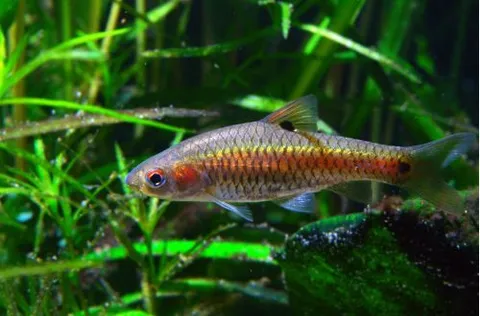
Puntius bimaculatus
Puntius bimaculatus, or the Two-Spot Barb, belongs to the family Cyprinidae. Kept in a school, these fish make a wonderful addition to almost any aquarium. They are undemanding in care, easy to breed, and compatible…
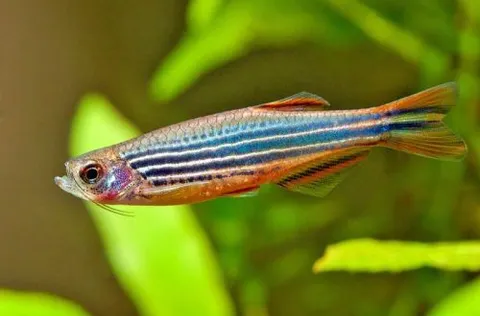
Danio kyathit
The Orange Danio, also known as the Orange-finned Danio (scientific name Danio kyathit), belongs to the Cyprinidae family. This active and beautiful fish can adorn any freshwater aquarium. Its appeal is enhanced by its…
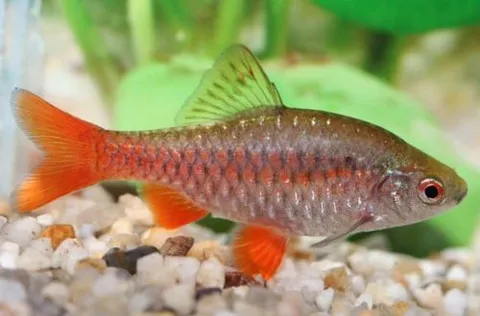
Pethia manipurensis
The fish, known scientifically as Pethia manipurensis, belongs to the Carp family (Cyprinidae) and is called the Manipur Barb. Its only natural habitat is located in the Indian state of Manipur, in Loktak Lake, which is…
Puntius mahecola
The fish known as Mahecola Barb (scientific name Puntius mahecola) is classified within the family Cyprinidae. It is very popular in Asian countries, especially India, but outside of this region, in Europe and America,…