Temperature22 – 26 °C
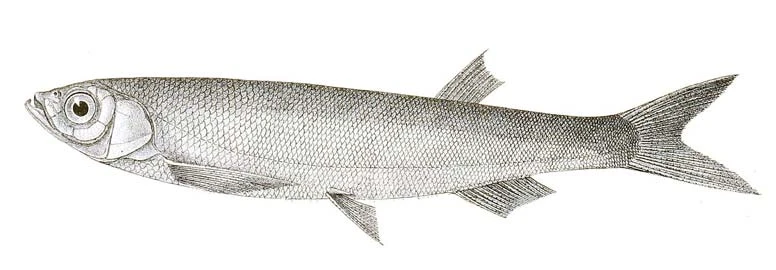
Salmostoma bacaila, known scientifically as Salmostoma bacaila, belongs to the family Cyprinidae (Carps). This fish species originates from South Asia, inhabiting the river systems of Pakistan, India, Bangladesh, and Nepal. Their natural habitat includes standing water bodies and marshy river areas densely covered with aquatic vegetation.
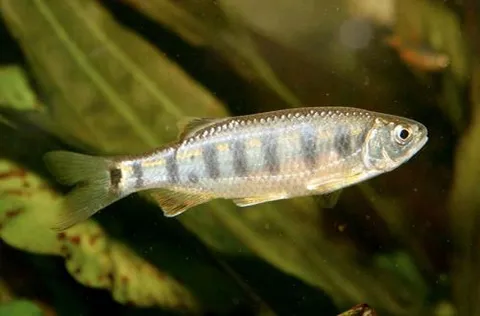
Adults of this fish grow to approximately 18 cm in length. Their body is elongated and quite slender, slightly compressed laterally. The head of Salmostoma bacaila is relatively small. The fins are shifted closer to the caudal part, allowing the fish to achieve high speeds. The coloration is typically uniform silvery, with a characteristic metallic sheen. Depending on the lighting, slight greenish hues may appear. Sexual dimorphism is weakly expressed; external differences between males and females are minimal.
The species is widespread in tropical regions of Asia, including Pakistan, India, Bangladesh, and Nepal. It inhabits rivers, ponds, lakes, and flooded fields. It prefers water bodies with slow currents. In nature, it leads a benthopelagic lifestyle, often staying in the upper water layers.
This fish is characterized by an active and mobile disposition. It is recommended to keep Salmostoma bacaila in a school of 8–10 or more individuals. If the number of fish in the school is smaller (e.g., 2–3), aggression towards other species may occur. Otherwise, Salmostoma bacaila coexists well with most aquarium fish of similar size and temperament.
For keeping a small school of these fish, the optimal aquarium volume starts from 300 liters. In the aquarium design, it is important to provide a combination of open swimming areas and plant thickets that serve as shelters. To ensure the long-term well-being of the fish, maintaining stable water parameters is critically important, which is achieved through regular aquarium maintenance and an efficient filtration system. This species is omnivorous. Salmostoma bacaila prefers to feed at the water surface or in the water column. Food that sinks to the bottom is usually ignored, so it is recommended to use floating foods.
The species is omnivorous. The primary feeding manner is from the water surface or in the water column. Food that settles to the bottom is often ignored. For this reason, it is preferable to offer them floating foods.
In their natural environment, Salmostoma bacaila spawns during the spring-summer period. These fish are potamodromous species, undertaking migrations for reproduction. Reliable information on breeding in aquarium conditions is limited, and specific stimulation protocols have not been described.
No diseases that affect only this species have been described. Under suitable conditions — clean water, a balanced diet and calm tank mates — health problems usually do not arise. The most common cause of illness is a decline in conditions: it weakens the immune system, and the fish becomes vulnerable to infections that are always present in an aquarium. At the first signs of trouble — lethargy, wasting, refusal of food or clamped fins — check the basic water parameters and the levels of ammonia, nitrite and nitrate first. Restoring acceptable conditions often lets the fish recover on its own.
When selecting individuals, attention should be paid to their overall activity and the condition of their skin. Healthy fish should show interest in food, have no visible injuries, spots, or signs of emaciation. Due to their active lifestyle, it is important to ensure the integrity of their fins and the absence of stress signs during transportation.
The essentials: size, tank volume, water parameters and care
An adult reaches 18 cm in length. Plan the tank around the maximum size: the fish quickly outgrows a cramped setup.
The recommended volume is 300 L. A smaller tank speeds up nitrate build-up and raises stress levels.
Temperature 22–26 °C, pH 7–7.8, hardness 4–12 dGH. Stability matters more than exact values: sudden swings are harder on the fish than a small deviation from the ideal.
Around 5 years when kept properly. Lifespan depends directly on tank volume, water quality and a varied diet.
Temperament: semi-peaceful (including aggression during spawning / intraspecific conflicts). Keep this in mind when choosing tank mates.
Recommended setup: group (8–10 individuals). Ignoring this is a common cause of stress and disease.
Diet type: any (universal). Feed small portions that are finished within a couple of minutes — overfeeding does more harm than underfeeding.
The scientific name of the species is Salmostoma bacaila, family Cyprinids (Cyprinidae). It also appears in the literature as: Chela bacaila, Cyprinus bacaila, Cyprinus oblonga.
The water suits 114 of 208 plants in the catalogue — the easiest ones are shown first.
African Onion PlantAfzelius's AnubiasAmazon FrogbitAmazon SwordAnacharisAnubiasArrowhead CryptDwarf CloverDwarf CloverDwarf HygrophilaDwarf SagittariaDwarf ValGuppy GrassHornwortJava MossMoneywortMud SwordNair's LagenandraNarrow Leaf AnacharisNarrow-leaf CloverStringy MossTaiwan MossTape GrassUssuri Watermilfoil
Matched by family, categories and overlapping keeping conditions
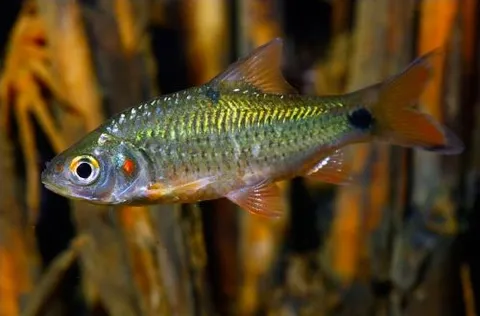
Systomus rubripinnis
The Java Barb, scientifically known as Systomus rubripinnis, is a member of the Cyprinidae family. This rather large fish exhibits remarkable hardiness and relatively low maintenance requirements. It is rarely…
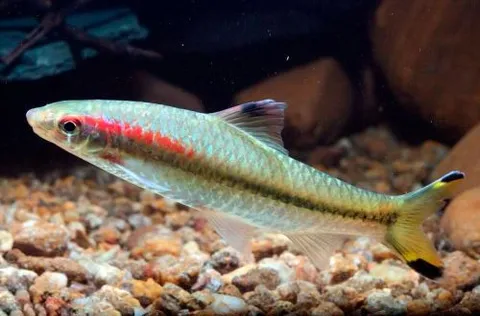
Dawkinsia chalakkudiensis
A representative of the carp family (Cyprinidae), the Chalakkudi Barb, known scientifically as Dawkinsia chalakkudiensis, only appeared in aquaristics in 2001, making it a relatively new species for hobbyists. It…
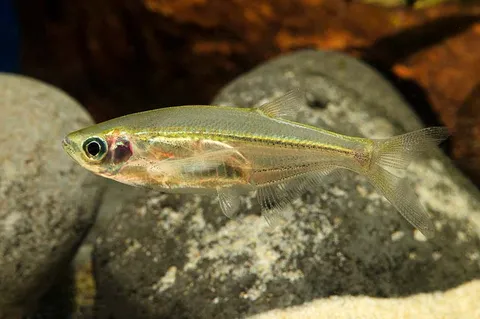
Parachela oxygastroides
Parachela oxygastroides, also known as the glass knifefish barb, is a member of the carp family (Cyprinidae). Its natural range covers areas of Southeast Asia, including Indochina, Thailand, as well as the islands of…
Opsarius dogarsinghi
The fish, known by the scientific name Opsarius dogarsinghi, or Dogarsingh's Baril, belongs to the Carp family (Cyprinidae). It received its name in honour of Sardar Dogar Singh, State Overseer of Manipur, India, who…