Temperature20 – 28 °C
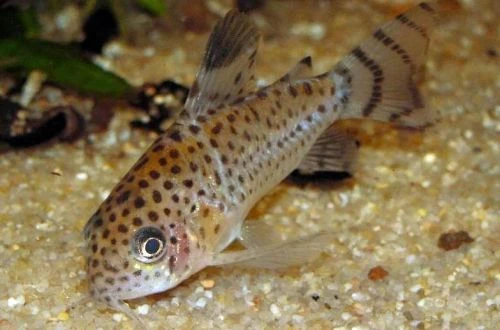
The Santa Cruz Corydoras, scientifically known as Corydoras cruziensis, belongs to the family Callichthyidae (armored catfishes). The fish is named after the Santa Cruz Department in Bolivia (South America), where it was first discovered. The natural distribution of this species is limited to the Bolivian part of the Madeira River basin and possibly includes its tributaries, such as the Mamoré and Beni rivers.
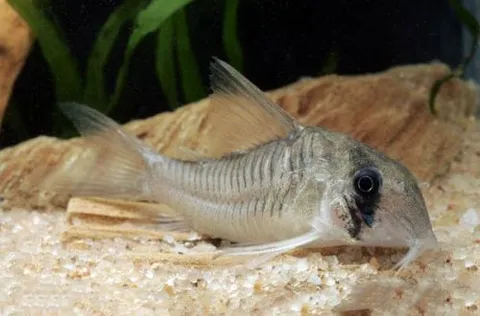
Adults reach 4–5 cm in length. These fish have a dense and compact body, covered with modified scales that form a kind of armor, reminiscent of ancient knights' mail. Their snout is slightly rounded. The body coloration is gray with dark pigmentation, and the fins and tail are adorned with stripes. A characteristic dark mark is visible on the dorsal fin.
The species' range is limited to the Madeira River basin in Bolivia. These catfish inhabit freshwater bodies with soft or fine sandy substrate, which allows them to safely explore the bottom with their sensitive barbels.
A peaceful schooling species that thrives best in groups of 5 or more individuals. Corydoras are primarily bottom-dwelling, actively exploring the substrate for food, and are compatible with most peaceful aquarium fish.
The Santa Cruz Corydoras prefers to spend most of its time in the lower layers of the aquarium, so special attention should be paid to the bottom part when setting it up. This catfish needs a soft sandy substrate and several shelters, which can be snags, dense thickets of aquatic plants, or any other decorative elements, both natural and artificial. The decoration of the upper and middle layers does not play a critically important role. Keeping these fish is not difficult and does not require the purchase of expensive equipment or any specific and laborious procedures. Aquarium maintenance is standard and suitable for most aquarium species. To maintain high water quality (minimal pollution) within acceptable temperature and hydrochemical parameters, the following is required: weekly partial water changes with fresh water, regular removal of organic debris (such as uneaten food and excrement), cleaning of glass and decorative elements from plaque, as well as preventive inspection and maintenance of installed equipment. Regarding feeding: The Santa Cruz Corydoras is not demanding about food; it readily consumes most popular foods – dry, frozen, and live. It is recommended to use sinking foods, as the catfish prefer to feed at the bottom. Behavioral characteristics and compatibility: These fish are known for their peaceful and calm nature. They get along well with fish that do not show aggression. Corydoras also tend to be in groups of their own kind, so when acquiring several individuals, they will form a cohesive school.
An omnivorous species, feeding on small invertebrates and organic detritus in nature. In the aquarium, specialized sinking foods should be used, supplemented with frozen products such as bloodworms or brine shrimp.
Spawning is paired or communal, often stimulated by water changes and temperature shifts. Eggs are laid on hard surfaces, such as broad plant leaves or aquarium glass, after which the parent fish are recommended to be removed to prevent them from eating the offspring.
The species is sensitive to substrate condition: using coarse or sharp substrate leads to barbels damage and subsequent infections. Fish do not tolerate salt in the water and are also susceptible to diseases with poor water quality and accumulation of organic matter.
When purchasing, choose active individuals with intact fins and undamaged barbels. It is important to ensure there are no white spots, ulcers, or signs of emaciation on the body, and to check that the fish exhibits natural exploratory behavior at the bottom.
The essentials: size, tank volume, water parameters and care
An adult reaches 4–5 cm in length. Plan the tank around the maximum size: the fish quickly outgrows a cramped setup.
The recommended volume is 80 L. A smaller tank speeds up nitrate build-up and raises stress levels.
Temperature 20–28 °C, pH 6–8.5, hardness 2–15 dGH. Stability matters more than exact values: sudden swings are harder on the fish than a small deviation from the ideal.
Around 5 years when kept properly. Lifespan depends directly on tank volume, water quality and a varied diet.
Temperament: peaceful (regular). Keep this in mind when choosing tank mates.
Recommended setup: small group (5–6 individuals). Ignoring this is a common cause of stress and disease.
Diet type: sinking (any). Feed small portions that are finished within a couple of minutes — overfeeding does more harm than underfeeding.
The scientific name of the species is Corydoras cruziensis, family Armored Catfish (Callichthyidae).
The water suits 197 of 208 plants in the catalogue — the easiest ones are shown first.
Afzelius's AnubiasAnacharisAnubiasBrazilian PennywortDwarf CloverDwarf CloverDwarf HygrophilaDwarf SagittariaDwarf ValGuppy GrassHornwortJava FernJava MossMoneywortMud SwordNair's LagenandraNarrow Leaf AnacharisNarrow-leaf CloverStringy MossSüsswassertangTaiwan MossTape GrassTemple PlantUssuri Watermilfoil
Matched by family, categories and overlapping keeping conditions
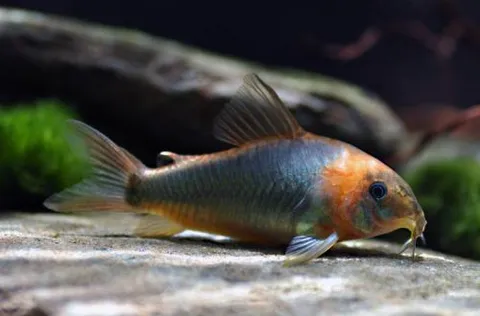
Corydoras eques
The Knight Corydoras, scientifically named Corydoras eques, is a member of the Callichthyidae family, which includes armored or callichthyid catfishes. Its Latin name, eques, translates to "knight" or "horseman,"…
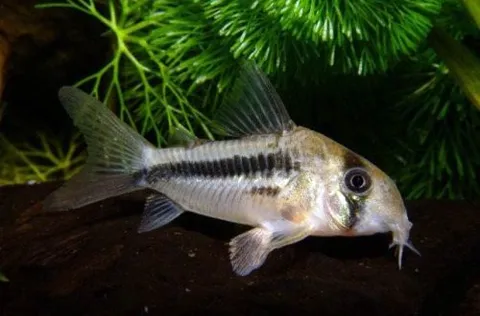
Corydoras axelrodi
Axelrod's Corydoras, also known as the Pink Corydoras (or simply Pink Cory), bears the scientific name Corydoras axelrodi and belongs to the armored catfish family, Callichthyidae. These catfish are native to South…
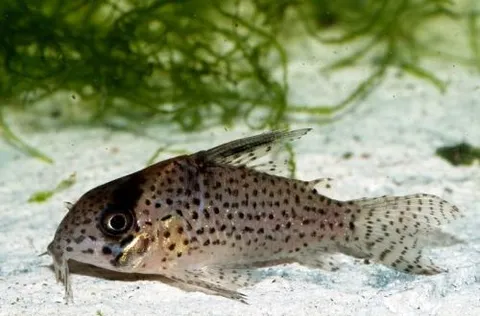
Corydoras kanei
Corydoras kanei is a member of the armored catfish family, Callichthyidae. The fish is named after Kane Grant, the son of the scientist who first discovered and described this species. The unique discovery of this…
Corydoras griseus
The Grey Corydoras, or Corydoras griseus in Latin, belongs to the armored catfish family (Callichthyidae). Its natural habitat is in the northern regions of South America, in the Essequibo River basin in Guyana.