Temperature22 – 28 °C
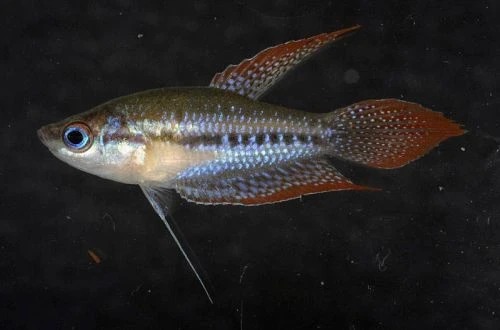
Schaller's Gourami, scientifically known as Trichopsis schalleri, belongs to the family Osphronemidae. The fish is named after Dietrich Schaller, a tropical fish exporter who first introduced this species to the European market. This attractive and vibrant fish is notable not only for its variable character during spawning but also for its unique ability to produce sounds, which it uses to communicate with its kin.
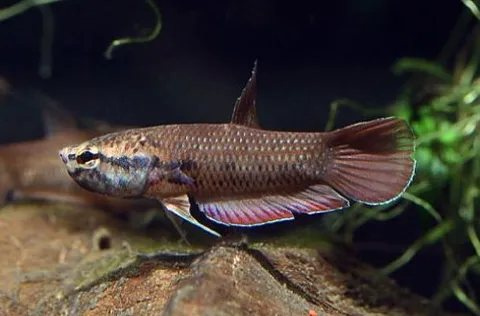
Adults reach 4–5 cm in length. This species is a close relative of the Sparkling Gourami, sharing similar body shape and pattern. The main coloration can vary from blue to yellow hues, depending on the region of origin. Males are usually larger and have elongated red rays at the ends of their fins. Females, however, do not exhibit such brightness.
Schaller's Gourami originates from Southeast Asia, including the lower Mekong River basin, which spans Laos, Thailand, Cambodia, and Vietnam. These fish are widespread, inhabiting primarily slow-moving or stagnant waters such as swamps, river backwaters, canals, and even rice paddies.
This is a peaceful and calm fish, but it should be noted that during spawning periods, males may show intolerance towards rivals. They can be kept either in pairs or in groups, together with other non-aggressive species of comparable size.
For a pair or a small group of these fish, the optimal aquarium volume starts from 50–60 liters. Within the aquarium, it is recommended to create many shaded areas using tall stem plants and clusters of floating vegetation. At the lower level, it is advisable to plant shade-loving plants, mosses, and ferns. For ease of maintenance, artificial plants can also be used. Additional shelters can be created using snags and other decorative elements. Many aquarists place dried leaves of certain trees on the substrate, pre-soaking them so they do not float. These leaves not only enhance the natural look of the setup but also serve as a source of tannins. Their presence helps bring the water chemistry closer to the fish's natural habitat. For this, the aquarium must be equipped with the necessary equipment, primarily filtration and heating systems. Regular maintenance should also be carried out: weekly partial water changes, timely removal of organic waste, and so on.
Trichopsis schalleri is an omnivorous species that readily accepts most common foods in a home aquarium, be they dry, frozen, or live. The latter, live foods, are most preferred and considered the best choice, especially if breeding is planned.
The stimulus for breeding Schaller's Gourami is a high-protein diet consisting of live foods, as well as certain external conditions: soft, slightly acidic water with a temperature close to the upper permissible limit, which is 27–28°C. When the breeding season arrives, the male begins to build a nest. It is created from sticky air bubbles under the surface of floating plants, under a large leaf, or in cavities on the bottom, for example, in cave-like shelters. In a small aquarium, minor skirmishes may occur between males for the most advantageous nest sites. After construction is complete, courtship begins. During mating dances, the fish emit peculiar “purring” sounds. The ability to “talk” using high and low sounds is a characteristic feature of species in the genus Trichopsis, thanks to the special structure of their pectoral fins. During spawning, a clutch is formed, which can contain over a hundred eggs. Both parents remain nearby, guarding the future offspring, with the male being more active, chasing away anyone he considers potentially dangerous. The incubation period lasts approximately 48 hours, after which the hatched fry remain in the nest for another 3–4 days, and then begin to swim freely. From this moment, the parents lose interest in their offspring, and the fry can be transferred to a separate tank.
Maintaining a stable biological system, providing a balanced diet, and eliminating stress factors (e.g., harassment by aggressive tank mates) are the best guarantees for preserving fish health. If the first signs of illness appear, the first thing to pay attention to is precisely these three aspects, as deviations have likely occurred in one of them. As a rule, eliminating the problem leads to self-recovery. However, if the immune system proves to be insufficiently strong, medicinal treatment may be required.
When choosing Schaller's Gourami, first pay attention to the fish's activity and the condition of their skin. Healthy individuals should be active, with clean scales free of whitish plaque, ulcers, or visible parasites. Fins should be spread, without signs of damage or clumping. Avoid purchasing fish with sunken bellies, which may indicate emaciation or internal diseases, as well as individuals that constantly stay at the water surface, unless this is due to fright. Keep in mind that this species is often confused with the closely related Croaking Gourami (Trichopsis vittata) or Sparkling Gourami (Trichopsis pumila). When inspecting them in the store, it is important to ensure correct species identification by the characteristic body pattern and fin shape. Since Schaller's Gourami can be susceptible to infections typical of labyrinth fish imported from Southeast Asia, it is recommended to carefully observe the behavior of the group in the store's aquarium: the fish should show natural curiosity and not exhibit signs of apathy.
The essentials: size, tank volume, water parameters and care
An adult reaches 4–5 cm in length. Plan the tank around the maximum size: the fish quickly outgrows a cramped setup.
The recommended volume is 50 L. A smaller tank speeds up nitrate build-up and raises stress levels.
Temperature 22–28 °C, pH 5–7.5, hardness 2–12 dGH. Stability matters more than exact values: sudden swings are harder on the fish than a small deviation from the ideal.
Around 4 years when kept properly. Lifespan depends directly on tank volume, water quality and a varied diet.
Temperament: peaceful (regular). Keep this in mind when choosing tank mates.
Recommended setup: schooling (usually from 5–6 individuals and more). Ignoring this is a common cause of stress and disease.
Diet type: high protein (predominantly meat). Feed small portions that are finished within a couple of minutes — overfeeding does more harm than underfeeding.
The scientific name of the species is Trichopsis schalleri, family Osphronemidae.
The water suits 198 of 208 plants in the catalogue — the easiest ones are shown first.
Afzelius's AnubiasAnacharisAnubiasBrazilian PennywortDwarf CloverDwarf CloverDwarf HygrophilaDwarf SagittariaDwarf ValGuppy GrassHornwortJava FernJava MossMoneywortMud SwordNair's LagenandraNarrow Leaf AnacharisNarrow-leaf CloverStringy MossSüsswassertangTaiwan MossTape GrassTemple PlantUssuri Watermilfoil
Matched by family, categories and overlapping keeping conditions
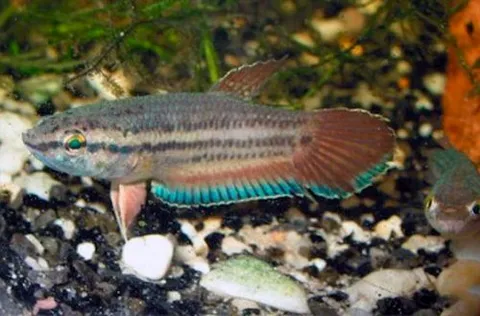
Betta picta
Betta picta, known as the Javanese Betta, belongs to the family Osphronemidae (Labyrinth fish or Gourami). Interestingly, despite its name and classification, this species shows more resemblance to Gouramis than to…
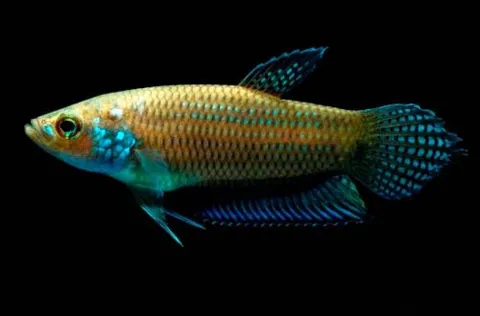
Betta stigmosa
The Stigmosa Betta, officially known as Betta stigmosa, belongs to the family Osphronemidae. It is a calm and undemanding fish, but it is not suited to the ordinary community aquarium: it is kept on its own or with very…
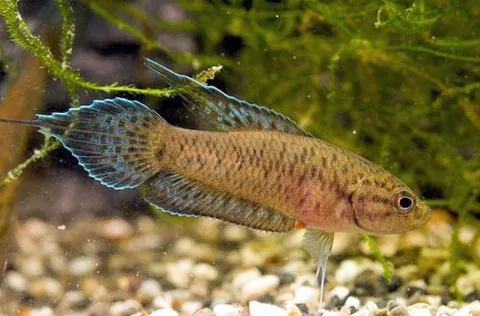
Malpulutta kretseri
Malpulutta kretseri, also known as Kretser's Paradise Fish, bears the scientific name Malpulutta kretseri and belongs to the family Osphronemidae. It was named in honour of the Sri Lankan lawyer De Kretser, who…
Betta falx
Betta falx, or Falx Betta, belongs to the family Osphronemidae. This fish, known by the scientific name Betta falx, is a representative of the fighting fish group, yet its calm disposition distinguishes it from its more…