Temperature23 – 27 °C
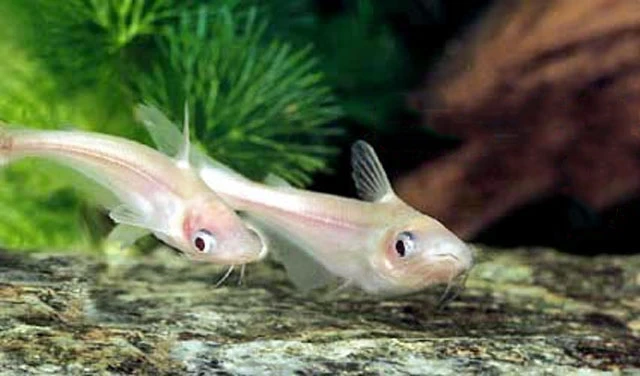
The Striped Schilbe, also known as the Silver Catfish (scientific name Schilbe mystus), belongs to the family Schilbeidae, or Schilbeid Catfishes. In some regions, it is called the African Butter Catfish. In its natural habitat, this fish is valued as an important commercial species, although it is less commonly used as an ornamental fish. Nevertheless, due to its unpretentiousness, omnivorous diet, and calm disposition, this catfish is often kept in aquariums.
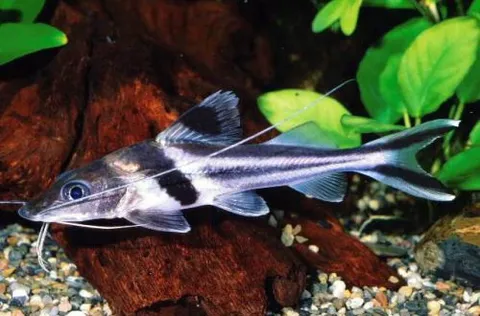
Adults of this species can grow up to 40 cm in length. Young catfish are characterized by a light silvery body coloration. Over time, their coloration darkens, the upper part of the body becomes gray, and a characteristic pattern of contrasting stripes appears along the lateral line. The belly remains light. The fish has a large, high-bodied physique. Its fins are short, with the exception of the anal fin, which extends like a ribbon from the base of the tail to the middle of the body.
This catfish originates from the African continent. It can be found in the Nile River basin, as well as in the water systems of West Africa. It inhabits a variety of biotopes, living in rivers, lakes, and swamps. It prefers areas with stagnant water or slow-moving currents, where abundant aquatic vegetation is present.
This catfish is usually active at night or in the evening. Its greatest activity is observed after the aquarium lights are turned off. It prefers to stay near the bottom and seeks shelter during the day. Being an omnivorous species, it can potentially eat smaller aquarium inhabitants. Otherwise, it is distinguished by a peaceful and calm disposition.
The Striped Schilbe requires a spacious aquarium, with a volume of 400 to 500 liters. Although the decor is not critical, it is important to provide shelters of appropriate size for the fish. These can be decorative elements, large snags, or any other natural or artificial decor. Water parameters such as pH and GH can be within a fairly wide range. A comfortable temperature for keeping them is 23–27°C, with small permissible deviations. Aquarium maintenance is standard: weekly partial water changes with fresh water, removal of accumulated waste, and regular equipment prophylaxis. In its natural environment, this species feeds on almost any food it can swallow, including small fish, insects, shrimp, snails, as well as plant seeds and fallen fruits. In aquarium conditions, its diet can consist of a variety of popular foods: dry, frozen, or live.
In the wild, this species feeds on almost anything it can swallow: from small fish, insects, shrimp, and snails to plant seeds and fallen fruits. In a home aquarium, it can be fed any available food, be it dry, frozen, or live.
In natural conditions, reproduction occurs during the rainy season, often accompanied by upstream migrations. These catfish lay their eggs on plants but do not care for either the clutch or the offspring. Cases of successful breeding of Silver Catfish in home aquariums have not yet been recorded.
The species is highly sensitive to water quality; bacterial infections are possible if keeping conditions are violated. Larvae and juveniles are particularly prone to dropsy, for the prevention of which daily significant water changes and maintaining cleanliness are required. When handling the fish, caution should be exercised: the pectoral fins have sharp venomous rays, stings from which cause severe pain and prolonged tissue swelling.
When selecting specimens, attention should be paid to the cleanliness of the skin and the absence of damage, as any wounds quickly become infected. Healthy fish should be active, have clear eyes, and tightly pressed fins. Avoid specimens with signs of emaciation or an unnatural coating on the body. Given their secretive lifestyle, fish may hide in the store, so it is important to assess their reaction during feeding.
The essentials: size, tank volume, water parameters and care
An adult reaches 40 cm in length. Plan the tank around the maximum size: the fish quickly outgrows a cramped setup.
The recommended volume is 400 L. A smaller tank speeds up nitrate build-up and raises stress levels.
Temperature 23–27 °C, pH 6–8, hardness 5–20 dGH. Stability matters more than exact values: sudden swings are harder on the fish than a small deviation from the ideal.
Around 7 years when kept properly. Lifespan depends directly on tank volume, water quality and a varied diet.
Temperament: semi-peaceful (dangerous to smaller ones). Not a predatory species, but small fish that fit in its mouth will eventually be eaten.
Recommended setup: mixed (solitary / pair / group). Ignoring this is a common cause of stress and disease.
Diet type: any (universal). Feed small portions that are finished within a couple of minutes — overfeeding does more harm than underfeeding.
The scientific name of the species is Schilbe mystus, family Schilbeid Catfishes (Schilbeidae). It also appears in the literature as: Bagrus adansonii, Bagrus depressirostris, Bagrus schilbeides.
The water suits 197 of 208 plants in the catalogue — the easiest ones are shown first.
Afzelius's AnubiasAnacharisAnubiasBrazilian PennywortDwarf CloverDwarf CloverDwarf HygrophilaDwarf SagittariaDwarf ValGuppy GrassHornwortJava FernJava MossMoneywortMud SwordNair's LagenandraNarrow Leaf AnacharisNarrow-leaf CloverStringy MossSüsswassertangTaiwan MossTape GrassTemple PlantUssuri Watermilfoil
Matched by family, categories and overlapping keeping conditions
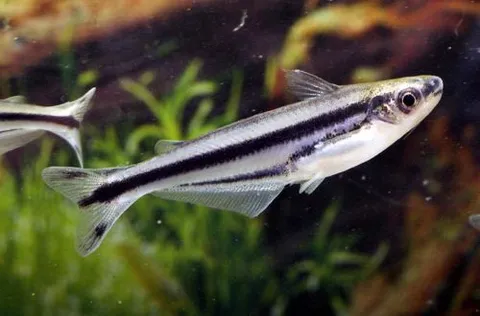
Pareutropius buffei
Pareutropius buffei, known as the Striped Glass Catfish, belongs to the family Schilbeidae (Schilbeid Catfishes). Its peaceful and friendly nature allows for successful integration into most types of freshwater…
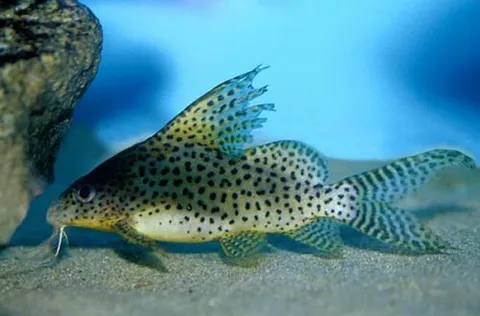
Synodontis eupterus
The Featherfin Synodontis, also known as Synodontis eupterus, belongs to the category of catfish that sometimes adopt an unusual upside-down swimming position. It is important to note that this behavior is not constant,…
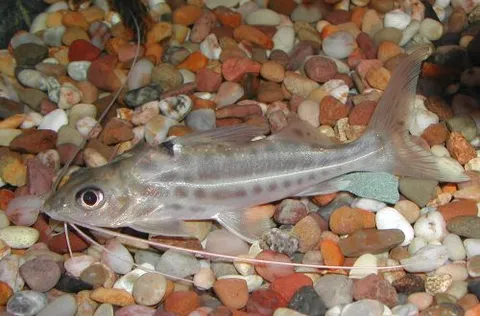
Pimelodus blochii
Pimelodus blochii, known as the four-banded pimelodus, belongs to the family Pimelodidae. This catfish species has many names in different countries; it has been given especially many names in Brazil, where it is most…
Pimelodus ornatus
The Ornate Pimelodus, also known as the Ornate Catfish (scientific name Pimelodus ornatus), belongs to the family Pimelodidae. This species is one of the most picturesque representatives of catfish, distinguished by its…