Temperature20 – 28 °C
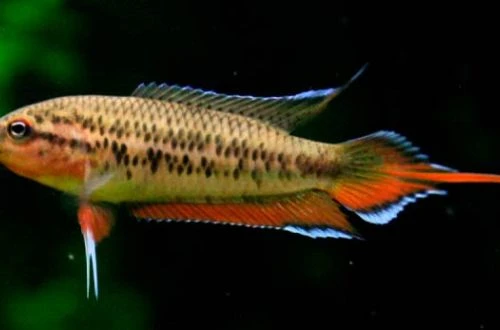
Pseudosphromenus cupanus, or spotted gourami, belongs to the family Osphronemidae. This fish got its name from the location of its first discovery – the Arian Kupang River, now known as Sankararani. Its keeping is quite simple; it is unpretentious and gets along well with other species of similar size. Thanks to these qualities, it is an excellent choice, including for beginner aquarists.
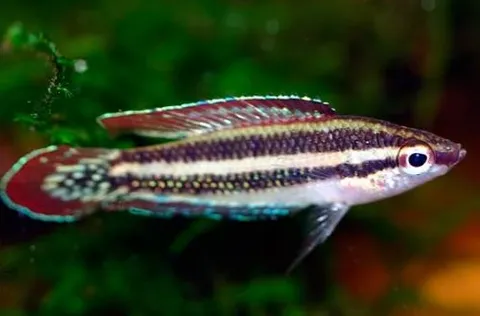
Adult specimens of this fish reach a length of about 6 centimeters. The main coloration is gray, with noticeable dark pigmentation running from the head to the tail along the center of the body. During the breeding season, males display bright red areas on their anal and caudal fins, as well as a turquoise edging. Females, meanwhile, darken, acquiring shades of dark gray.
Its natural habitat is in the southern regions of India. Specifically, Pseudosphromenus cupanus can be found in the Sankararani River basin, which flows through the Indian state of Tamil Nadu, as well as in the river systems of the neighboring island of Sri Lanka. It was previously believed that its range extended to Bangladesh, Indonesia, Malaysia, Myanmar, and Pakistan, but later studies disproved this data. The fish prefers coastal areas of rivers and streams where the current is slow and aquatic vegetation is dense. It can also be found in stagnant bodies of water, such as swamps, lakes, ponds, and rice paddies.
This fish has a peaceful and friendly disposition. Given its small size, it cannot compete with larger species, so their cohabitation should be avoided. The spotted gourami coexists well with many small and non-aggressive fish.
For a single pair of fish, an aquarium of at least 50 liters is considered optimal. Unlike some related species, keeping spotted gouramis is quite simple. The fish does not have high demands for tank decoration (sometimes no substrate is even used) or water hydrochemistry, successfully adapting to a wide range of pH and dGH values. If breeding is planned, it is advisable to provide several shelters where the fish can set up a clutch. Natural snags, dense plant thickets, and various decorative elements are suitable for this. If aesthetics are not a priority, ordinary ceramic pots, turned on their side, or sections of PVC pipes can be used. A useful addition would be leaves from certain trees placed on the substrate. In addition to decorative functions, they affect the chemical composition of the water, releasing tannins during decomposition. Similar processes naturally occur in nature when bodies of water are enriched with fallen leaves, branches, and other plant material. An important condition for successful keeping is maintaining stable water conditions. For this, the aquarium is equipped with everything necessary, primarily a filtration system, and regular maintenance is carried out: weekly water changes of 10–15% of the volume with fresh water and removal of organic waste, such as food remnants and excrement.
Although this species is often described as omnivorous, not all fish available in pet stores readily accept dry foods. Therefore, before purchasing, it is worth clarifying their usual diet. Typically, the diet consists of live or frozen foods, such as Artemia, Daphnia, and bloodworms. Other small insects, such as mosquito larvae or Drosophila flies, can also be offered.
Breeding spotted gouramis is not uncommon, provided the fish are kept in a suitable environment and receive a complete diet. During the breeding season, as already mentioned, males acquire bright coloration and begin to build a bubble nest mixed with pieces of plants. The nest is usually built under broad leaves or in cavities that mimic caves — for example, inside the same pots or PVC pipes. After construction is complete, the courtship process begins. The temporary pair of male and female lays several dozen eggs. The male stays near the clutch, protecting the future offspring. Parental instincts weaken only when the fry begin to swim freely. It is recommended to transfer the fry to a separate tank to prevent possible predation by other fish.
Maintaining a stable biological system, providing a balanced diet, and eliminating stress factors (e.g., harassment by aggressive tank mates) are the best guarantees for preserving fish health. If the first signs of illness appear, the first thing to pay attention to is precisely these three aspects, as deviations have likely occurred in one of them. As a rule, eliminating the problem leads to self-recovery. However, if the immune system proves to be insufficiently strong, medicinal treatment may be required.
When choosing a spotted gourami, attention should be paid to the fish's activity and appearance. Healthy specimens should show curiosity, have clean fins without signs of erosion or white film, and scales tightly pressed to the body. Avoid fish with sunken bellies, signs of emaciation or unnaturally bloated abdomens, as well as specimens that constantly stay near the water surface, breathe heavily, or show skin damage. Since this species has a timid temperament, fish in the store may hide in decorations or corners of the aquarium. This is normal behavior, but it is important to ensure they react to movement from outside. It is recommended to purchase specimens from aquariums where they are kept in calm conditions without strong currents, as stress from transportation and unsuitable water parameters can provoke the development of bacterial infections.
The essentials: size, tank volume, water parameters and care
An adult reaches 6–8 cm in length. Plan the tank around the maximum size: the fish quickly outgrows a cramped setup.
The recommended volume is 50 L. A smaller tank speeds up nitrate build-up and raises stress levels.
Temperature 20–28 °C, pH 6–7.5, hardness 2–26 dGH. Stability matters more than exact values: sudden swings are harder on the fish than a small deviation from the ideal.
Around 6 years when kept properly. Lifespan depends directly on tank volume, water quality and a varied diet.
Temperament: peaceful (regular). Keep this in mind when choosing tank mates.
Recommended setup: schooling (usually from 5–6 individuals and more). Ignoring this is a common cause of stress and disease.
Diet type: high protein (predominantly meat). Feed small portions that are finished within a couple of minutes — overfeeding does more harm than underfeeding.
The scientific name of the species is Pseudosphromenus cupanus, family Osphronemidae. It also appears in the literature as: Macropodus cupanus, Polyacanthus cupanus, Psedosphronemus cupanus.
The water suits 197 of 208 plants in the catalogue — the easiest ones are shown first.
Afzelius's AnubiasAnacharisAnubiasBrazilian PennywortDwarf CloverDwarf CloverDwarf HygrophilaDwarf SagittariaDwarf ValGuppy GrassHornwortJava FernJava MossMoneywortMud SwordNair's LagenandraNarrow Leaf AnacharisNarrow-leaf CloverStringy MossSüsswassertangTaiwan MossTape GrassTemple PlantUssuri Watermilfoil
Matched by family, categories and overlapping keeping conditions
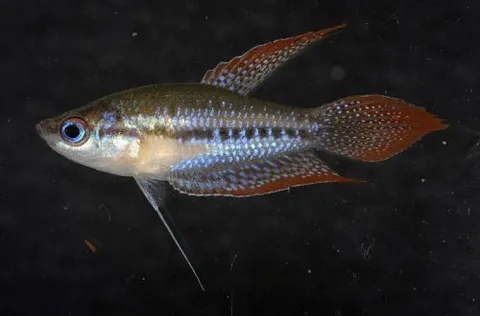
Trichopsis schalleri
Schaller's Gourami, scientifically known as Trichopsis schalleri, belongs to the family Osphronemidae. The fish is named after Dietrich Schaller, a tropical fish exporter who first introduced this species to the…
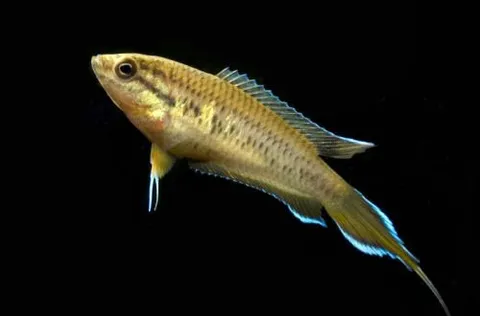
Pseudosphromenus dayi
Day's paradise fish, or Pseudosphromenus dayi by its scientific name, belongs to the family Osphronemidae. It is characterized by a peaceful disposition, which is quite rare among its relatives. This fish is…
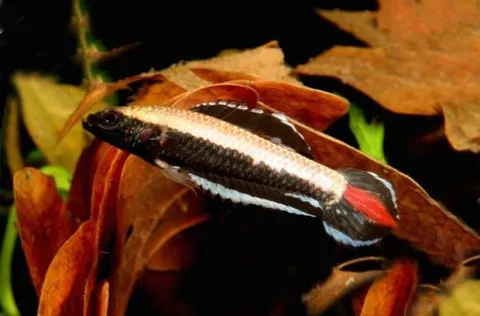
Parosphromenus ornaticauda
The Ornate Licorice Gourami, also known as Parosphromenus ornaticauda, belongs to the family Osphronemidae. These fish are available for purchase, but their keeping is associated with a number of difficulties, so they…
Parosphromenus quindecim
Parosphromenus quindecim, known as the Fifteen-rayed Licorice Gourami or Fifteen-rayed Betta, is a member of the Osphronemidae family. Its unusual name is due to the structure of its dorsal fin: unlike most relatives,…