Temperature22 – 28 °C
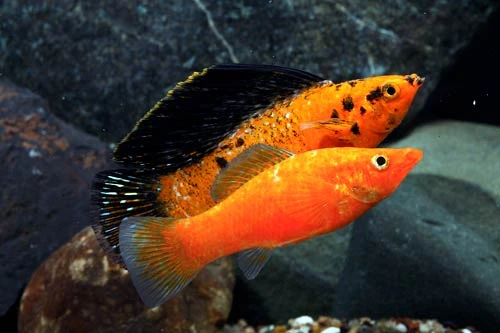
The Sailfin Molly, scientifically known as Poecilia velifera, is a member of the Poeciliidae family. In the aquarium hobby, it is also known as the Giant Sailfin Molly.
Poecilia velifera is closely related to the Yucatan Molly (Poecilia latipinna), another popular species among aquarists. Young individuals of these two species are almost indistinguishable; their identification is only possible by counting the rays in the dorsal fin: Poecilia velifera has 18–19, while Poecilia latipinna has only 14. In adult fish, the differences are more pronounced. Poecilia velifera is significantly larger: females can reach 17 cm in length. Males are smaller (up to 15 cm) and have a more massive dorsal fin, which gave rise to the name “Sailfin.” Originally, the coloration of these fish is gray, with a pattern of dotted horizontal lines. However, over the years, numerous hybrid varieties have been bred, showcasing a rich diversity of colors and shades. Among the most sought-after are solid yellow, orange, black, white (albino), and several variegated forms.
The species is endemic to south-eastern Mexico — the Yucatán Peninsula; it has been introduced by people into several other countries, including Colombia, Israel, Singapore and Taiwan. It inhabits numerous river systems flowing into the Caribbean Sea, including brackish river estuaries. Outside its native range the species has established itself in the Middle East and Southeast Asia, where it likely spread from home aquariums, becoming invasive.
It is characterized by a peaceful and calm disposition. Although these fish could be good neighbors for other freshwater species, their need for high pH and GH values limits the number of compatible tankmates.
For keeping one or two fish, the optimal aquarium volume starts from 170 liters. In terms of decor, it is preferable to use a large number of rooted and floating aquatic plants, while leaving enough open space for swimming. Nevertheless, excessive overgrowth should be avoided, as males with their impressive sail-like fins will find it difficult to maneuver in dense thickets. The substrate decoration does not play a significant role for this species. Livebearers generally do not require complex care, but in the case of Poecilia velifera, there are nuances. The fish needs sufficiently alkaline water with a high level of carbonate hardness. It can also live in brackish environments, with a salt concentration of about 5 grams per liter. Soft, slightly acidic water negatively affects its well-being. Thus, maintaining the necessary hydrochemical composition of the aquarium will be the key challenge in keeping them. Otherwise, aquarium care is standard and includes essential procedures such as weekly partial water changes with fresh water, simultaneous removal of organic waste (e.g., food remnants and excrement), and preventive equipment maintenance.
These fish readily accept most common aquarium foods: dry, frozen, and live. It is important to include a certain amount of plant-based components in their diet. If these are already present in dry flakes or granules, then when feeding, for example, bloodworms or brine shrimp, it is recommended to supplement them with spirulina flakes or similar products.
During the breeding season, males exhibit pronounced temperament; therefore, especially in confined spaces, it is advisable to minimize the number of males, for example, to one male for every 2–3 females. The incubation period, as with all live-bearing species, occurs inside the female's body, without egg-laying. Pregnancy lasts an average of 4 to 8 weeks. Up to two hundred fry can appear in one brood, but usually their number is limited to 40–60. It is best to separate the fry into a separate tank to prevent predation by parents and other aquarium inhabitants. Feeding should be done with specialized powdered foods, suspensions, or Artemia nauplii. It should also be remembered that Poecilia velifera can produce hybrid offspring with Poecilia latipinna.
Under favorable conditions, when the fish are not subjected to stress and receive a balanced diet, the risk of disease remains minimal. However, as noted earlier, the fish are sensitive to the hydrochemical composition of the water; low pH and GH values have a depressing effect on their bodies, which can lead to manifestations of fungal or bacterial infections. Normalizing environmental parameters often allows the immune system to cope with the problem, but if the disease progresses, medical treatment is required.
When choosing healthy specimens, pay attention to the cleanliness of the scales and fins: there should be no white film, sores, or visible parasites on the body. Fins should be spread out, without signs of damage or clumping. Avoid fish with sunken bellies or unnaturally curved spines, which may indicate emaciation or genetic defects. Active and curious fish that show interest in food are a sign of good health. Inspect the aquarium in the store: there should be no dead fish or individuals with obvious signs of disease, as this indicates poor keeping conditions.
The essentials: size, tank volume, water parameters and care
An adult reaches 15–17 cm in length. Plan the tank around the maximum size: the fish quickly outgrows a cramped setup.
The recommended volume is 170 L. A smaller tank speeds up nitrate build-up and raises stress levels.
Temperature 22–28 °C, pH 7–8.5, hardness 13–35 dGH. Stability matters more than exact values: sudden swings are harder on the fish than a small deviation from the ideal.
Around 4 years when kept properly. Lifespan depends directly on tank volume, water quality and a varied diet.
Temperament: peaceful (regular). Keep this in mind when choosing tank mates.
Recommended setup: mixed (solitary / pair / group). Ignoring this is a common cause of stress and disease.
Diet type: any (universal). Feed small portions that are finished within a couple of minutes — overfeeding does more harm than underfeeding.
The scientific name of the species is Poecilia velifera, family Poeciliidae. It also appears in the literature as: Mollienesia velifera, Mollienisia velifera.
The water suits 114 of 208 plants in the catalogue — the easiest ones are shown first.
African Onion PlantAfzelius's AnubiasAmazon FrogbitAmazon SwordAnacharisAnubiasArrowhead CryptDwarf CloverDwarf CloverDwarf HygrophilaDwarf SagittariaDwarf ValGuppy GrassHornwortJava MossMoneywortMud SwordNair's LagenandraNarrow Leaf AnacharisNarrow-leaf CloverStringy MossTaiwan MossTape GrassUssuri Watermilfoil
Matched by family, categories and overlapping keeping conditions
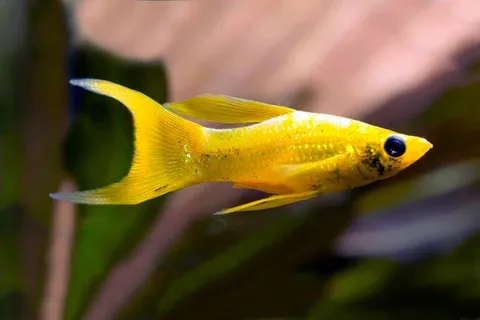
Poecilia latipinna
The Sailfin Molly, also known as Poecilia latipinna, belongs to the Poeciliidae family. This beautiful fish attracts attention with its unusually large and wide dorsal fin, which outwardly resembles a sail. Nowadays, it…
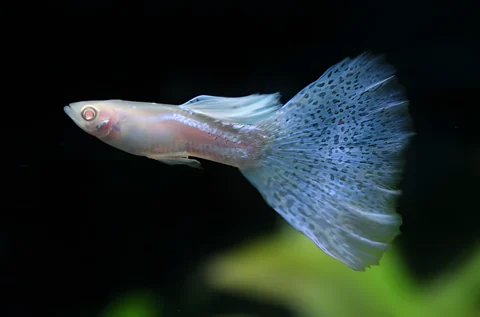
Poecilia reticulata
The Albino Guppy, belonging to the Poeciliidae family, is known by its scientific name Poecilia reticulata (Albino variety). A distinctive feature of this fish is the congenital absence of melanin – the black pigment in…
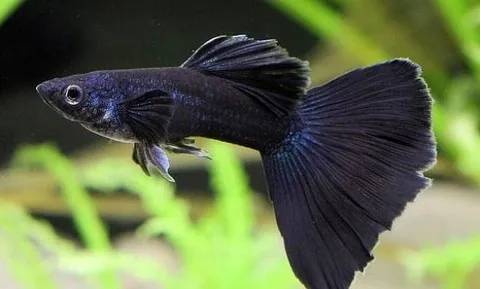
Poecilia reticulata
Black Monk Guppies, also known as Black Guppies, are a breed of Poecilia reticulata (Black strain) from the Poeciliidae family. One of the main features of this variety is the pronounced dark body coloration in males.…
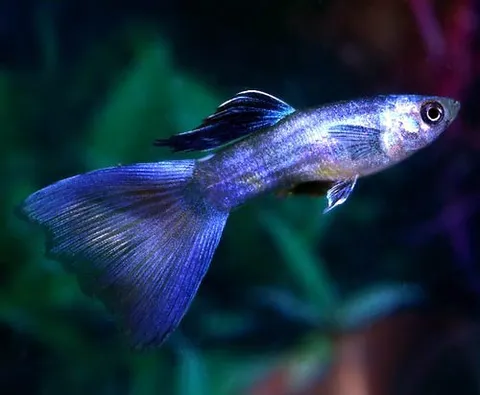
Poecilia reticulata
Blue Guppies, known scientifically as Poecilia reticulata (Blue variety), belong to the Poeciliidae family. This name is a generalization and encompasses various breeds where blue is the dominant color. It is mainly…