Aquarium plants
Page 2 of 5
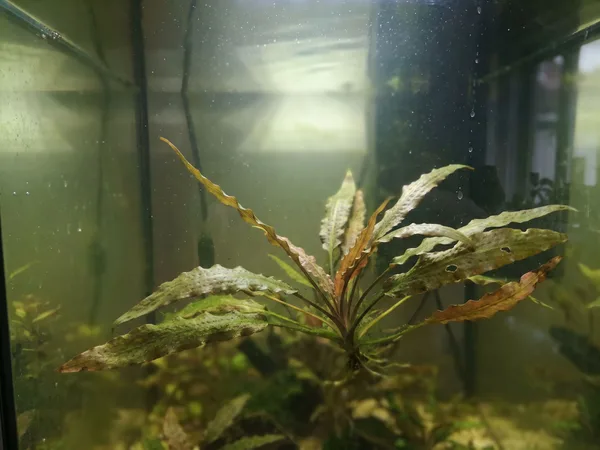
Cryptocoryne crispatula var. flaccidifolia
Araceae
Cryptocoryne crispatula
A variety from southern Thailand (the Malay Peninsula): long, narrow, limp leaves ranging from smooth to wavy, green to red-brown — hence the name 'limp-leaved'. Underwater leaves are 20–50 cm long and 5–12 mm wide.
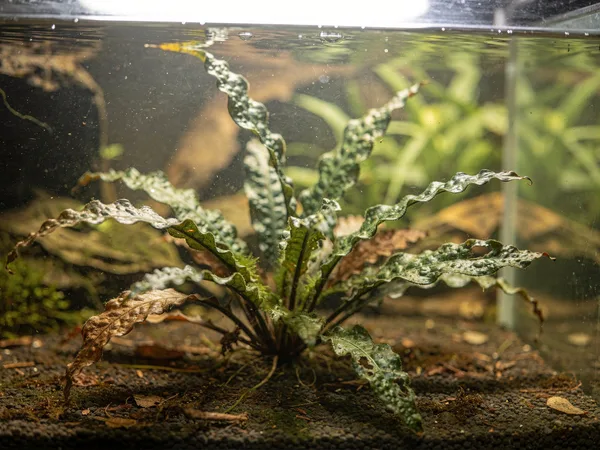
Cryptocoryne crispatula var. kubotae
Araceae
Cryptocoryne crispatula
The narrowest-leaved variety of Cryptocoryne crispatula — thin-leaved, grass-like, copper-brown, from around Ubon Ratchathani in eastern Thailand. Described as a separate variety only at the end of 2015.
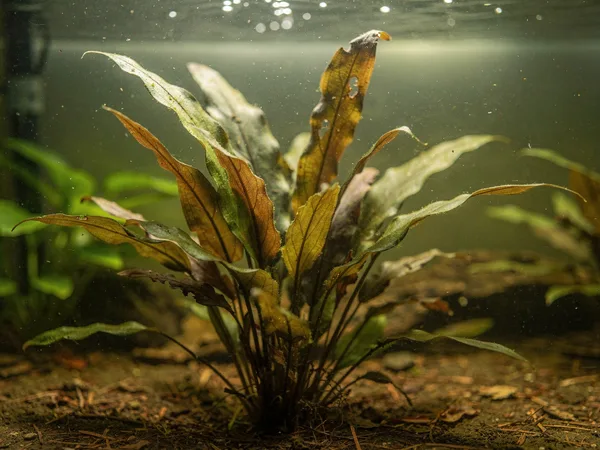
Cryptocoryne spiralis var. caudigera
Araceae
Cryptocoryne spiralis
A variety of the spiral water trumpet described in 2013: narrow-leaved and not large, forming a dense group of rosettes thanks to short underground offshoots. The name 'tail-bearing' was given for the thread-like…
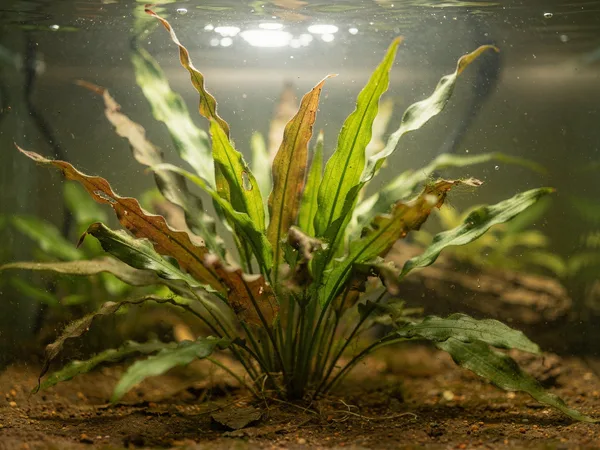
Cryptocoryne spiralis var. spiralis
Araceae
Cryptocoryne spiralis
The main, most widespread variety of the spiral water trumpet: a narrow-leaved plant of mainland Asia, a weed of rice paddies in southern India and Bangladesh. Simple to keep and the most variable of the species' four…
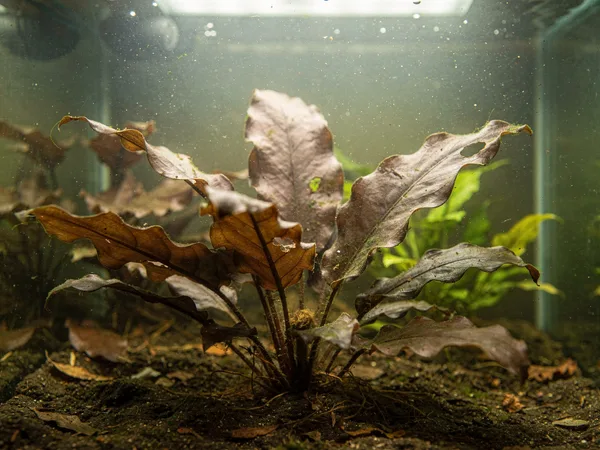
Cryptocoryne wendtii ''braun''
Araceae
Cryptocoryne wendtii
'Braun' (brown) is not a separate cultivar but a catch-all trade name for the Wendt's water trumpet: various forms of the species that grow brown or reddish-brown leaves underwater are sold under it.
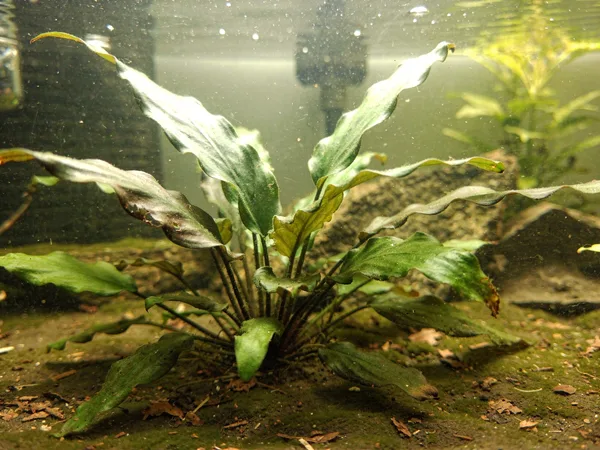
Cryptocoryne wendtii ''grün''
Araceae
Cryptocoryne wendtii
'Grün' (green) is not a separate cultivar but a catch-all trade name for the Wendt's water trumpet: forms of the species with more or less green underwater leaves, differing slightly between suppliers, are sold under it.
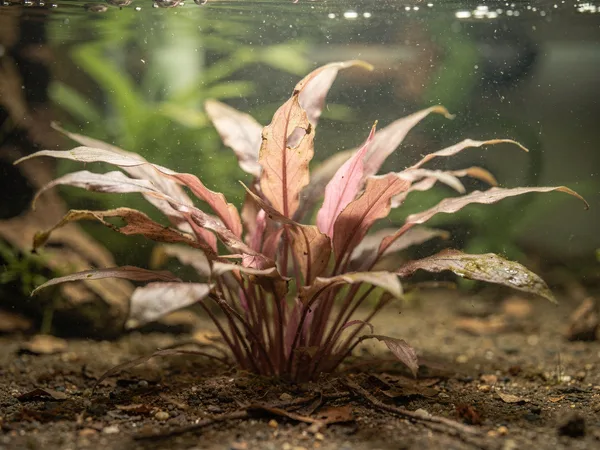
Cryptocoryne wendtii 'Flamingo'
Araceae
Cryptocoryne wendtii
A pink form of Cryptocoryne wendtii: young leaves are bright pink and fade with age to a flesh tone with green veins. More compact than the ordinary wendtii and grows noticeably slower.
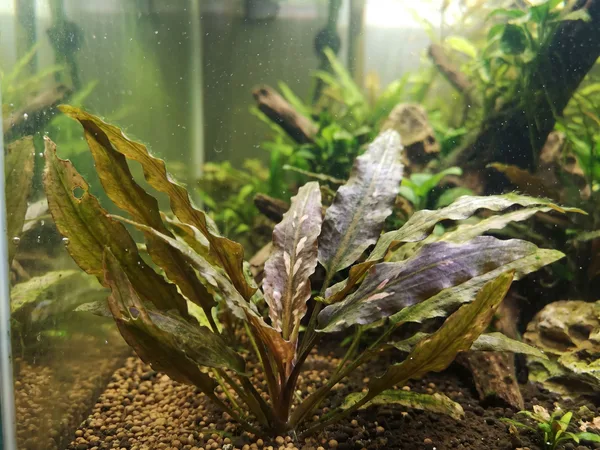
Cryptocoryne wendtii 'Florida Sunset'
Araceae
Cryptocoryne wendtii
A variegated form of Wendt's water trumpet, selected in 2006 in Florida from 'Mi Oya': the underwater leaves are pink, white and golden-yellow mixed with green — unmatched among the species' forms for variety of colour.
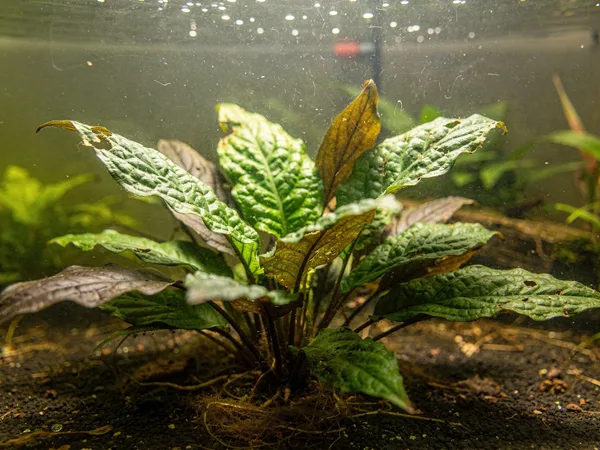
Cryptocoryne wendtii 'Green Gecko'
Araceae
Cryptocoryne wendtii
A selected form of Wendt's water trumpet with an unusual leaf pattern: the blade is light to yellow-green on top, with a reddish-brown zone across the lower half, and a wavy leaf edge.
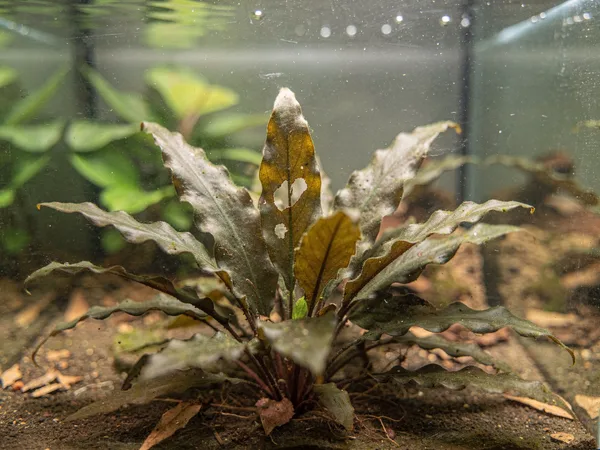
Cryptocoryne wendtii 'Mi Oya'
Araceae
Cryptocoryne wendtii
A reddish-brown, slightly textured form of Wendt's water trumpet; in the wild it grows only in the Mi Oya river of Sri Lanka, in very warm water — not the most ordinary of the species' forms.
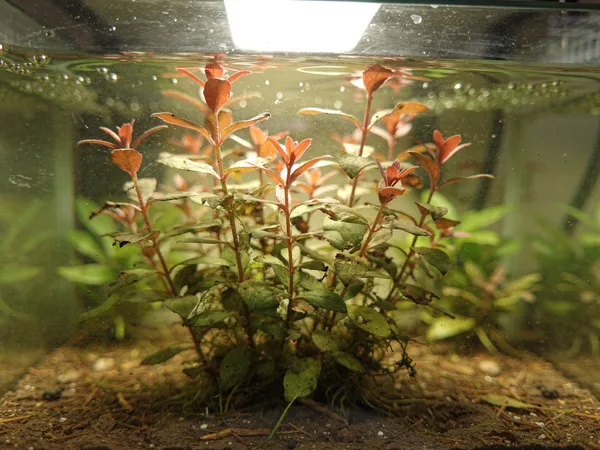
Cuphea
Lythraceae
Cuphea anagalloidea
A small stem plant with leaves that run from light green to red and orange under bright light. Most of its genus lives on land — this one is the exception that took to aquariums, and it is not an easy start.
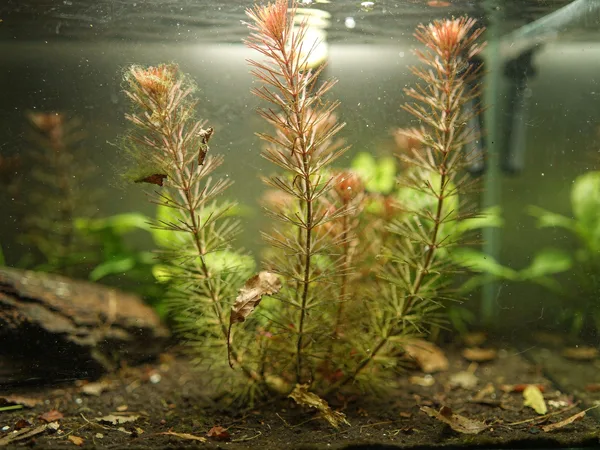
Cutleaf Watermilfoil
Haloragaceae
Myriophyllum pinnatum
A North American watermilfoil with feathery green leaves on a stem that turns red. It has been in the hobby for decades, usually under someone else's name.
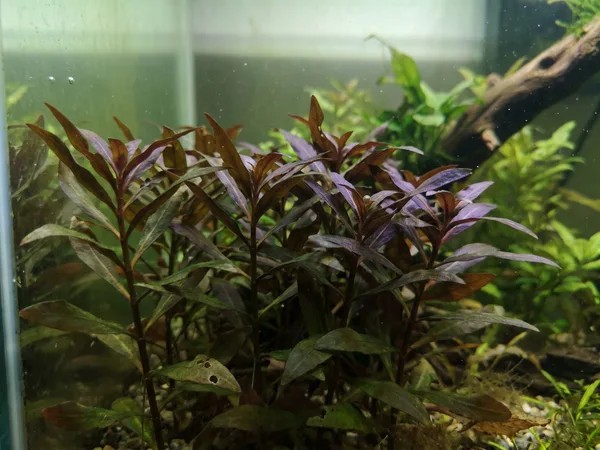
Cylindricfruit Ludwigia
Onagraceae
Ludwigia glandulosa
Narrow leaves in deep wine red and purple on an upright stem. The colour is the whole point, and it comes from light — in the shade the plant simply turns green.
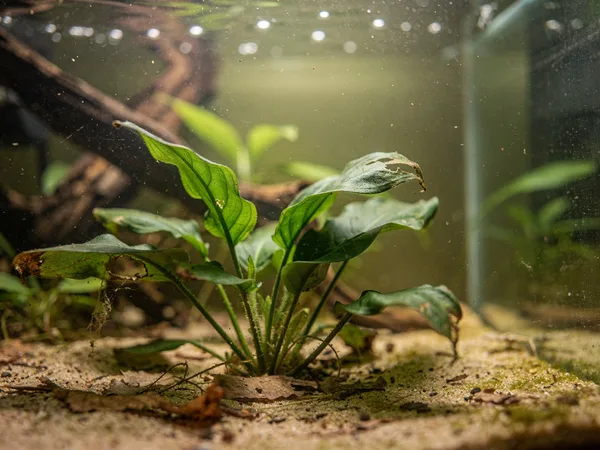
Dark Sword
Alismataceae
Echinodorus portoalegrensis
A small, stiff-leaved sword plant from the cool fast rivers of southern Brazil. It has been known to the hobby for decades and has never been common — it simply grows too slowly to be worth a nursery's while.
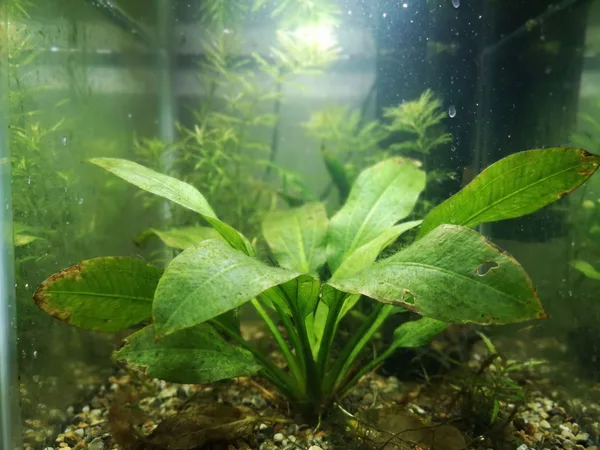
Delta Arrowhead
Alismataceae
Sagittaria platyphylla
Broad ribbon leaves growing in a rosette, spreading by runners into a colony. An undemanding plant for a large tank, and a rare one in shops.
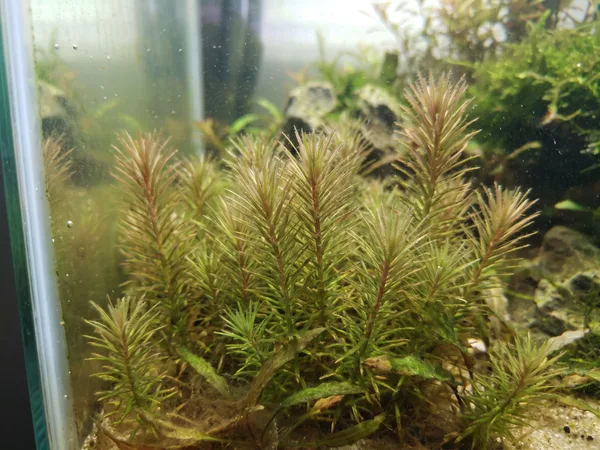
Dense Mayaca
Mayacaceae
Mayaca sellowiana
Needle-fine leaves packed tightly along the stem, denser than on the common mayaca. A little-known plant, mostly because it is usually sold under the name of another one.
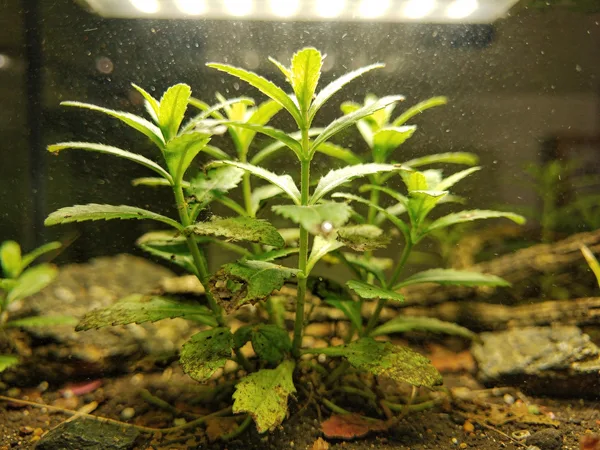
Ditch Stonecrop
Penthoraceae
Penthorum sedoides
Light green toothed leaves on dense compact stems. An undemanding North American plant that changes shape with the light: upright in the shade, creeping in the bright.
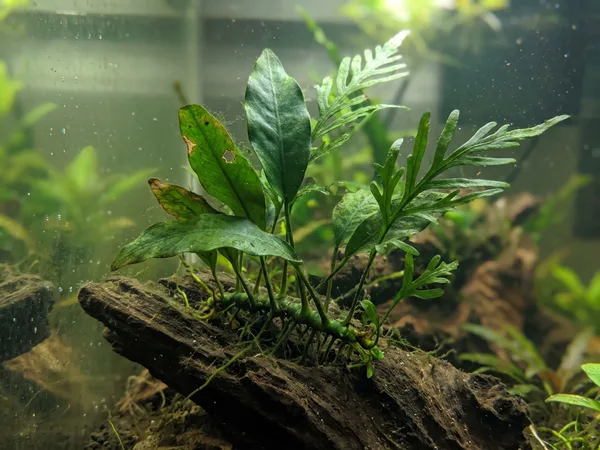
Dwarf African Fern
Dryopteridaceae
Bolbitis heteroclita
A small fern for wood and stone, closer to a java fern in habit than to its larger African relative. It grows slowly, needs no substrate and suits a nano tank.
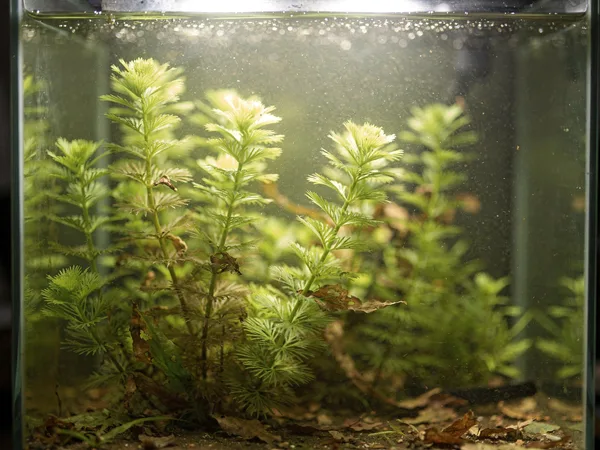
Dwarf Ambulia
Plantaginaceae
Limnophila sessiliflora
Feathery whorls of soft green leaves on a fast stem — the look of cabomba without cabomba's demands. It grows in dim light and without carbon dioxide, which makes it a rare thing among feathery plants.
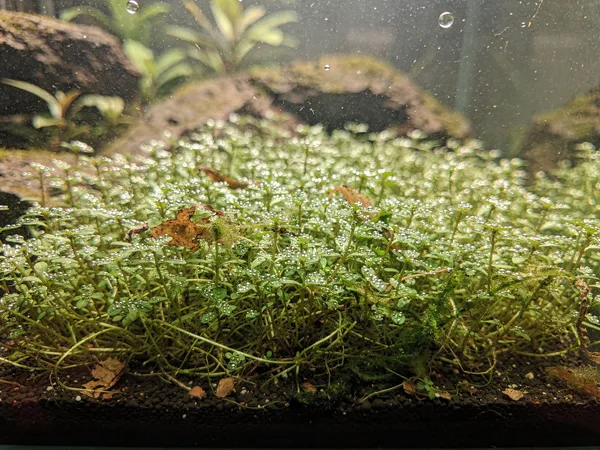
Dwarf Baby Tears
Linderniaceae
Micranthemum callitrichoides
The smallest plant in the hobby: round leaves a couple of millimetres across, creeping into a velvet-green floor. The classic carpet of show tanks — and one that will not forgive a dim lamp or a missing carbon dioxide…
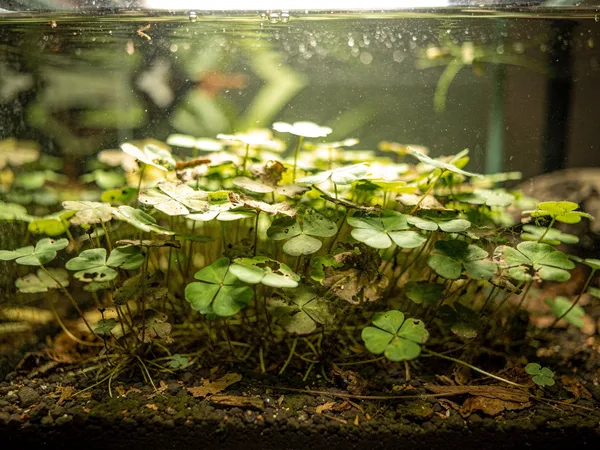
Dwarf Clover
Marsileaceae
Marsilea crenata
A small fern from Asian rice fields whose leaves look like tiny four-leaf clovers. It creeps along the substrate and makes one of the lowest carpets in the hobby — slowly, and without much fuss.
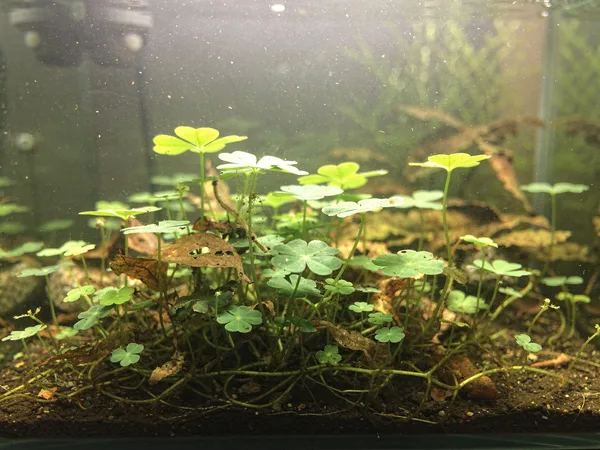
Dwarf Clover
Marsileaceae
Marsilea hirsuta
A small water fern whose leaves look like four-leaf clover. It grows in dim light and without carbon dioxide, and it is the calmest way to get a carpet — slow, but almost impossible to spoil.
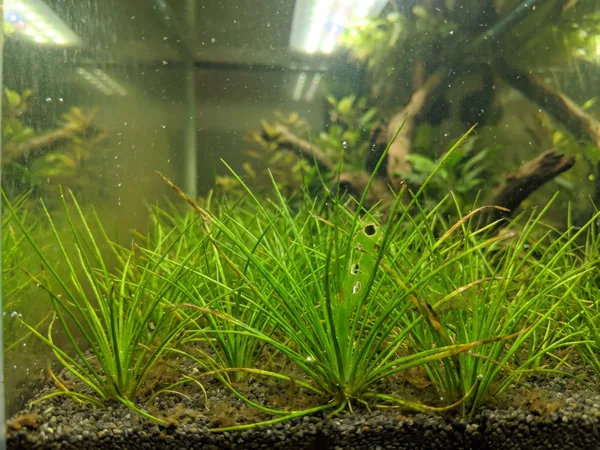
Dwarf Hairgrass
Cyperaceae
Eleocharis pusilla
Thin green blades that spread by runners into something very like a mown lawn. The most reliable of the carpets: it stays short by itself and needs no trimming.
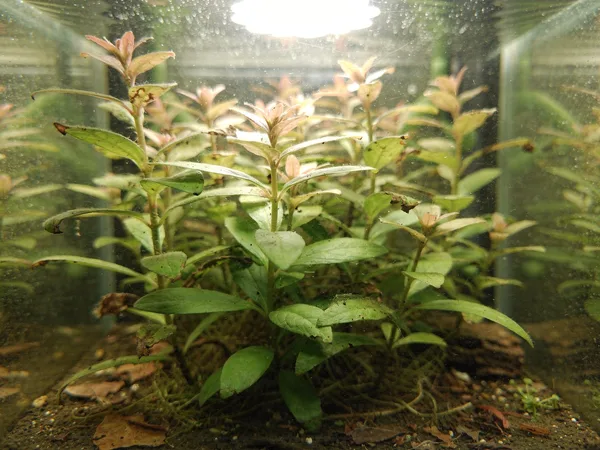
Dwarf Hygrophila
Acanthaceae
Hygrophila polysperma
The stem plant usually handed to beginners: it grows in almost any water, needs no carbon dioxide and forgives mistakes. Its own speed is the only problem — the thicket has to be cut back every few weeks.
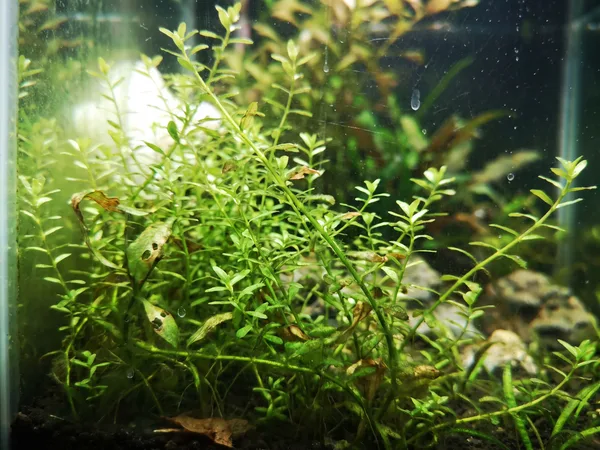
Dwarf Microcarpaea
Phrymaceae
Microcarpaea minima
Very fine needle-shaped leaves in pairs along thin stems. It can be cut low into a carpet or left to grow into a soft cloud of green at the back — rare, and not as delicate to keep as it looks.
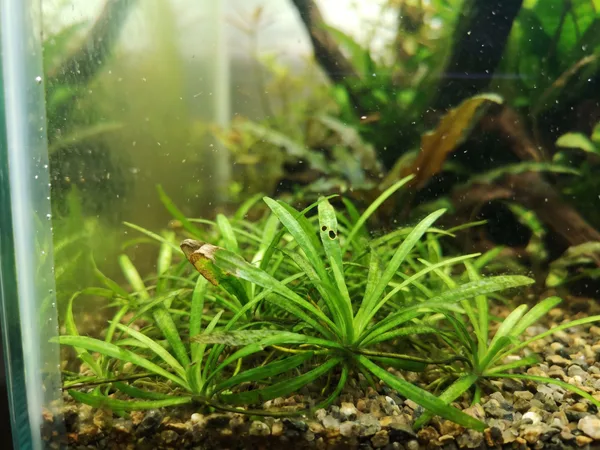
Dwarf Ranalisma
Alismataceae
Ranalisma rostrata
A tiny grass-like carpet plant that spreads by runners. Above water its leaves are round; submerged it turns into narrow blades and looks like another plant entirely.
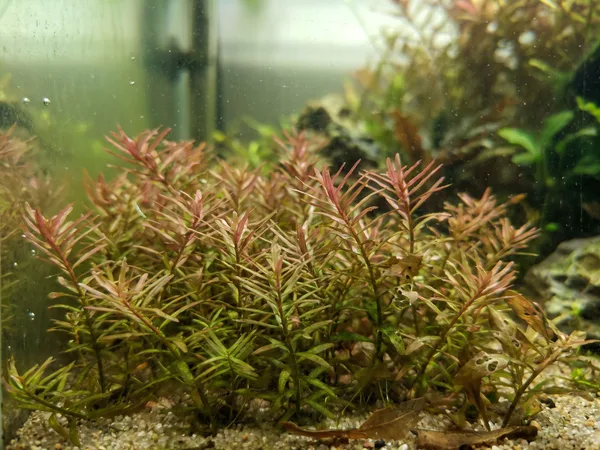
Dwarf Rotala
Lythraceae
Rotala mexicana
A tiny rotala with needle-fine leaves that shade from green into salmon and pink at the tips. Small enough for a nano tank, quick enough to need scissors.
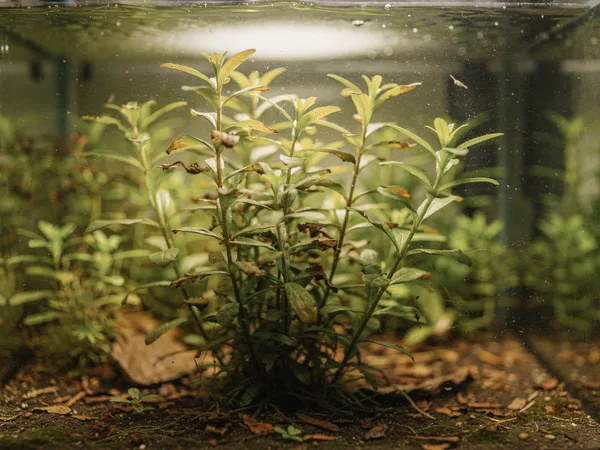
Dwarf Rotala
Lythraceae
Rotala rotundifolia
A fast stem plant from South and East Asia, and the usual first choice for anyone who wants red in the aquarium. The round leaves of its name belong to the marsh form; under water the leaves are narrow and turn from…
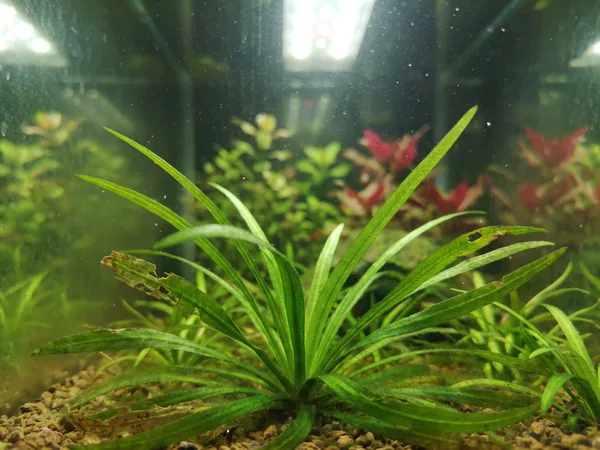
Dwarf Sagittaria
Alismataceae
Sagittaria subulata
A short grass-like plant that spreads by runners into a low green lawn. It suits a nano tank as well as a large one, and it is one of the simplest carpets to start with.
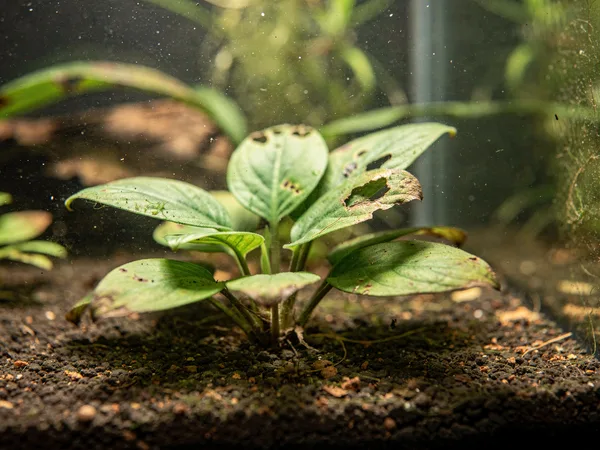
Dwarf Sword
Alismataceae
Echinodorus schlueteri
A small sword plant known only from cultivation: a compact rosette of broad leaves, low enough for the front of a tank. It is the same plant sold in shops as a miniature spade-leaf sword.
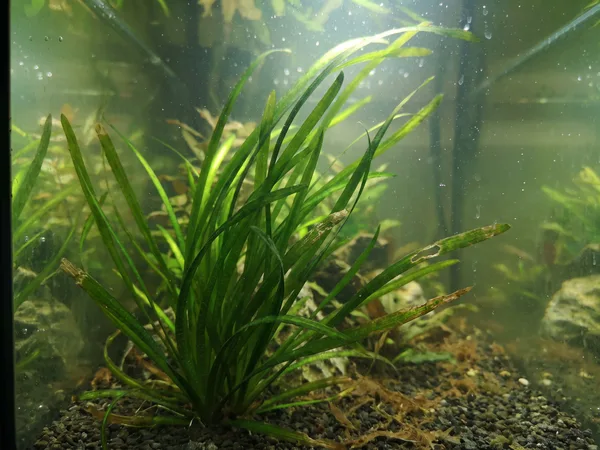
Dwarf Val
Hydrocharitaceae
Vallisneria nana
The narrowest of the vallisnerias: leaves a few millimetres wide, more like tall grass than ribbons. It spreads by runners and makes a fine-textured green wall.
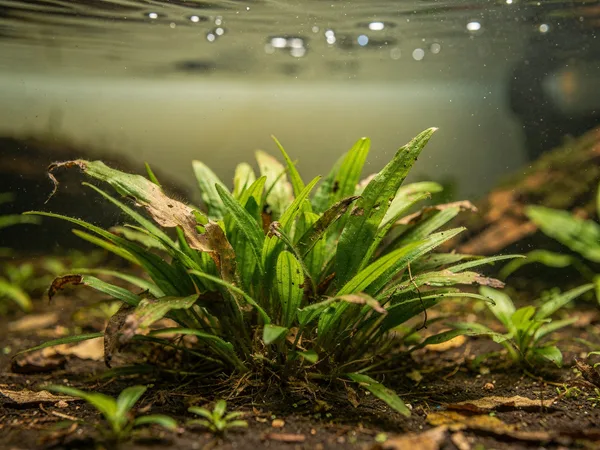
Dwarf Water Trumpet
Araceae
Cryptocoryne parva
The smallest of the water trumpets, and the only one that keeps the same narrow, grass-like leaves whatever the conditions. A rosette stays under 10 cm, which makes it one of the few foreground plants that never needs…
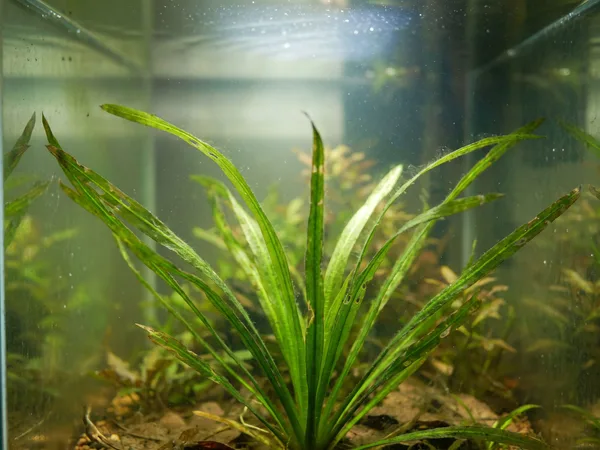
Eelgrass
Hydrocharitaceae
Vallisneria natans
Narrow ribbon leaves rising from a small rosette, spreading by runners into a stand of underwater grass. Undemanding, quick, and tolerant of cool water.
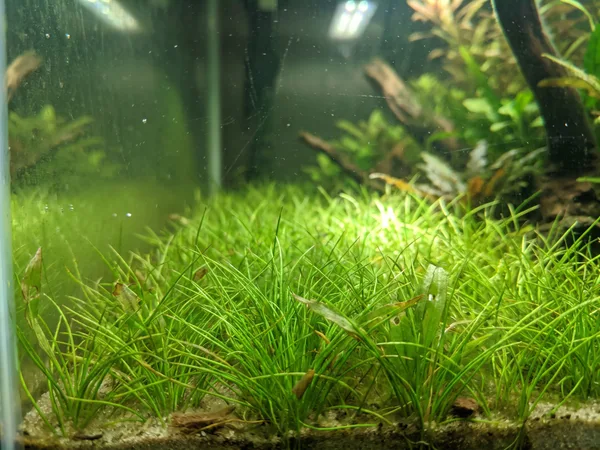
Eleocharis pusilla ('E. parvula')
Cyperaceae
Eleocharis pusilla
Under the name 'Eleocharis parvula' the plant on sale since 1997 is not true E. parvula but a different species, Eleocharis pusilla. True E. parvula grows on brackish shores and bears small tubers on its rhizomes, which…
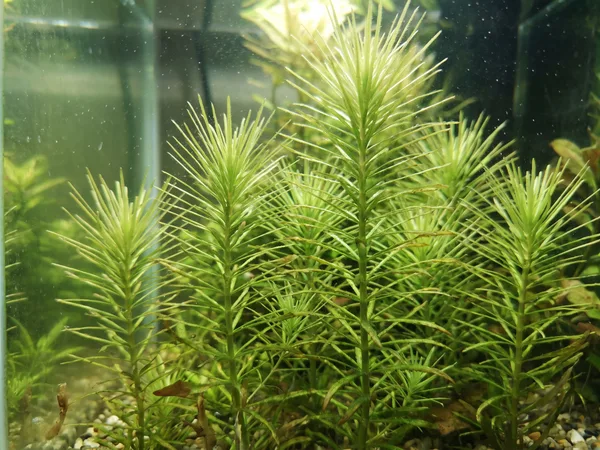
Erect Pogostemon
Lamiaceae
Pogostemon deccanensis
Bright green needle-like leaves in whorls on straight stems — a group of them looks like a stand of small conifers. Compact, and simpler than the other pogostemons.
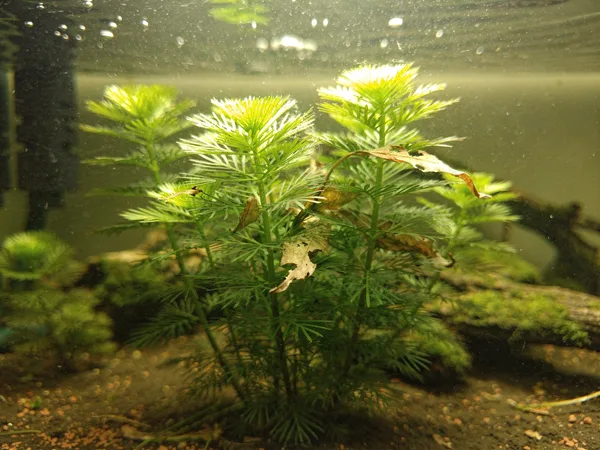
Fanwort
Cabombaceae
Cabomba aquatica
Fan-shaped whorls of finely cut leaves — the classic feathery plant of old aquariums. It is the least demanding of its family, but light is still what it lives on.
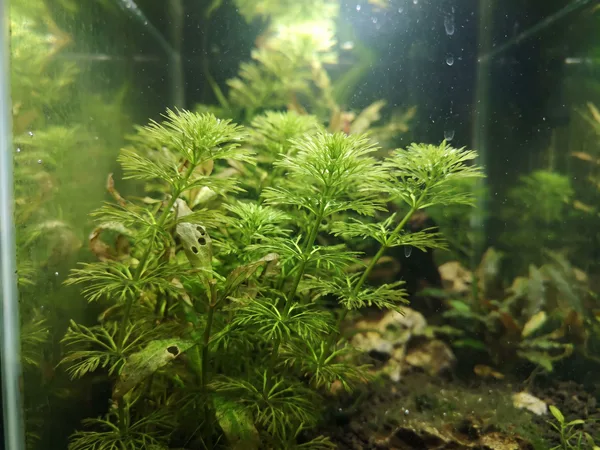
Feathered Limnophila
Plantaginaceae
Limnophila heterophylla
Bright green whorls of finely divided leaves, like a cross between water wisteria and cabomba. Fast, forgiving and happy without carbon dioxide.
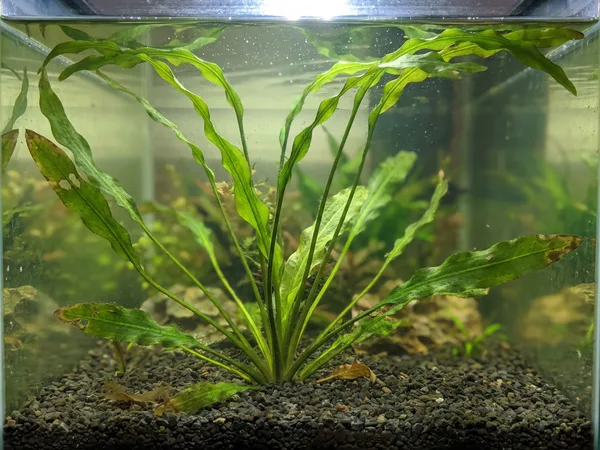
Floating Aponogeton
Aponogetonaceae
Aponogeton natans
A bulb plant from the still waters of India and Sri Lanka: long wavy leaves rise to the surface and lie on it. It flowers readily, which few aquarium plants do.
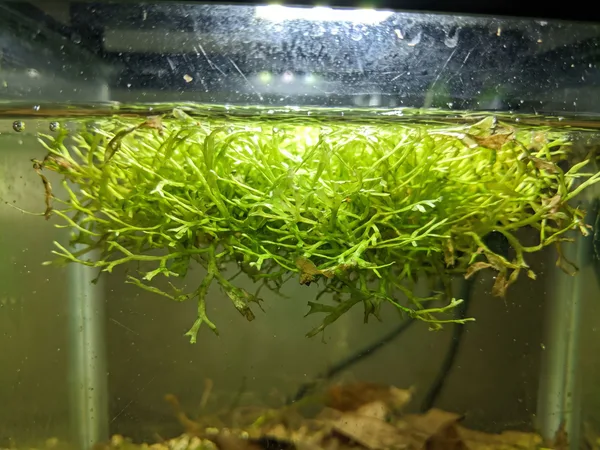
Floating Crystalwort
Ricciaceae
Riccia fluitans
A rootless liverwort that grows as a tangle of forking green threads. Traditionally kept floating, it became an aquascaping staple once aquarists learned to tie it down and grow it as a bright, bubbling underwater…
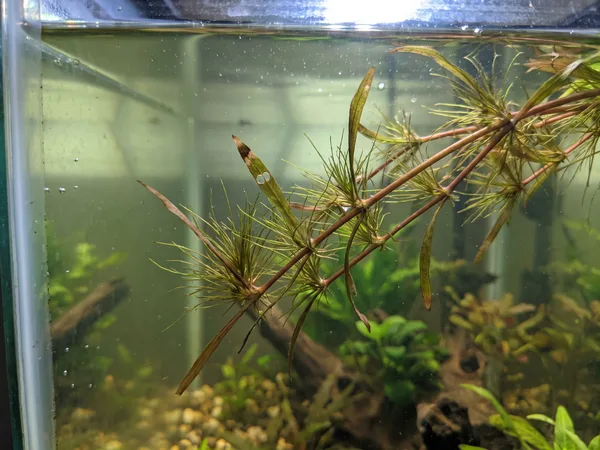
Floating Spikerush
Cyperaceae
Eleocharis fluctuans
A fine South American plant that roots in the substrate and floats at the surface: reddish stems with hair-thin olive shoots in tufts. Beautiful, extremely demanding, and almost never seen in tanks.
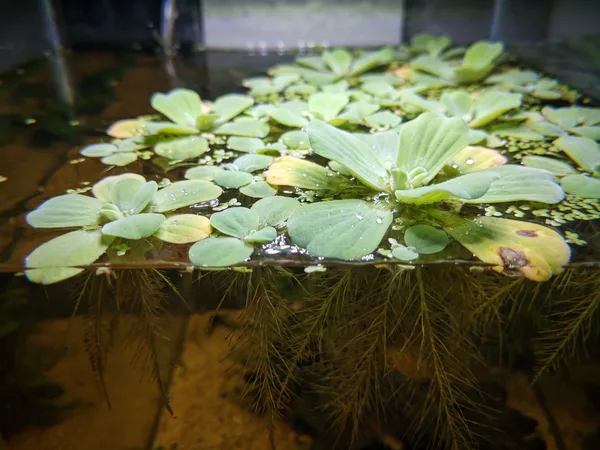
Floating Water Sprite
Pteridaceae
Ceratopteris pteridoides
The water sprite that only floats: unlike its relatives it cannot grow rooted under water. Broad pale fronds on swollen stalks make a thick raft at the surface.
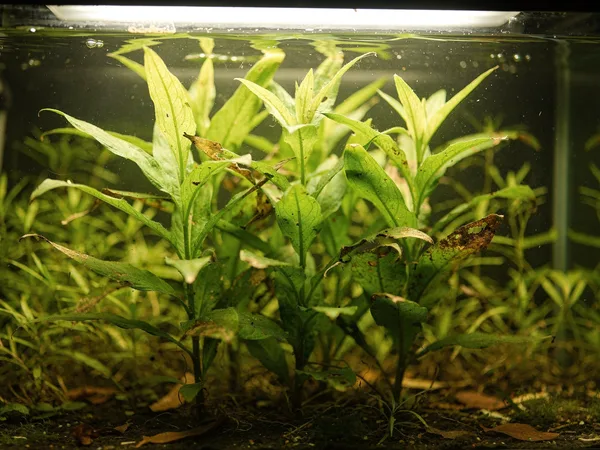
Floscopa
Commelinaceae
Floscopa scandens
A coarse-leaved tropical marsh plant, close kin to the tradescantia on a windowsill. Fresh green and unusual, and not the easiest plant to fit into a layout.
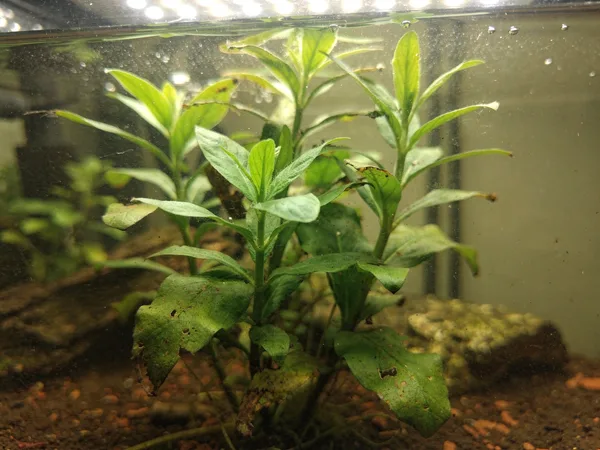
Fragrant Hygrophila
Acanthaceae
Hygrophila odora
Thick stems with an unusual leaf shape, bright green under water and scented when grown above it. Simple in a marsh setup, more demanding in a tank.
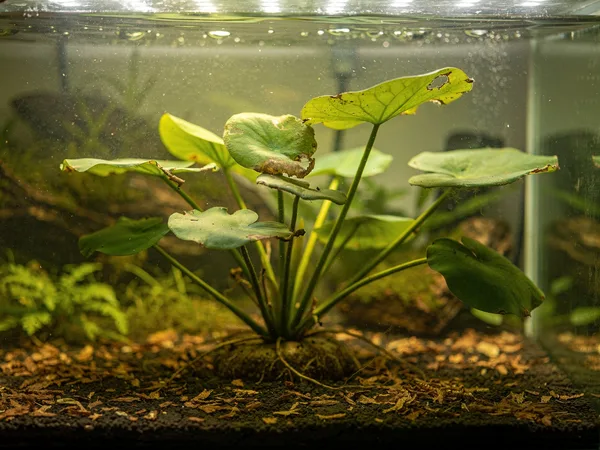
Gardner's Water Lily
Nymphaeaceae
Nymphaea gardneriana
A night-flowering water lily from tropical South America with relatively small round leaves. Rare in the hobby, and easily confused with its green-leaved relatives.
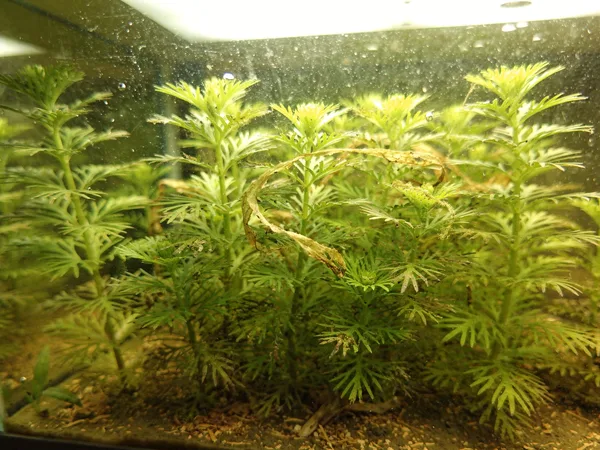
Giant Ambulia
Plantaginaceae
Limnophila aquatica
Wide wheels of thread-fine leaves along a tall stem — the biggest and softest of the ambulias, like a green bottle brush. A group of it is one of the best background plantings there is.
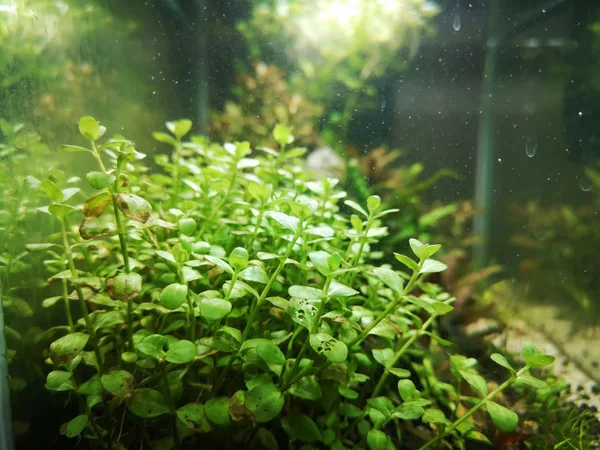
Giant Baby Tears
Linderniaceae
Micranthemum umbrosum
Small round leaves on soft creeping stems — the same look as the tiny carpeting baby tears, but at a size that is far easier to grow. Trim it and it stays low, leave it and it climbs.
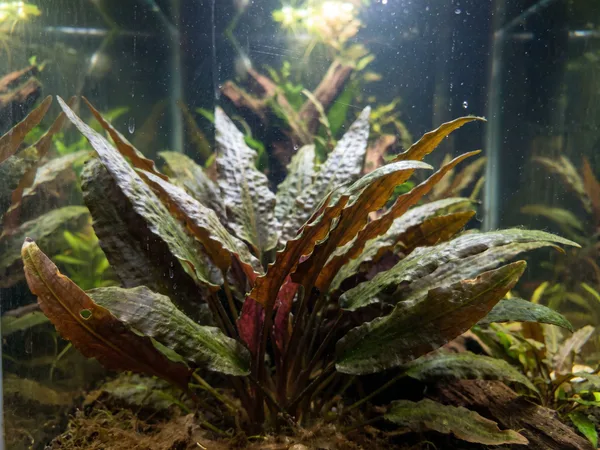
Giant Crypt
Araceae
Cryptocoryne usteriana
One of the tallest water trumpets: long embossed leaves, dark green above and burgundy underneath. Tough enough for a tank with large fish, and happy in hard alkaline water.
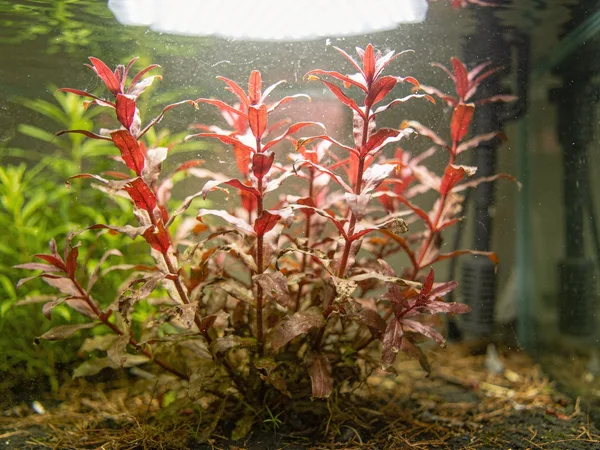
Giant Red Rotala
Lythraceae
Rotala macrandra
Large soft leaves of raspberry red — one of the most striking plants in the hobby and one of the most demanding. Without strong light, carbon dioxide and soft water it simply fades away.
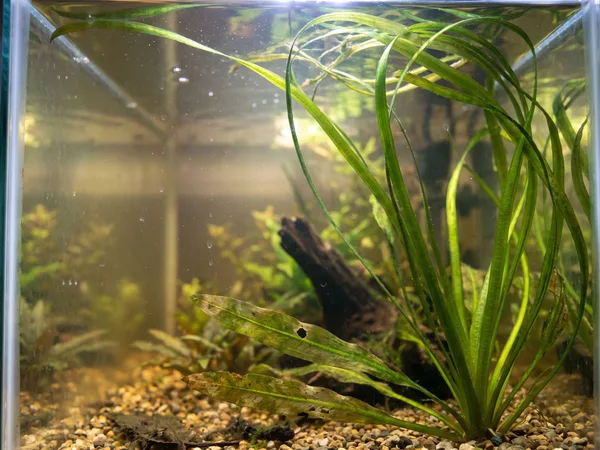
Giant Vallisneria
Hydrocharitaceae
Vallisneria australis
The big vallisneria of the hobby — long broad ribbons that reach the surface and lie along it. Sold for decades under several other names, and as undemanding as its smaller relatives.
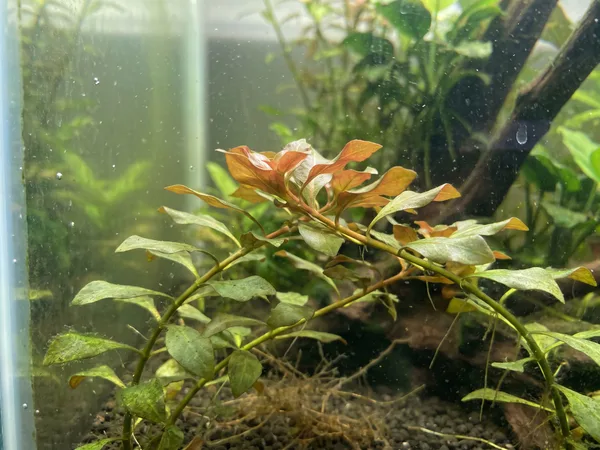
Globefruit Ludwigia
Onagraceae
Ludwigia sphaerocarpa
A ludwigia that grows sideways instead of up: trimmed regularly it forms low red-orange crowns near the substrate. Unusual for the genus, and useful at the front of a tank.
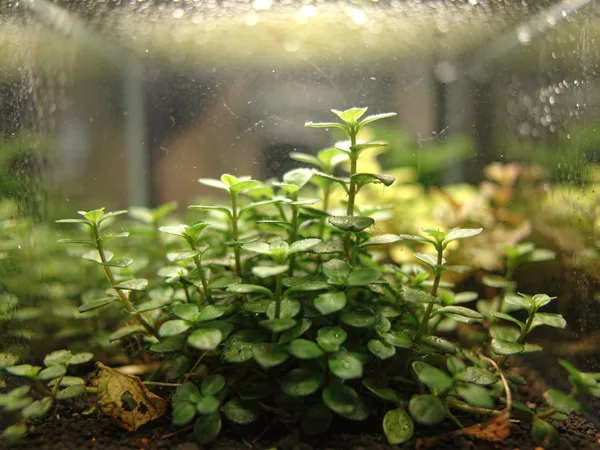
Glosso
Phrymaceae
Glossostigma elatinoides
A New Zealand plant with round leaves the size of a match head, and the carpet that made Japanese-style layouts famous. Very bright light is not a wish here but a condition.
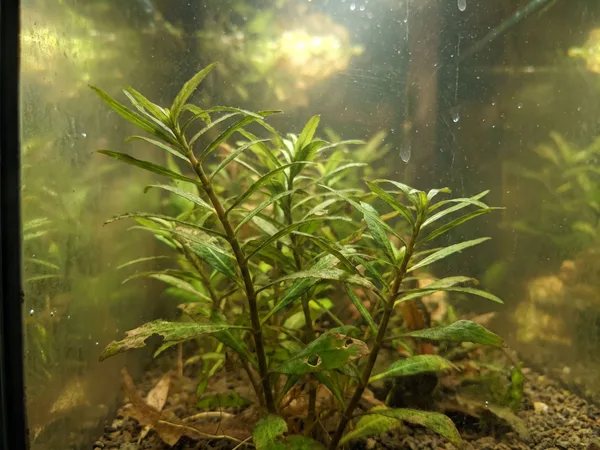
Glush Weed
Acanthaceae
Hygrophila costata
A tall stem plant with long narrow leaves, close kin to the temple plant and just as fast. It fills a back wall in a month and asks for little beyond regular trimming.
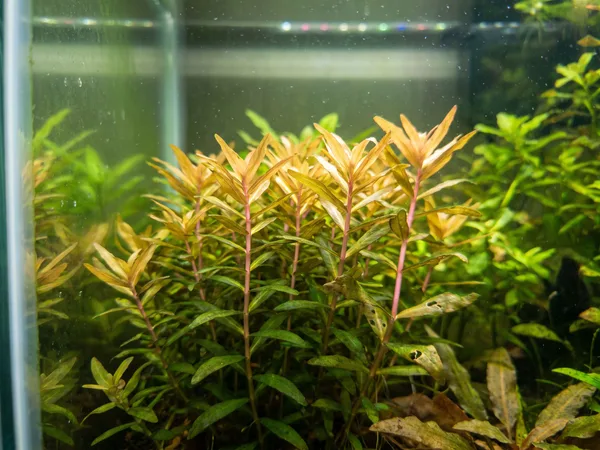
Golden Ammannia
Lythraceae
Ammannia pedicellata
Greenish gold leaves on pink stems — one of the very few genuinely golden plants in the hobby. Hardier about water than most coloured stems, but still demanding on light and feeding.
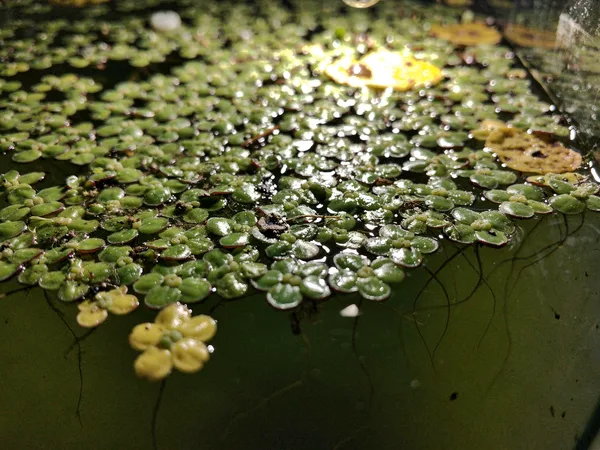
Greater Duckweed
Araceae
Spirodela polyrhiza
The floating plant everybody knows: flat green discs the size of a fingernail that cover the surface in days. Useful for shade and for stripping nutrients from the water — and almost impossible to get rid of afterwards.
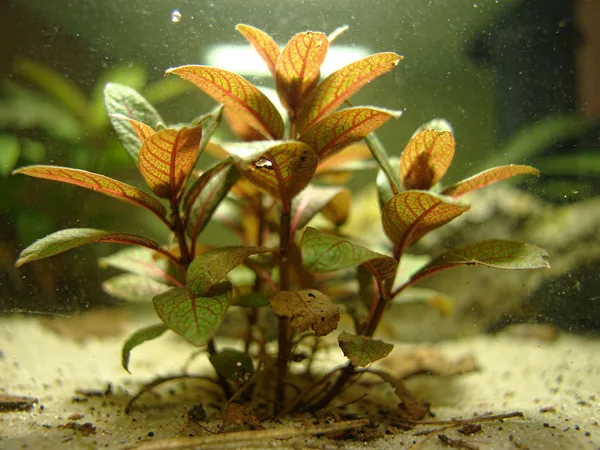
Guinea Ludwigia
Onagraceae
Ludwigia senegalensis
Leaves marked with a network of red veins on a green background — a pattern no other aquarium plant has. Rare in the trade and demanding in the tank.
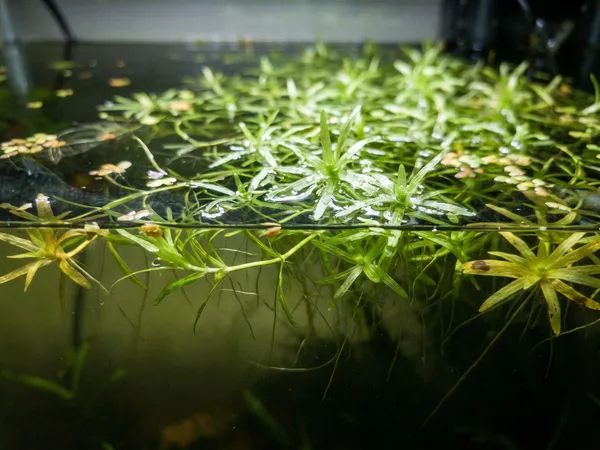
Guppy Grass
Hydrocharitaceae
Najas guadalupensis
A loose tangle of brittle stems with narrow leaves that grows in almost any water, planted or floating. The standard plant for a fry tank: fast, thirsty and full of hiding places.
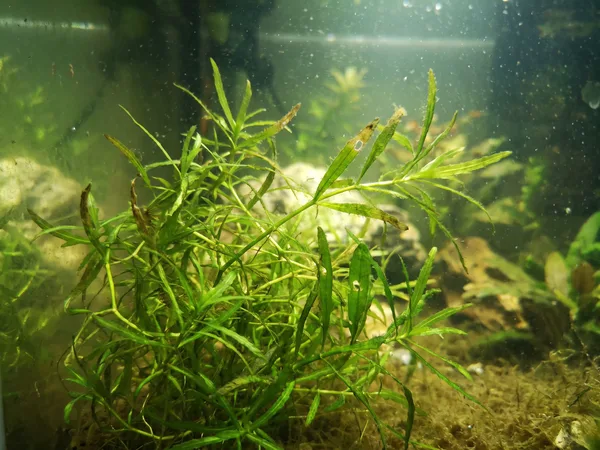
Guppy Grass
Hydrocharitaceae
Najas indica
A tangle of thin brittle stems that grows almost anywhere and asks for nothing. It floats or is tucked into the substrate, takes nutrients out of the water and gives fry the safest cover there is.
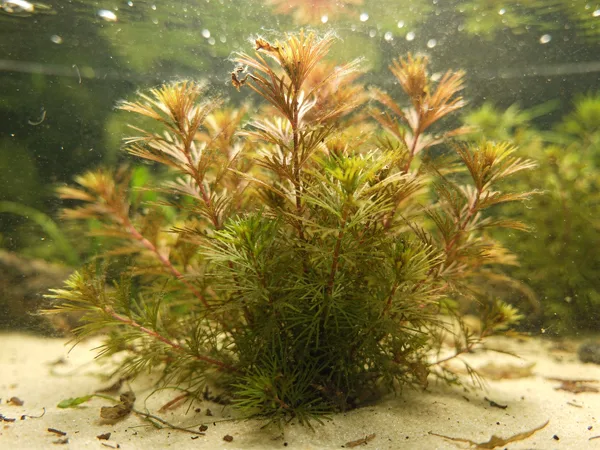
Hard-water Watermilfoil
Haloragaceae
Myriophyllum tetrandrum
Feathery bright green leaves on a red-brown stem — the watermilfoil for hard water, where most fine-leaved plants struggle.
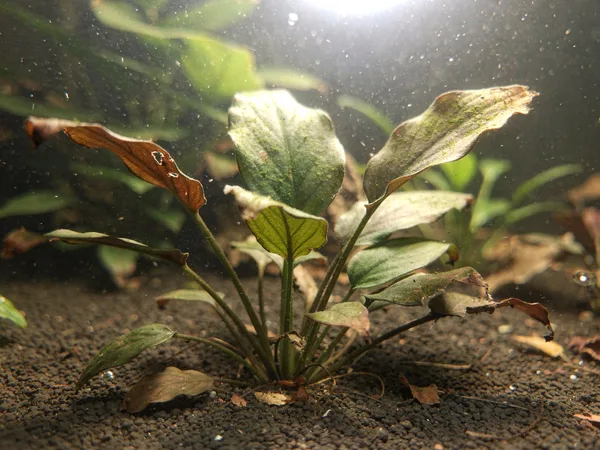
Heart-leaf Crypt
Araceae
Cryptocoryne cordata
A large and extremely variable water trumpet from Malaysia and Thailand — several plants once counted as separate species belong to it. Slow, undemanding and rare in shops.
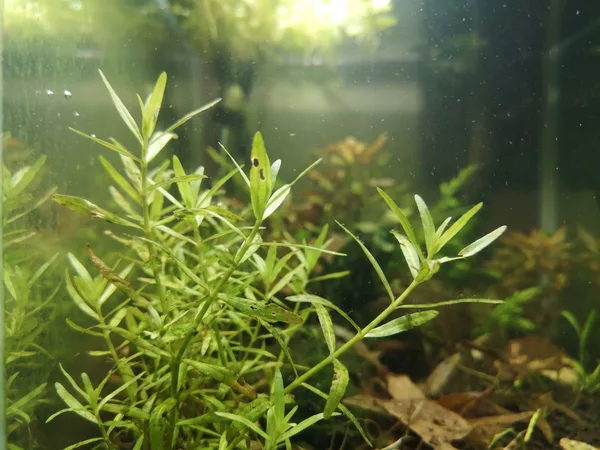
Hedge Hyssop
Plantaginaceae
Gratiola viscidula
Short stiff leaves that give the stems a spiky look — easy to recognise and unlike anything else at the front of a tank. Trimmed low it turns into a cushion, left alone it stands as a small bush.