Temperature24 – 26 °C
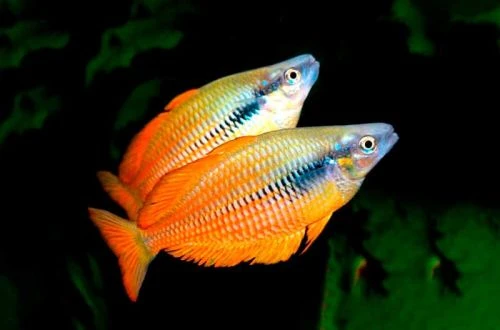
Melanotaenia angfa, or Angfa Rainbowfish, is a member of the family Melanotaeniidae. The natural habitat of this species is limited to two tributaries of the Yakati River, located on the isthmus of the Cenderawasih Peninsula, in the northwestern part of New Guinea island. These tributaries, flowing through mountainous terrain, are characterized by clear, flowing water, stony bottoms, and sparse aquatic vegetation.
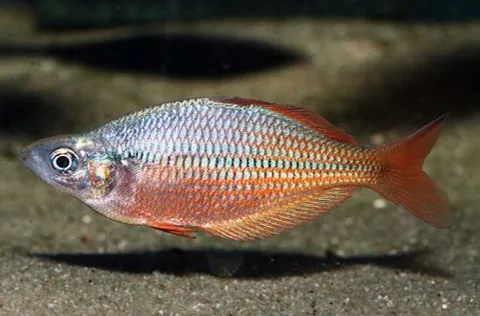
Adults can reach a length of approximately 12 cm. A distinctive feature of this fish is its bright yellow body coloration, accentuated by a black stripe running along the lateral line. Its appearance is similar to Axelrod's Rainbowfish, but the latter differs in having red fins.
The species inhabits mountain streams in New Guinea (Indonesia) at altitudes of 200 to 400 meters above sea level. It prefers areas with clean, oxygen-rich water, moderate currents, and dense riparian vegetation. In nature, the water in these biotopes is characterized by neutral to slightly acidic pH values of 6.5 to 7.5 and a temperature range of 24–26 °C.
This active and lively fish feels comfortable in a group of its own kind or with other Rainbowfish species. It can also coexist well with many non-aggressive and non-territorial aquarium fish of similar size.
The Angfa Rainbowfish is rarely encountered in aquariums, which explains the scarcity of information on successful keeping of this species in artificial conditions. Creating an environment close to its natural habitat appears to be the optimal approach. For a school of 6–8 individuals, a spacious aquarium of 150 liters or more will be required. A simple setup is recommended, including a stony substrate and driftwood. The use of plants that can attach to rocks or wood, such as Anubias, Bucephalandra, various aquatic mosses, and ferns, is also permissible. It is important to maintain high pH and GH values. Water purity is ensured by an efficient filtration system and regular aquarium maintenance.
Acclimated fish will likely readily accept most common foods, both dry and frozen or live.
Reproduction in captivity is not well studied, however, to stimulate spawning, it is recommended to use a separate aquarium of 40–60 liters with soft, slightly acidic water. Fine-leaved plants or special synthetic spawning mops are used as spawning substrate. After spawning is complete, the substrate with the eggs should be transferred to a separate container to protect the future fry from being eaten by the adults.
No specific diseases unique to this species have been recorded. Like other members of the Melanotaeniidae family, this species is susceptible to standard aquarium fish diseases when kept in improper conditions, especially with poor filtration or accumulation of organic waste. They are sensitive to abrupt changes in water hydrochemical parameters. — Bacterial infections arising from stress or injuries — Ichthyophthiriasis and other parasitic infestations due to lack of quarantine — Fin rot, developing in water with high nitrate content Prevention involves maintaining stable water parameters, regular partial water changes, and ensuring good aeration. When using medications, the species' sensitivity to certain chemical compounds should be considered, so it is recommended to temporarily remove activated carbon from the filter during treatment.
When selecting individuals, pay attention to the fish's activity and the cleanliness of its skin. A healthy rainbowfish should show curiosity, have vibrant coloration, and feed actively. Avoid purchasing fish with signs of emaciation, fin damage, body film, or unnatural behavior, such as prolonged hovering at the surface or bottom of the aquarium. It is recommended to acquire a group of 6 or more individuals to reduce stress levels.
The essentials: size, tank volume, water parameters and care
An adult reaches 12 cm in length. Plan the tank around the maximum size: the fish quickly outgrows a cramped setup.
The recommended volume is 150 L. A smaller tank speeds up nitrate build-up and raises stress levels.
Temperature 24–26 °C, pH 6.5–7.5, hardness 2–16 dGH. Stability matters more than exact values: sudden swings are harder on the fish than a small deviation from the ideal.
Around 10 years when kept properly. Lifespan depends directly on tank volume, water quality and a varied diet.
Temperament: peaceful (regular). Keep this in mind when choosing tank mates.
Recommended setup: medium group (6–8 individuals). Ignoring this is a common cause of stress and disease.
Diet type: any (universal). Feed small portions that are finished within a couple of minutes — overfeeding does more harm than underfeeding.
The scientific name of the species is Melanotaenia angfa, family Rainbowfishes (Melanotaeniidae).
The water suits 196 of 208 plants in the catalogue — the easiest ones are shown first.
Afzelius's AnubiasAnacharisAnubiasBrazilian PennywortDwarf CloverDwarf CloverDwarf HygrophilaDwarf SagittariaDwarf ValGuppy GrassHornwortJava FernJava MossMoneywortMud SwordNair's LagenandraNarrow Leaf AnacharisNarrow-leaf CloverStringy MossSüsswassertangTaiwan MossTape GrassTemple PlantUssuri Watermilfoil
Matched by family, categories and overlapping keeping conditions
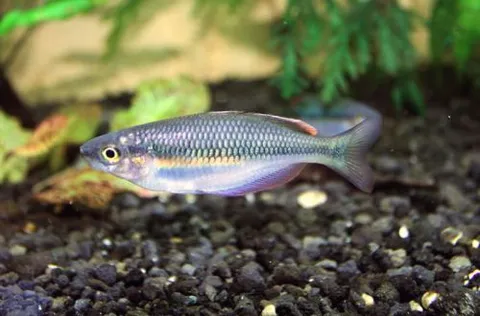
Melanotaenia irianjaya
Melanotaenia irianjaya, also known as the Irian Jaya Rainbowfish, belongs to the family Melanotaeniidae. This fish is an excellent choice for beginner aquarists due to its unpretentiousness, ease of breeding and…
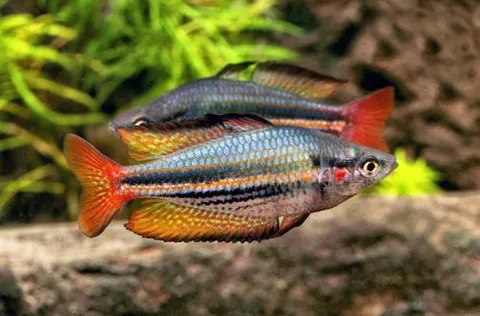
Melanotaenia australis
Melanotaenia australis, also known as the Western Rainbowfish, belongs to the family Melanotaeniidae. This fish is an excellent choice for beginner aquarists due to its unpretentiousness, ease of care and breeding, and…
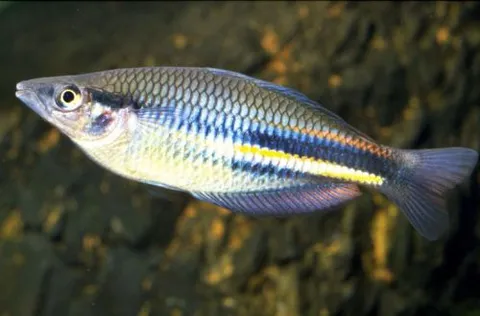
Melanotaenia affinis
The Northern Melanotaenia, widely known as the New Guinea Rainbowfish, belongs to the family Melanotaeniidae and has the scientific name Melanotaenia affinis. These beautiful fish are peaceful and undemanding, allowing…
Melanotaenia splendida rubrostriata
The Red-striped Rainbowfish (scientific name Melanotaenia splendida rubrostriata), also known as the Red-banded Rainbowfish, belongs to the family Melanotaeniidae. This species can be an excellent choice even for…