Temperature16 – 28 °C
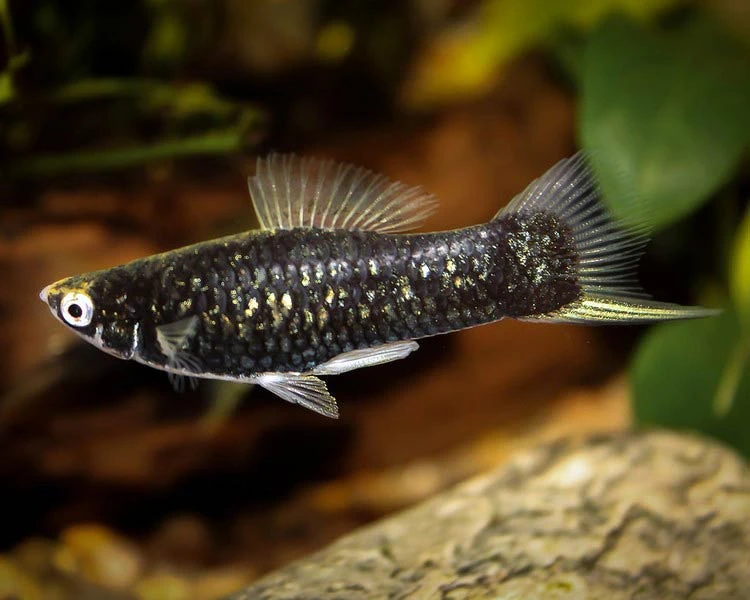
The Black Swordtail, scientifically known as Xiphophorus hellerii (Black variety), belongs to the Poeciliidae family. This fish is distinguished by its uniform dark body coloration, which gives it its name. Under certain lighting conditions, blue-green reflections can sometimes be observed on its body.
The Black Swordtail is a selectively bred form of the Green Swordtail. The fish has an elongated, laterally compressed body, with the characteristic elongated lower ray of the caudal fin in males, known as the “sword.” The coloration is rich, coal-black, often with a blue-green sheen under bright light. The eyes have a silvery-white iris. Sexual dimorphism is clearly expressed: males are slimmer, have a gonopodium and a “sword,” while females are larger (up to 16 cm) and more robust, lacking a “sword.”
In the wild, the species Xiphophorus hellerii inhabits waters of Central America, including Mexico and Guatemala. It lives in both fast-flowing mountain rivers and calm areas: lower reaches of rivers, lakes, swamps, and lagoons with dense vegetation. The black morph was artificially bred through selective breeding and does not occur in natural conditions.
This is an active and peaceful fish, suitable for a community tank. Males may display intraspecific aggression, competing for the attention of females, so it is recommended to keep them in groups with a predominance of females (at least 2-3 females per male). They are compatible with most non-aggressive fish of comparable size. Avoid keeping them with very slow-moving fish with flowing fins, which swordtails may nip.
Keeping these fish is not difficult; they are undemanding. For their well-being, an ideal environment would be a spacious aquarium with clean, warm water, equipped with several hiding places. These can be dense plant thickets or other decorative elements, whether natural or artificial. The Black Swordtail can adapt to a fairly wide range of temperatures, as well as pH and dGH values. They often thrive in unheated aquariums, without the use of heaters. Aquarium care includes standard but essential procedures: weekly partial water changes, removal of organic waste, and regular equipment checks. If a large number of fish are kept in one tank or a simple filtration system, such as an airlift filter, is used, then the frequency of water changes may need to be increased. Regarding feeding, these fish readily accept almost any food intended for aquarium inhabitants. It is recommended to include both plant-based and protein components in their daily diet: for example, spirulina flakes combined with live or frozen Artemia, bloodworms, Daphnia, and other similar foods. As for behavior and compatibility, males often compete for the attention of females. Sometimes this rivalry can be quite intense, which in small aquariums, especially without sufficient hiding places, can lead to injuries. Females, on the other hand, are peaceful. This species coexists well with many other non-aggressive fish of comparable size. However, it is important to remember the possibility of hybrid offspring, as swordtails are closely related to platies. Crossbreeding can also occur with mollies.
An omnivorous species, undemanding in terms of diet. In the aquarium, they readily consume high-quality dry foods in the form of flakes or pellets. To maintain health and vibrant coloration, the diet should be supplemented with live or frozen foods (Artemia, bloodworms, Daphnia) and vegetable additives (spirulina, blanched vegetables). Feeding is recommended 1-2 times a day in small portions.
Live-bearing fish, breeding occurs easily. Fertilization is internal, and the female carries the fry for 4-6 weeks. To preserve the offspring, it is advisable to move a pregnant female to a separate aquarium with dense vegetation, as adult fish are prone to eating their fry. One female can produce from 20 to 100 or more fry at a time. An important feature of the species is the ability of females to change sex under altered environmental conditions.
With clean water and proper nutrition, they have a strong immune system. The main problems arise from improper keeping conditions: bacterial infections, protozoan infestations, or swim bladder disease. Prevention involves weekly partial water changes, filtration, and quarantining new individuals. They are sensitive to sudden changes in water parameters.
When purchasing, choose active fish with clean fins, free of signs of damage, film, or spots. The body should be proportionate, without spinal deformities. Avoid individuals that stay near the surface, breathe heavily, or exhibit sluggish behavior. When buying black swordtails, pay attention to the intensity of their coloration and the absence of pale areas, which indicate stress or poor keeping conditions.
The essentials: size, tank volume, water parameters and care
An adult reaches 14–16 cm in length. Plan the tank around the maximum size: the fish quickly outgrows a cramped setup.
The recommended volume is 100 L. A smaller tank speeds up nitrate build-up and raises stress levels.
Temperature 16–28 °C, pH 7–8, hardness 10–30 dGH. Stability matters more than exact values: sudden swings are harder on the fish than a small deviation from the ideal.
Around 4 years when kept properly. Lifespan depends directly on tank volume, water quality and a varied diet.
Temperament: peaceful (regular). Keep this in mind when choosing tank mates.
Recommended setup: mixed (solitary / pair / group). Ignoring this is a common cause of stress and disease.
Diet type: any (universal). Feed small portions that are finished within a couple of minutes — overfeeding does more harm than underfeeding.
The scientific name of the species is Xiphophorus hellerii, family Poeciliidae.
The water suits 114 of 208 plants in the catalogue — the easiest ones are shown first.
African Onion PlantAfzelius's AnubiasAmazon FrogbitAmazon SwordAnacharisAnubiasArrowhead CryptDwarf CloverDwarf CloverDwarf HygrophilaDwarf SagittariaDwarf ValGuppy GrassHornwortJava MossMoneywortMud SwordNair's LagenandraNarrow Leaf AnacharisNarrow-leaf CloverStringy MossTaiwan MossTape GrassUssuri Watermilfoil
Matched by family, categories and overlapping keeping conditions
Xiphophorus hellerii
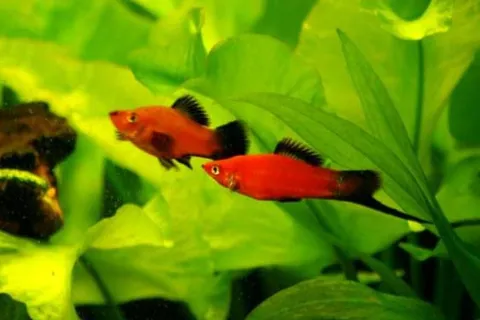
The Berlin Swordtail, known in the English-speaking world as the Red Wagtail Swordtail, is an artificially bred variety. This hybrid, resulting from the crossbreeding of the common Green Swordtail (Xiphophorus hellerii)…
Xiphophorus hellerii
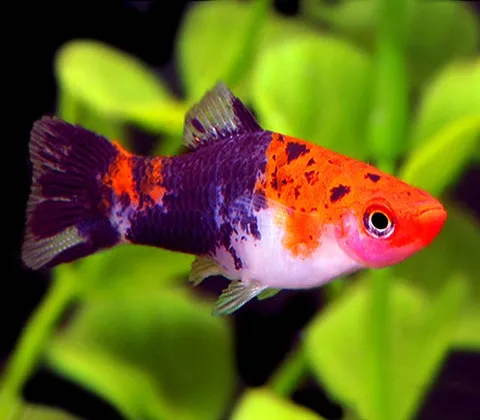
The Calico Swordtail, known scientifically as Xiphophorus hellerii (Showa strain), belongs to the Poeciliidae family. This fish earned its name due to its body coloration, which resembles the pattern of the decorative…
Xiphophorus hellerii
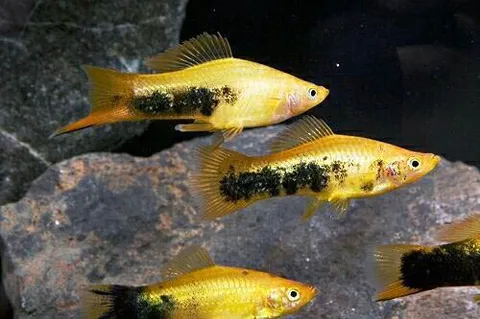
The Cuban Swordtail, known in the trade as the Tuxedo Swordtail, is the result of crossbreeding. This fish is a hybrid between the Green Swordtail and the Tuxedo Platy. From the former ancestor, males inherited the…
Xiphophorus hellerii
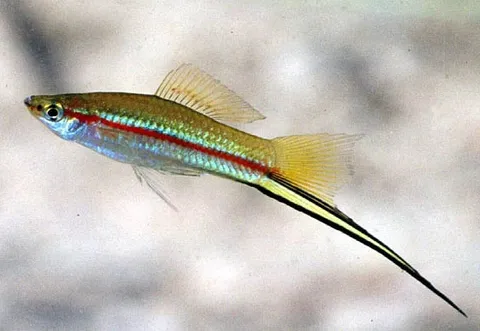
The Green Swordtail, scientifically known as Xiphophorus hellerii, belongs to the family Poeciliidae. The genus name honors Karl Bartholomaeus Heller — an Austrian botanist and naturalist (1824–1880) who first…