Temperature22 – 29 °C
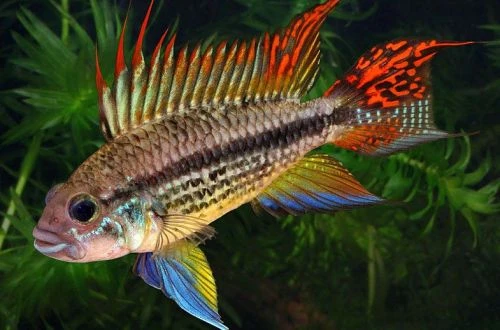
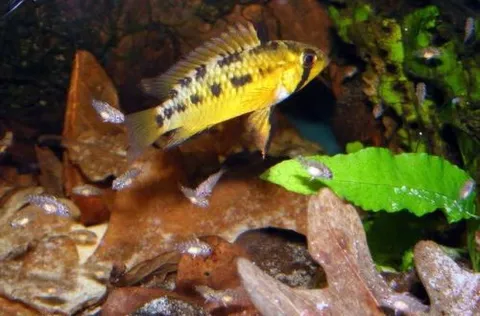
The Cockatoo Dwarf Cichlid, also known as the Cockatoo Cichlid (Apistogramma cacatuoides), is a member of the Cichlidae family. This fish is one of the most striking representatives of South American cichlids and can enhance any freshwater aquarium. Its attractive coloration is not its only advantage; the Cockatoo also stands out for its ease of care, unpretentiousness, and friendly disposition, making it an excellent choice even for beginner aquarists.
Adults reach a length of 5 to 7 cm. Males are larger and have a prominent dorsal fin, shaped like a crest, which, like the tail, is brightly colored in fiery tones. It is this unique appearance that gave the species its common name "Cockatoo." Females are significantly smaller and their coloration is much more subdued. Selective breeding forms have gained particular popularity, bearing prefixes to their names indicating their predominant coloration: "Sunset," "Double Red," "Triple Red," "Gold," "White Gold," "Orange Flash," and "Albino."
The natural habitat of this fish is located in South America, covering the Ucayali and Amazon river basins in Peru, as well as the Solimões River and its tributaries in western Brazil. They prefer areas with slow currents, flooded tropical forest sections, and swamps. In their natural environment, the waters are rich in fallen leaves, fruits, and tree branches, which give the water a rich brownish tint due to the abundance of tannins.
This fish is distinguished by its peaceful and calm temperament, allowing it to coexist well with most species of similar size and temperament. To prevent intraspecific conflicts, it is recommended to keep one male with several females. It is also not advisable to keep them with other Apistogramma species, as there is a high risk of hybrid offspring, which is best left to experienced breeders.
Most Cockatoo Cichlids available in European and Asian markets are the result of breeding on commercial fish farms. Over many generations, they have adapted to artificial aquarium environments, successfully adjusting to various water parameters. Aquarium decor also does not play a decisive role and can be chosen according to the aquarist's preferences. For those who wish to recreate a semblance of their natural habitat, it is recommended to use a sandy substrate, several pieces of driftwood covered with moss or ferns, as well as rooted and floating plants. Lighting should be subdued. Adding beech, oak, or Indian almond leaves will help give the water a characteristic "tea" tint. A similar effect can be achieved using special essences. Before placing leaves in the aquarium, they are first dried and then soaked until they sink. As for Indian almond (its leaves and bark), they are most often supplied already prepared for use.
This species is carnivorous, and in natural conditions, their diet consists of benthic invertebrates, small aquatic insects and their larvae, and crustaceans. In a home aquarium, it is recommended to supplement their diet with live or frozen foods such as bloodworms, Daphnia, or Artemia. However, these fish generally adapt well to dry sinking foods in the form of flakes or granules with a high protein content, which serves as a substitute for meat-based food.
Under favorable conditions, such as suitable hydrochemical composition and water temperature, the likelihood of fry appearing is very high. The chances significantly increase when fish are kept in soft, slightly acidic water. At the beginning of the breeding period, the male may show attention to several females simultaneously, and each of them is capable of producing offspring. In such cases, it is important to provide a sufficient number of shelters, matching the number of females, and positioned at some distance from each other. During spawning, the female lays eggs in secure shelters and stays near the clutch to protect it. After the fry emerge, she continues to care for them, protecting them from others. The male also participates in protecting the offspring, but sometimes he becomes overly aggressive, and then he has to be temporarily moved to a separate aquarium.
The main cause of most diseases in these fish is unsuitable keeping conditions and poor-quality nutrition. If initial symptoms are observed, it is first necessary to check water parameters and the concentration of dangerous substances such as ammonia, nitrites, and nitrates. If the indicators deviate from the norm, they should be brought back into order, and only then should treatment begin.
When choosing Cockatoo Dwarf Cichlids, pay attention to the fish's overall activity and the condition of their skin. Healthy individuals should be curious, have clean fins without signs of damage, growths, or white, cotton-like spots. Avoid purchasing fish with sunken bellies, signs of emaciation, or unnaturally clamped fins, which may indicate chronic stress or infections. — Opt for individuals with bright, clear coloration that matches the chosen color morph. — Carefully inspect the condition of their eyes; they should be clear, without cloudiness. — Observe their behavior: healthy fish actively explore the bottom and hiding places, rather than constantly hiding in a corner or near the water surface. — Ask the seller about the keeping conditions and the type of food the fish are accustomed to, to minimize stress during relocation.
The essentials: size, tank volume, water parameters and care
An adult reaches 5–8 cm in length. Plan the tank around the maximum size: the fish quickly outgrows a cramped setup.
The recommended volume is 60 L. A smaller tank speeds up nitrate build-up and raises stress levels.
Temperature 22–29 °C, pH 5–7, hardness 1–15 dGH. Stability matters more than exact values: sudden swings are harder on the fish than a small deviation from the ideal.
Around 5 years when kept properly. Lifespan depends directly on tank volume, water quality and a varied diet.
Temperament: semi-peaceful (including aggression during spawning / intraspecific conflicts). Keep this in mind when choosing tank mates.
Recommended setup: harem (1 male and several females). Ignoring this is a common cause of stress and disease.
Diet type: meat / protein (live, frozen, fresh). Feed small portions that are finished within a couple of minutes — overfeeding does more harm than underfeeding.
The scientific name of the species is Apistogramma cacatuoides, family Cichlids (Cichlidae).
The water suits 198 of 208 plants in the catalogue — the easiest ones are shown first.
Afzelius's AnubiasAnacharisAnubiasBrazilian PennywortDwarf CloverDwarf CloverDwarf HygrophilaDwarf SagittariaDwarf ValGuppy GrassHornwortJava FernJava MossMoneywortMud SwordNair's LagenandraNarrow Leaf AnacharisNarrow-leaf CloverStringy MossSüsswassertangTaiwan MossTape GrassTemple PlantUssuri Watermilfoil
Matched by family, categories and overlapping keeping conditions
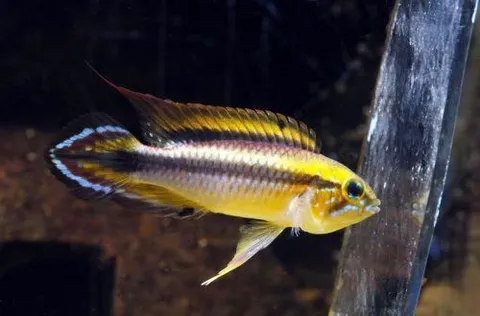
Apistogramma agassizii
Agassiz's Dwarf Cichlid, also known as Apistogramma agassizii, belongs to the family Cichlidae. This attractive fish is popular and comes in many selective breeding forms, which differ mainly in coloration. The species…
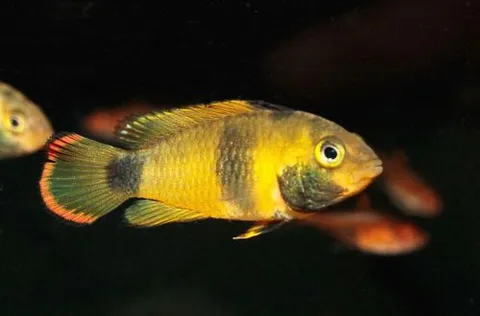
Apistogramma nijsseni
The Panda Apistogramma, or Panda Cichlid (scientific name Apistogramma nijsseni), belongs to the Cichlidae family. It is a beautiful and generally peaceful fish. However, keeping it in an aquarium can present some…
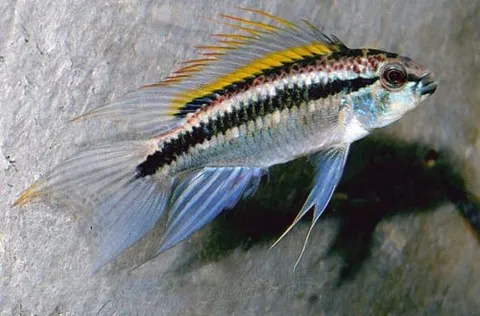
Apistogramma bitaeniata
Apistogramma bitaeniata, also known as the Two-striped Apistogramma, from the Cichlidae family, is a brightly colored and quite active fish. Males of this species are known for their complex character, which requires a…
Apistogramma macmasteri
Apistogramma macmasteri, also known as the Red-tailed Dwarf Cichlid (scientific name Apistogramma macmasteri), belongs to the family Cichlidae. This fish attracts attention with its beauty, but its temperament can be…