Temperature15 – 25 °C
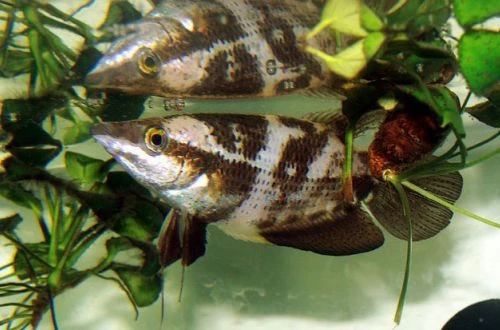
The Noble Gourami, scientifically known as Ctenops nobilis, also referred to as the Threadfin or Contemplative Gourami, belongs to the family Osphronemidae. This species is characterized by its hardiness and unpretentiousness, making it relatively easy to keep and breed. However, it should be noted that males exhibit a rather belligerent disposition, which limits the range of possible tank mates.
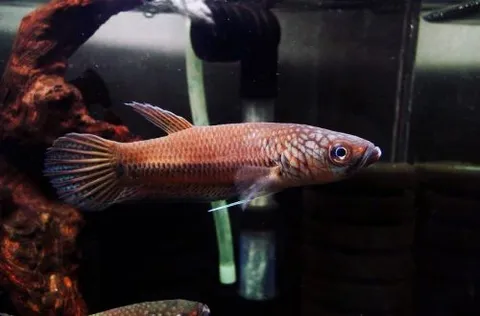
Adults of this fish can grow up to 10 cm in length. Their head has a pointed shape, with the lower jaw being slightly longer than the upper. The pattern on each fish's body is unique, consisting of irregular brownish and silvery spots. A dark spot is often visible at the base of the caudal fin. A distinctive feature of males is the red edging on the caudal fin.
The natural habitat of this species spans the entire vast river systems of the Ganges and Brahmaputra, extending across the territories of modern-day eastern India, Nepal, Bangladesh, and Bhutan. It is worth noting that conditions in these water bodies are not stable: during the monsoon season (traditionally from July to September), heavy rains cause a significant increase in river water levels and noticeably alter their hydrochemical composition.
Males of this species show antagonism towards each other, often engaging in fierce territorial conflicts. They generally treat other fish species with restraint, except during breeding periods. It has also been observed that high temperatures exceeding 25°C can negatively affect their behavior. Females, on the other hand, are peaceful. To minimize the risk of conflicts, it is recommended to keep one male with several females. As tank mates, it is best to choose peaceful schooling fish of comparable size, preferably from the carp family.
For comfortable keeping of a pair of Noble Ctenops, an aquarium of at least 100 liters will be required. These fish thrive in subdued lighting and tolerate strong internal currents poorly, so aquarium equipment should be adjusted accordingly. Otherwise, they show surprising unpretentiousness, adapting perfectly to a wide range of temperatures, pH levels, and dGH hardness. In warm weather, they can even successfully inhabit outdoor garden ponds. When decorating the aquarium, preference is given to thickets of shade-loving plants, including floating species. A sandy substrate is laid on the bottom, and shelters are placed in the form of snags, decorative elements (such as sunken ships or castles), or ceramic pots turned on their side. Aquarium care includes regular cleaning of the substrate from organic deposits and weekly partial water changes (10% to 15% of the total volume) with fresh water. The temperature regime for these fish is flexible: they adapt well to seasonal changes, feeling comfortable in the range of 15 to 25°C, while being able to briefly tolerate more significant fluctuations. In many homes with good thermal insulation or in regions with a moderate climate, artificial heating of the aquarium is not always necessary. However, if a constant temperature is desired, a value in the middle of the specified range should be chosen. It is important to note that raising the temperature above the comfortable level can provoke increased aggression in the fish or even lead to a complete refusal to eat.
In their natural environment, these fish prefer to feed on small crustaceans, various insects, their larvae, as well as worms and other zooplankton. Therefore, their daily diet should necessarily include live or frozen foods, such as bloodworms, daphnia, and artemia, along with dry feed mixes.
Noble Ctenops exhibit strong parental instincts, with the care for future offspring falling entirely on the males. The courtship process is initiated by the female or, if there are several, by the alpha female in the aquarium. The fish begin to perform a peculiar "dance," circling almost vertically, head down. Then they alternately release small portions of eggs and milt. The male immediately collects the fertilized eggs in his mouth. After the completion of spawning, which can last several hours, the male finds a quiet place in the aquarium to incubate the future offspring. Incubation takes 7 to 20 days, and throughout this time, the male completely refuses food. The fry are born fully formed and immediately begin to actively swim in search of food. If other fish species are present in the aquarium, it is recommended to transfer the fry to a separate tank with similar water conditions, which will significantly increase their chances of survival.
The main cause of most diseases in these fish is unsuitable keeping conditions and poor-quality nutrition. If initial symptoms are observed, it is first necessary to check water parameters and the concentration of dangerous substances such as ammonia, nitrites, and nitrates. If the indicators deviate from the norm, they should be brought back into order, and only then should treatment begin.
When purchasing, choose active individuals that show interest in food and have no visible damage to their fins or skin. It is important to assess the fish's overall condition: absence of signs of emaciation, unnatural spots, film, or ulcers. Avoid specimens that stay near the water surface, breathe heavily, or show signs of apathy, as the species is sensitive to transportation and keeping conditions. Since this species is considered rare and difficult to care for, it is recommended to ask the seller about the keeping conditions in the store and the current diet. Signs of ill health include a sunken belly, clamped fins, and cloudy eyes. Given the territorial nature of the species, it is better to acquire young individuals, as they adapt more easily to new conditions than adult fish accustomed to a specific environment.
The essentials: size, tank volume, water parameters and care
An adult reaches 10 cm in length. Plan the tank around the maximum size: the fish quickly outgrows a cramped setup.
The recommended volume is 100 L. A smaller tank speeds up nitrate build-up and raises stress levels.
Temperature 15–25 °C, pH 5–7.5, hardness 1–12 dGH. Stability matters more than exact values: sudden swings are harder on the fish than a small deviation from the ideal.
Around 8 years when kept properly. Lifespan depends directly on tank volume, water quality and a varied diet.
Temperament: semi-peaceful (including aggression during spawning / intraspecific conflicts). Keep this in mind when choosing tank mates.
Recommended setup: harem (1 male and several females). Ignoring this is a common cause of stress and disease.
Diet type: any (universal). Feed small portions that are finished within a couple of minutes — overfeeding does more harm than underfeeding.
The scientific name of the species is Ctenops nobilis, family Osphronemidae. It also appears in the literature as: Osphromenus nobilis, Osphronemus nobilis.
The water suits 197 of 208 plants in the catalogue — the easiest ones are shown first.
Afzelius's AnubiasAnacharisAnubiasBrazilian PennywortDwarf CloverDwarf CloverDwarf HygrophilaDwarf SagittariaDwarf ValGuppy GrassHornwortJava FernJava MossMoneywortMud SwordNarrow Leaf AnacharisNarrow-leaf CloverStringy MossSüsswassertangTaiwan MossTape GrassTemple PlantUssuri WatermilfoilWater Wisteria
Matched by family, categories and overlapping keeping conditions
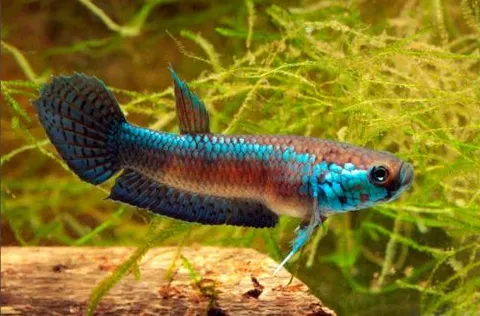
Betta unimaculata
Betta unimaculata, a member of the family Osphronemidae, is a fighting fish that fully lives up to its name. Males of this species display a temperamental character, often engaging in skirmishes over territory and…
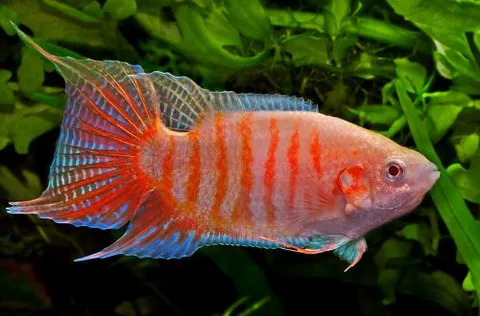
Macropodus opercularis
The Paradise Fish (Macropodus opercularis), also known as the Macropod, belongs to the family Osphronemidae. It is one of the most beautiful aquarium fish, and its appearance in the wild remains unchanged. Other…
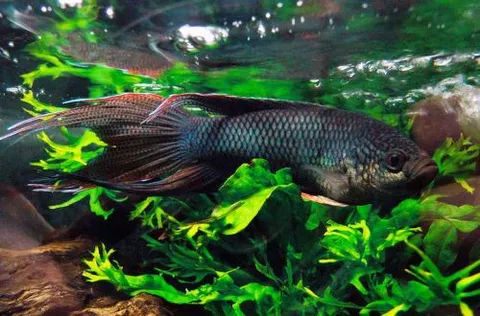
Macropodus spechti
The Black Paradise Fish, scientifically known as Macropodus spechti, belongs to the family Osphronemidae. Previously, it was often referred to as the Macropodus concolor, considered a color variation of the classic…
Betta sp. «Antuta/Bulungan»
The Bulungan Betta, also known as Betta bulungan, belongs to the family Osphronemidae. This is an undescribed species that was obtained from a collection labeled by suppliers as “Bulungan Jungle”—a name indicating the…