Lebiasinidae

Copella callolepis

Copella callolepis belongs to the family Lebiasinidae. This species was officially described as a separate species only in 2011; before that it was considered a variant of Copella nattereri or Copella meinkei, depending on the intensity of the body pattern. These fish are quite popular in the hobby, and although they may be called by different names, this does not affect how they are kept or their compatibility with other freshwater inhabitants.

Tank
from 50 L (13 gal)
Temperature
20 – 28 °C (68 – 82 °F)
Size in aquarium
4 cm (1.6 in)
Acidity
pH 4–7
Natural rangeRange on the map
  • Brazil

Tank conditions

Plan the tank stocking
Temperature
20 – 28 °C (68 – 82 °F)
Water pH
Acidic (4) – Neutral (7)
Water dH
Very soft (1) – Medium hardness (9)
Water salinity
no salt (freshwater)
Size in aquarium
4 cm (1.6 in)
Lifespan
5 years
Temperament
Semi-peaceful including aggression during spawning / intraspecific conflicts
Toward small fish
not a predator
Required aquarium volume
from 50 L (13 gal)
Lighting
dimmed
Substrate
sandy (regular, light)
Water flow
weak
Feeding
Meat with plant additives omnivores
Keeping
Schooling usually from 5–6 individuals and more
  • Lifespan. A lifespan to expect under good care, not a measured value: it depends heavily on tank volume, water quality and diet — and for selectively bred forms, on their origin as well.
  • Toward small fish. Based on the Predators category in the catalog or the temperament in the species parameters. “A risk to small fish” means the species is not a predator by habit, yet will swallow any fish that fits in its mouth.
  • Required aquarium volume. This is a husbandry recommendation, not a measured value: the volume depends on the keeping mode (schooling (usually from 5–6 individuals and more)), footprint, decor and tank mates.

Care and keeping

Description

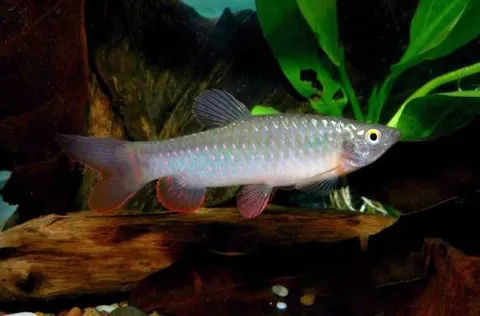
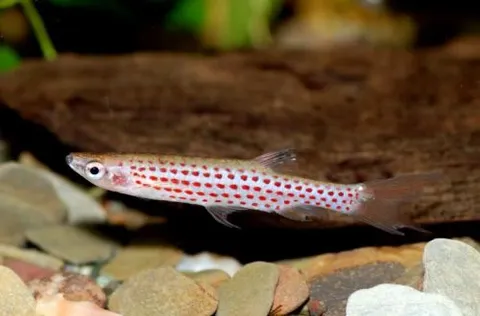
Adults reach 4 cm in length. Their overall coloration is silvery, with a darker back. The body is decorated with a pattern of red and black spots arranged in rows. A large spot is visible on the dorsal fin. Males differ from females not only in size, being larger, but also in more vivid coloration.

Habitat

This species originates from South America. Since the species was identified as separate only recently, its exact range has not been established. It is believed to inhabit the middle Amazon basin in Brazil, where it occurs in small streams and channels among dense tropical forests.

Behavior and Compatibility

This peaceful and active fish, due to its modest size, can coexist only with a limited range of other species. It is best to avoid housing it with larger or aggressive fish. Copella callolepis prefer to stay in groups of 8–10 individuals. During spawning, males become more protective of their eggs and may show unfriendly behaviour toward other tank inhabitants at this time.

Care and Maintenance

A group of 8–10 fish requires a tank of at least 50–60 L; a paludarium with a similar volume is also suitable. Given their breeding behaviour (described below), it is important to provide leaves that hang low over the water surface. Additionally, the water level should be kept so that there is a gap of at least 10 cm or more from the top of the tank. Copella callolepis looks particularly attractive among dense aquatic plants and driftwood, with dimmed lighting. Dried leaves from certain trees placed on the bottom are useful. They serve not only as decoration but also help create water chemistry close to their natural habitat. As these leaves break down, they release tannins into the water, which help lower pH and water dH. Successful long-term keeping depends largely on maintaining stable water parameters within acceptable ranges of temperature and chemistry, as well as regular tank maintenance and reliable equipment operation.

Diet

Being omnivorous, this fish readily adapts to most popular foods of appropriate size in a home aquarium. Its diet should be rich in protein and include live or frozen foods such as daphnia, brine shrimp, small bloodworms and fruit fly larvae.

Breeding and Reproduction

This fish displays an unusual breeding strategy. With the onset of the breeding season, males actively court females, occupying a small area at the water surface and excluding rivals. If the female accepts his courtship, the pair temporarily join to spawn. What follows is remarkable: the fish deposit eggs on a leaf above the water. The male and female, pressing against each other, jump out of the water and stick to the leaf for a few moments, managing to attach several eggs to it. After several such jumps, the clutch can grow to dozens of eggs. After spawning ends, the female swims away, and the male takes care of the future brood. With a sharp tail movement, he splashes water onto the eggs to prevent them from drying out.
Diseases

Health problems in these fish most often arise from unsuitable keeping conditions. Such conditions weaken the immune system, making them more vulnerable to various diseases.

How to choose

When selecting fish, pay attention to their activity and scale condition: healthy fish should be active and free from visible damage, sores or coating on the body. Make sure the fish show no signs of emaciation, and their fins are fully extended and not torn at the edges. Avoid buying fish from tanks where dead individuals have been observed or specimens with suspicious behaviour, such as unnatural swaying or lethargy. Since this species is sensitive to sudden changes in water parameters, it is best to ask the seller about the store's keeping conditions and, if possible, acclimate the fish gradually to new conditions.

Compatibility

There are no pair reviews for this species yet — check tankmates in the matcher.

All tankmates

Plants and this fish

Matching water does not mean the plant will stay intact.

Frequently asked questions

The essentials: size, tank volume, water parameters and care

How big does Copella callolepis get?

An adult reaches 4 cm in length. Plan the tank around the maximum size: the fish quickly outgrows a cramped setup.

What size aquarium does Copella callolepis need?

The recommended volume is 50 L. A smaller tank speeds up nitrate build-up and raises stress levels.

What water parameters does Copella callolepis need?

Temperature 20–28 °C, pH 4–7, hardness 1–9 dGH. Stability matters more than exact values: sudden swings are harder on the fish than a small deviation from the ideal.

How long does Copella callolepis live?

Around 5 years when kept properly. Lifespan depends directly on tank volume, water quality and a varied diet.

Is Copella callolepis aggressive?

Temperament: semi-peaceful (including aggression during spawning / intraspecific conflicts). Keep this in mind when choosing tank mates.

How many Copella callolepis should be kept together?

Recommended setup: schooling (usually from 5–6 individuals and more). Ignoring this is a common cause of stress and disease.

What does Copella callolepis eat?

Diet type: meat with plant additives (omnivores). Feed small portions that are finished within a couple of minutes — overfeeding does more harm than underfeeding.

What is the scientific name of Copella callolepis?

The scientific name of the species is Copella callolepis, family Lebiasinidae. It also appears in the literature as: Copeina callolepis, Pyrrhulina nattereri.

Similar fishes

Matched by family, categories and overlapping keeping conditions

Spotted Copella

Spotted Copella

Copella meinkeni

Lebiasinidae

Copella meinkeni, known as the Spotted Copella or Meinken's Copella, belongs to the family Lebiasinidae. Until 2006, it was considered a variety of Natterer's Copella, but it is now an independent species, although the…

Copella nattereri

Copella nattereri

Copella nattereri

Lebiasinidae

Copella nattereri, also known as Natterer's Copella (scientific name Copella nattereri), belongs to the family Lebiasinidae. This agile, schooling fish, like other members of its genus, exhibits a very unusual breeding…

Trout Copeina

Trout Copeina

Copeina guttata

Lebiasinidae

The Trout Copeina, scientifically known as Copeina guttata, is a member of the Lebiasinidae family. This fish is not particularly suitable for inexperienced aquarists, as it requires careful attention to water quality…

One-lined Pencilfish

One-lined Pencilfish

Nannostomus unifasciatus

Lebiasinidae

Nannostomus unifasciatus, also known as the One-lined Pencilfish, belongs to the family Lebiasinidae. This popular aquarium fish is notable for its unusual oblique swimming style, which distinguishes it from other…

Other scientific names and conservation status

Other scientific names
Copeina callolepis, Pyrrhulina nattereri
Copella callolepis
listed as a synonym of Copella nattereri, but the species was revalidated (Zarske, 2011)
Categories
Characins