Temperature24 – 30 °C
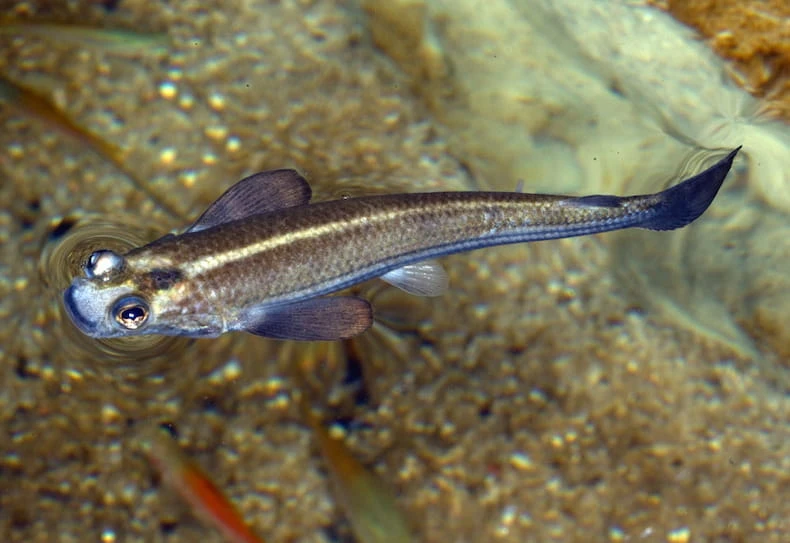
Anableps anableps, commonly known as the Four-eyed fish, belongs to the family Anablepidae. This species of tropical fish is particularly interesting due to its unusual eye structure. Although the fish has only two eyes, like most animals, each one is unique in that it is divided into two parts. This structure allows the fish to simultaneously observe what is happening above and below the water surface.
The four-eyed fish has a slender body and a unique visual organ structure that protrudes above the head. Each eye is divided by a horizontal band of tissue into two parts, allowing the fish to see both above and below the water simultaneously. Adults reach a length of 20–26 cm, with females being noticeably larger than males. The body coloration is brownish with a golden stripe along the back and several blue or purple lines on the sides. The fish's mouth is wide, with fleshy lips and teeth for holding prey. The caudal fin is fan-shaped, and the dorsal fin is strongly shifted towards the posterior part of the body. In males, the anal fin is modified into a specialized copulatory organ — the gonopodium. External sexual characteristics also include an asymmetrical genital structure, which is a characteristic feature of this species.
The species inhabits the northern coast of South America, from Trinidad and Venezuela to the Amazon delta in Brazil, including Guyana, Suriname and French Guiana. Their preferred habitats are river estuaries that flow into the sea. The Four-eyed fish spends a significant part of its life in the upper layers of the water, where it hunts small insects and various crustaceans.
This fish is characterized by a peaceful schooling nature, but it should be noted that it may prey on smaller tank mates if they can fit into its mouth. Four-eyed fish feel great in the company of their own kind; optimal groups consist of 5–6 individuals. The species is compatible with brackish water inhabitants that live in the middle or bottom layers of the aquarium.
pH and GH values do not play a critical role for this species; it is much more important to maintain a certain level of water salinity. When preparing water, it is recommended to dissolve salt in a proportion of 1 gram per 1 liter. Simple airlift filters and a reliable heater will suffice for equipment. The lighting system should provide moderate light intensity. It is advisable to fill the aquarium to half or three-quarters of its volume and keep it tightly covered to prevent the fish from jumping out. Rooted plants that can tolerate saline water are preferred for decoration. Four-eyed fish require sufficient space for free swimming. If plants grow too large and begin to cover the water surface, they should be trimmed or cut back. The choice of substrate and decorative elements for the lower tier of the aquarium is at the discretion of the aquarist, as this fish shows minimal interest in what happens at the bottom.
Since the Four-eyed fish is a carnivorous species, appropriate feeding must be provided for its maintenance in a home aquarium. The diet can include live, frozen, dry, or fresh foods, such as bloodworms, mosquito larvae, large artemia, and others. It is important to remember that the fish will only consume food if it is on the water surface.
Reproduction of this species occurs quite quickly and does not require special effort from the aquarist. Fry appear fully formed, bypassing the egg stage. The only important condition is that after the young appear, they must be moved to a separate tank, as adult individuals may eat their own offspring.
Four-eyed fish are very sensitive to bacterial infections, which are sometimes difficult to treat. The main cause of these problems often lies in the unstable salt concentration in the water, caused by evaporation.
When choosing four-eyed fish in a store, it is important to assess the overall activity of the individuals and the condition of their skin, which should be free of plaque, spots, or damage. Healthy fish stay in a school, show interest in the water surface, and react actively to movement. Avoid specimens with signs of emaciation, sunken bellies, or damaged fins. Given the specifics of the species, check the fish's eyes: they should be clear, without cloudiness, and clearly divided into two functional zones. Since four-eyed fish are schooling fish, it is recommended to purchase a group of 6–10 individuals at once to reduce stress during adaptation to new conditions. Ask the seller what type of food the fish are accustomed to in the store.
The essentials: size, tank volume, water parameters and care
An adult reaches 20–26 cm in length. Plan the tank around the maximum size: the fish quickly outgrows a cramped setup.
The recommended volume is 304 L. A smaller tank speeds up nitrate build-up and raises stress levels.
Temperature 24–30 °C, pH 7–8.5, hardness 15–35 dGH. Stability matters more than exact values: sudden swings are harder on the fish than a small deviation from the ideal.
Around 7 years when kept properly. Lifespan depends directly on tank volume, water quality and a varied diet.
Temperament: semi-peaceful (dangerous to smaller ones). Not a predatory species, but small fish that fit in its mouth will eventually be eaten.
Recommended setup: schooling (usually from 5–6 individuals and more). Ignoring this is a common cause of stress and disease.
Diet type: high protein (predominantly meat). Feed small portions that are finished within a couple of minutes — overfeeding does more harm than underfeeding.
The scientific name of the species is Anableps anableps, family Anablepidae (Four-eyed fish). It also appears in the literature as: Anableps anonymus, Anableps gronovii, Anableps lineatus.
The water suits 113 of 208 plants in the catalogue — the easiest ones are shown first.
African Onion PlantAfzelius's AnubiasAmazon FrogbitAmazon SwordAnacharisAnubiasArrowhead CryptDwarf CloverDwarf CloverDwarf HygrophilaDwarf SagittariaDwarf ValGuppy GrassHornwortJava MossMoneywortMud SwordNair's LagenandraNarrow Leaf AnacharisNarrow-leaf CloverStringy MossTaiwan MossTape GrassUssuri Watermilfoil
Matched by family, categories and overlapping keeping conditions
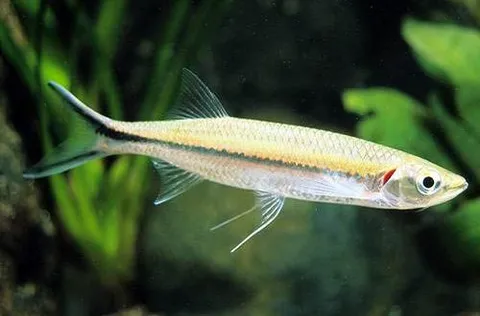
Luciosoma spilopleura
The fish, known scientifically as Luciosoma spilopleura, or the dark-sided luciosoma, belongs to the Carp family (Cyprinidae). The true Luciosoma spilopleura is almost never seen in the hobby: fish sold under this name…
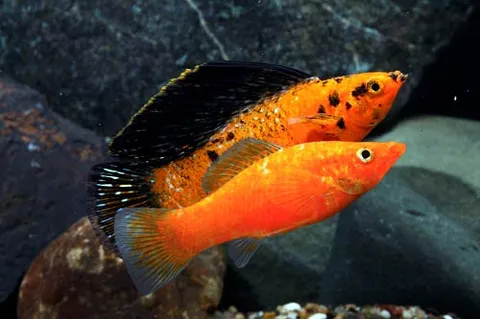
Poecilia velifera
The Sailfin Molly, scientifically known as Poecilia velifera, is a member of the Poeciliidae family. In the aquarium hobby, it is also known as the Giant Sailfin Molly.
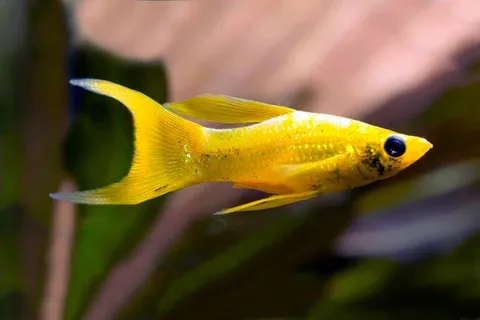
Poecilia latipinna
The Sailfin Molly, also known as Poecilia latipinna, belongs to the Poeciliidae family. This beautiful fish attracts attention with its unusually large and wide dorsal fin, which outwardly resembles a sail. Nowadays, it…
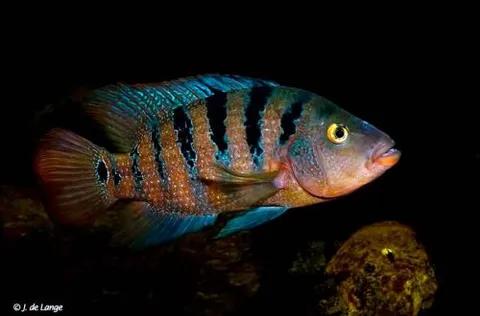
Mayaheros urophthalmus
The Mexican Cichlid, also known as Mojarra or Maya Cichlid (scientific name Mayaheros urophthalmus), belongs to the family Cichlidae. In its natural habitats in the USA and Mexico, this species is a target for…