Temperature25 – 28 °C
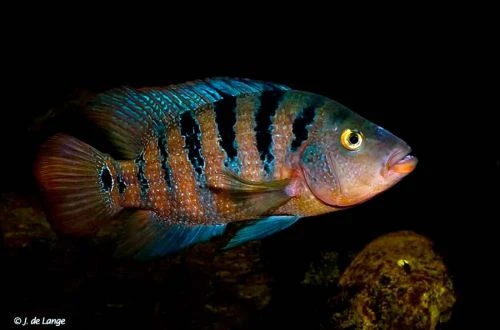
The Mexican Cichlid, also known as Mojarra or Maya Cichlid (scientific name Mayaheros urophthalmus), belongs to the family Cichlidae. In its natural habitats in the USA and Mexico, this species is a target for commercial fishing. However, the Mexican Cichlid is quite rare in aquariums.
Adults typically reach 20 cm in length. However, some geographical populations include specimens that are twice this size. There is a recorded instance of a fish over 39 cm long. The fish's appearance is notable for its flattened, oval body. The fins are large and feature spiny, pointed rays. The dorsal fin, the largest of all, begins approximately from the middle of the body and extends to the caudal region. Coloration varies depending on the specific region of habitation, usually ranging from yellow-brown to gray-brown tones, which acquire red hues during the breeding season. Red coloration can also appear outside the breeding season, especially noticeable on the lower part of the body and on the fins. A distinctive feature is a pattern of six wide vertical green-black stripes along the sides of the body. A large black spot can be seen at the base of the tail.
As the name suggests, the fish originates from Central America. Its range extends to river systems flowing into the Atlantic Ocean, from Mexico to Nicaragua. Additionally, the species has been introduced to the southern states of the USA, particularly Florida. The Mexican Cichlid inhabits both fresh and brackish waters, preferring mangrove swamps, river backwaters, and estuaries. It has a particular preference for areas with dense aquatic vegetation and silty substrates.
This relatively calm and peaceful fish forms monogamous pairs. As they mature, the male and female form a stable bond that can last for a long time. During the breeding period, they exhibit caring parental behavior, becoming aggressive when protecting their offspring. In nature, Mojarras hunt small fish, but they often become prey for large predators and birds. Their gastronomic preferences make them a threat to small aquarium inhabitants such as shrimp, snails, and other small fish. Being a territorial species, especially during the breeding season, they do not get along well with other bottom-dwelling fish like catfish and loaches. Fish of comparable size that inhabit the water column or surface are optimal choices for cohabitation.
For keeping a pair of Maya Cichlids, an aquarium with a volume of at least 350–400 liters is necessary. In natural conditions, they are often found among dense aquatic vegetation, but in an aquarium, they can damage and uproot plants. It is recommended to use fast-growing floating plant species. Natural driftwood and rock formations make good decorations, creating secluded hiding places. These fish are hardy and undemanding, capable of adapting to various conditions. They thrive in both fresh and brackish water, tolerating rapid changes in salinity, even up to marine water levels. Neutral or alkaline pH values with medium to high hardness are considered optimal. It has been noted that prolonged exposure to soft, acidic water can provoke bacterial and fungal infections. In their natural habitat, water temperatures range from 18 to 34°C, meaning a strict temperature regime is not necessary. In large aquariums, a powerful filtration system is essential. When kept in brackish water, specialized equipment for marine aquariums may be required. The Mexican Cichlid is a predator. In nature, its diet consists of other fish and invertebrates such as insects, snails, and worms. A small amount of vegetation may also enter their diet along with their main food. In an aquarium, it is recommended to offer live prey, as its absence can lead to malnutrition and emaciation. Before using alternative feeds, it is advisable to consult with the supplier.
The Mexican Cichlid is considered a small predator. In its natural environment, it feeds on other fish and invertebrates such as insects, snails, and worms. During feeding, a small amount of vegetation may also enter its diet. In aquarium conditions, it is recommended to provide live prey, as its lack often leads to malnutrition and emaciation. The use of alternative feeds should be discussed with a specialist or supplier.
The Maya Cichlid is a monogamous species, forming stable pairs. They are substrate spawners: the fish clean a flat surface (a stone, a piece of decor) or dig a pit in the substrate, where they lay their eggs. Both parents show pronounced care for their offspring, jointly guarding the clutch and larvae. In nature, spawning often coincides with the rainy season at water temperatures of 24°C. Fry begin to swim freely after a few days, after which they can be fed with Artemia nauplii and finely crushed specialized foods.
The species is highly resilient but sensitive to water quality and keeping conditions. Prolonged exposure to soft and acidic environments often provokes the development of bacterial and fungal infections, manifesting as ulcers, body film, or fin damage. The main prevention is maintaining stable water parameters, regular weekly water changes of 30–50% of the aquarium volume, and powerful filtration, which is necessary due to the high protein content in their diet and the volume of waste produced.
When selecting, prioritize active individuals with clean skin without visible damage, ulcers, or signs of emaciation. It is important to avoid fish with sluggish behavior, clamped fins, or an unnaturally bloated abdomen. Since the species is territorial and aggressive, it is recommended to acquire juveniles for co-rearing or an already established pair. When purchasing, keep in mind that fish in the store may appear paler than during the breeding season, but the basic pattern of vertical stripes should be clearly visible.
The essentials: size, tank volume, water parameters and care
An adult reaches 20 cm in length. Plan the tank around the maximum size: the fish quickly outgrows a cramped setup.
The recommended volume is 350 L. A smaller tank speeds up nitrate build-up and raises stress levels.
Temperature 25–28 °C, pH 7–9.5, hardness 12–35 dGH. Stability matters more than exact values: sudden swings are harder on the fish than a small deviation from the ideal.
Around 11 years when kept properly. Lifespan depends directly on tank volume, water quality and a varied diet.
Temperament: semi-peaceful (dangerous to smaller ones). Not a predatory species, but small fish that fit in its mouth will eventually be eaten.
Recommended setup: pair (male/female). Ignoring this is a common cause of stress and disease.
Diet type: high protein (predominantly meat). Feed small portions that are finished within a couple of minutes — overfeeding does more harm than underfeeding.
The scientific name of the species is Mayaheros urophthalmus, family Cichlids (Cichlidae). It also appears in the literature as: Astronotus urophthalmus, Cichlasoma urophthalmus, Herichthys urophthalmus.
This fish damages plants, especially when its diet is short of vegetable food.
African Onion PlantAfzelius's AnubiasAmazon FrogbitAmazon SwordAnacharisAnubiasArrowhead CryptAsian WatermossBalansa Water TrumpetBanana PlantBarth's SwordBeckett's Water TrumpetBoivin's AponogetonBroad-leaf Water SpriteBrookweedChristmas MossCognac AmmanniaCongo AnubiasCreeping JennyCreeping SpotflowerCrinkled AponogetonDark SwordDense MayacaDitch StonecropDwarf AmbuliaDwarf CloverDwarf CloverDwarf HairgrassDwarf HygrophilaDwarf RanalismaDwarf RotalaDwarf SagittariaDwarf ValDwarf Water TrumpetEelgrassFanwortFeathered LimnophilaFloating AponogetonFloating SpikerushFloating Water Sprite
This fish digs through the substrate and pulls rooted plants out.
African Onion PlantAfzelius's AnubiasAmazon SwordAnacharisArrowhead CryptBalansa Water TrumpetBanana PlantBarth's SwordBeckett's Water TrumpetBoivin's AponogetonBroad-leaf Water SpriteBrookweedCognac AmmanniaCongo AnubiasCreeping JennyCreeping SpotflowerCrinkled AponogetonDark SwordDense MayacaDitch StonecropDwarf AmbuliaDwarf CloverDwarf CloverDwarf HairgrassDwarf HygrophilaDwarf RanalismaDwarf RotalaDwarf SagittariaDwarf ValDwarf Water TrumpetEelgrassFanwortFeathered LimnophilaFloating AponogetonFloating SpikerushFragrant HygrophilaGardner's Water LilyGiant CryptGolden AmmanniaGuppy Grass
Matched by family, categories and overlapping keeping conditions
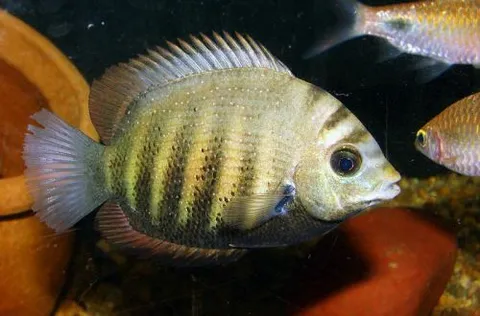
Etroplus suratensis
The scientific name for this cichlid species is Etroplus suratensis, but it is commonly known as the Banded Chromide or Green Chromide. Due to its significant size and rather subdued coloration, this species has not…
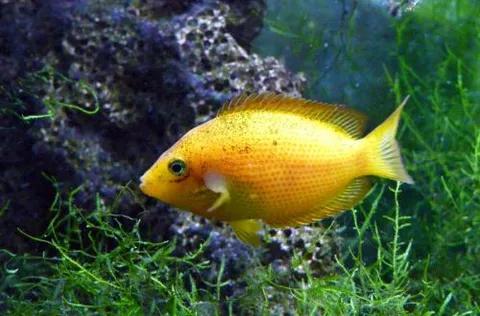
Pseudetroplus maculatus
The Spotted Chromide, also known as the Orange Chromide (scientific name Pseudetroplus maculatus), belongs to the family Cichlidae. It is a beautiful and very bright fish, particularly notable for its ornamental forms.…
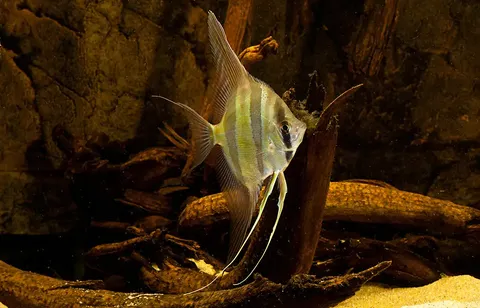
Pterophyllum altum
Pterophyllum altum, known as the Altum Angelfish or High-bodied Angelfish, belongs to the Cichlidae family. This species is the largest among angelfish, reaching lengths of 18 cm or more. Despite their size, these fish…
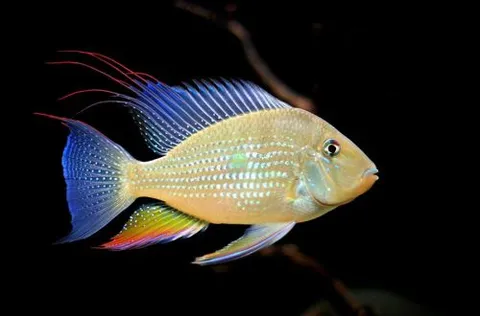
Acarichthys heckelii
Acarichthys heckelii, known as Heckel's Acara or Threadfin Acara, belongs to the Cichlidae family. This vibrant and attractive fish is relatively easy to keep, standing out with its unusual behavior during the breeding…