Temperature16 – 28 °C
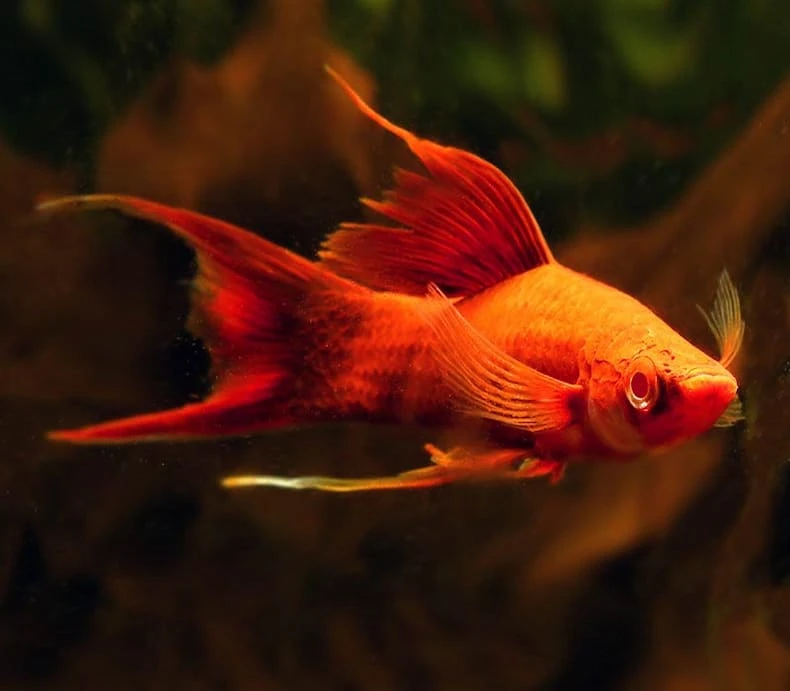
The Lyretail Swordtail, known in the English-speaking trade as Hi-Fin Lyretail Swordtails, is an artificially bred variety. It originated in the USA in the late 1960s through the hybridization of Flag and Lyretail Swordtails.
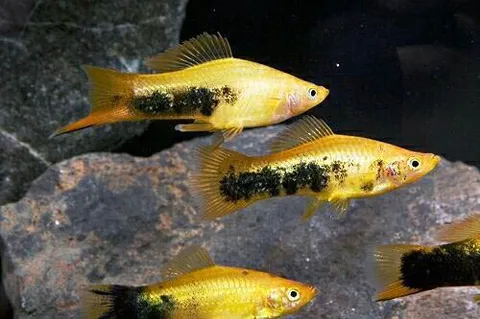
The Lyretail Swordtail is a selective breeding form of Xiphophorus hellerii, distinguished by the specific structure of its caudal fin. Unlike the wild type, where the lower rays form a single long "sword," in the lyretail form, both the lower and upper rays of the caudal fin are elongated, giving it a fork or lyre shape. The fish's body is elongated, laterally compressed, and its coloration varies from the classic olive-green with a red stripe to vibrant selective colors such as red, black, or calico. Males reach 14 cm in length, possess a gonopodium, and have more pronounced fin development, while females are larger and have a more rounded abdomen.
The wild form inhabits waters of Central America (Mexico, Guatemala, Honduras), populating both mountain rivers with fast currents and stagnant waters such as swamps, lagoons, and lakes. The lyretail variety is a product of aquarium selective breeding and is not found in the wild. In the aquarium, these fish prefer the middle and upper water layers, needing space for swimming and dense vegetation for cover.
These are active and peaceful fish, suitable for community tanks with similarly sized species. Within the species, males can exhibit territoriality and aggression towards each other, so it is recommended to keep them in groups with a predominance of females (a minimum of 3 females per 1 male), which helps to disperse the attention of the dominant male. The fish are active and can jump out of the water, so the aquarium should be covered with a lid.
Thanks to their natural resilience and lack of special requirements, Lyretail Swordtails can be a wonderful addition to any freshwater or brackish aquarium. The only thing to consider is the choice of tank mates: it is undesirable to house them with large and aggressive fish. Special attention should be paid to cohabitation with certain types of barbs, which are known for their tendency to nip and damage the fins of other fish, especially if they are long. Even a beginner aquarist can easily manage their care, as it presents no particular difficulties. It is only important to provide them with high-quality and balanced nutrition, maintain stable water parameters, and regularly remove excess organic matter, such as food debris and waste.
Swordtails are omnivorous fish with a strong inclination towards plant-based food. Their diet should include high-quality dry foods (flakes or granules), as well as regular additions of live or frozen foods (brine shrimp, daphnia, bloodworms). Important components are vegetable supplements: blanched zucchini, spinach, or spirulina-containing foods. Feeding should be done 1–2 times a day in small portions that the fish can consume within a few minutes.
Along with many advantages, this breed of Lyretail Swordtails has inherited certain disadvantages. The most notable of these is a problem with reproduction in males, caused by an excessively elongated gonopodium. Although recommendations for gonopodium trimming are sometimes found on various specialized forums and websites, such "surgical intervention" is not suitable for hobbyists and beginner aquarists and should not even be considered. To obtain healthy offspring, it is often resorted to crossing a female Lyretail Swordtail with a male of another breed, for example, a Red Swordtail. The "long fin" gene is dominant, ensuring its manifestation in a significant portion of the fry.
The species has a strong immune system provided that water purity is maintained and stress is absent. Common problems include infections caused by protozoa or bacteria, often arising from poor water quality or overcrowding. They are sensitive to sudden changes in environmental parameters. For disease prevention, regular water changes (about 25–30% weekly) and the use of quality filtration are recommended. If signs of illness appear (clamped fins, film, refusal to eat), water parameters must be checked.
When purchasing, choose active fish with clean fins and scales, free of any signs of film, sores, or spots. It is important to pay attention to the condition of the caudal fin's "fork": it should be symmetrical, without signs of rot or mechanical damage. Avoid individuals that stay at the bottom, look emaciated, or have an abnormally swollen abdomen. It is advisable to acquire young fish, as they adapt more easily to new aquarium conditions.
The essentials: size, tank volume, water parameters and care
An adult reaches 14–16 cm in length. Plan the tank around the maximum size: the fish quickly outgrows a cramped setup.
The recommended volume is 100 L. A smaller tank speeds up nitrate build-up and raises stress levels.
Temperature 16–28 °C, pH 7–8, hardness 10–30 dGH. Stability matters more than exact values: sudden swings are harder on the fish than a small deviation from the ideal.
Around 4 years when kept properly. Lifespan depends directly on tank volume, water quality and a varied diet.
Temperament: peaceful (regular). Keep this in mind when choosing tank mates.
Recommended setup: mixed (solitary / pair / group). Ignoring this is a common cause of stress and disease.
Diet type: any (universal). Feed small portions that are finished within a couple of minutes — overfeeding does more harm than underfeeding.
The scientific name of the species is Xiphophorus hellerii, family Poeciliidae. It also appears in the literature as: Mollienisia helleri, Poecilia helleri, Xiphophorus brevis.
The water suits 114 of 208 plants in the catalogue — the easiest ones are shown first.
African Onion PlantAfzelius's AnubiasAmazon FrogbitAmazon SwordAnacharisAnubiasArrowhead CryptDwarf CloverDwarf CloverDwarf HygrophilaDwarf SagittariaDwarf ValGuppy GrassHornwortJava MossMoneywortMud SwordNair's LagenandraNarrow Leaf AnacharisNarrow-leaf CloverStringy MossTaiwan MossTape GrassUssuri Watermilfoil
Matched by family, categories and overlapping keeping conditions
Xiphophorus hellerii
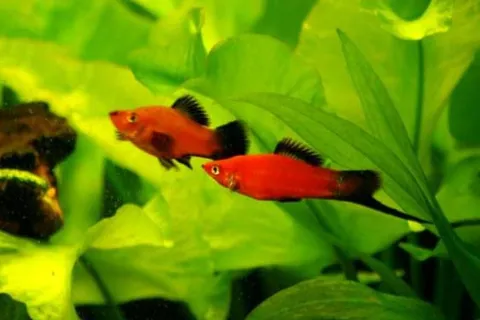
The Berlin Swordtail, known in the English-speaking world as the Red Wagtail Swordtail, is an artificially bred variety. This hybrid, resulting from the crossbreeding of the common Green Swordtail (Xiphophorus hellerii)…
Xiphophorus hellerii
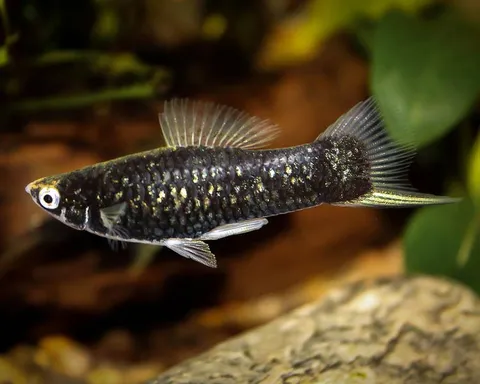
The Black Swordtail, scientifically known as Xiphophorus hellerii (Black variety), belongs to the Poeciliidae family. This fish is distinguished by its uniform dark body coloration, which gives it its name. Under…
Xiphophorus hellerii
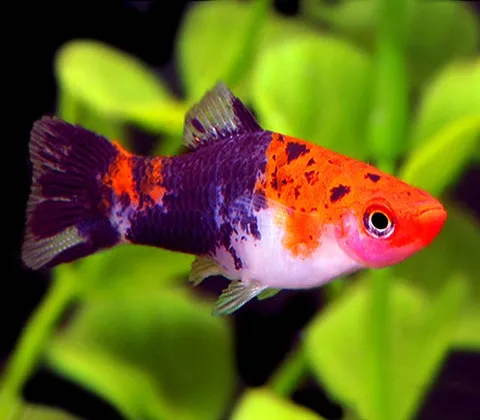
The Calico Swordtail, known scientifically as Xiphophorus hellerii (Showa strain), belongs to the Poeciliidae family. This fish earned its name due to its body coloration, which resembles the pattern of the decorative…
Xiphophorus hellerii
The Cuban Swordtail, known in the trade as the Tuxedo Swordtail, is the result of crossbreeding. This fish is a hybrid between the Green Swordtail and the Tuxedo Platy. From the former ancestor, males inherited the…