Temperature16 – 28 °C
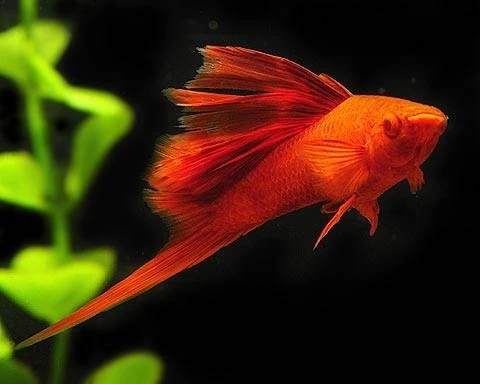
Xiphophorus hellerii, known as the Hi-Fin Swordtail, is a member of the Poeciliidae family. Outside of Russia, in Europe and America, this variety is known as Swordtails Hi Fin. A distinctive feature of both male and female individuals of this species is an unusually large dorsal fin, the size of which serves as the basis for an analogy with a flag among aquarists. Initially, swordtails of red coloration possessed such a fin, but over time, varieties with black hues were also bred. It is noteworthy that the characteristic "sword" is an attribute exclusively of male individuals.
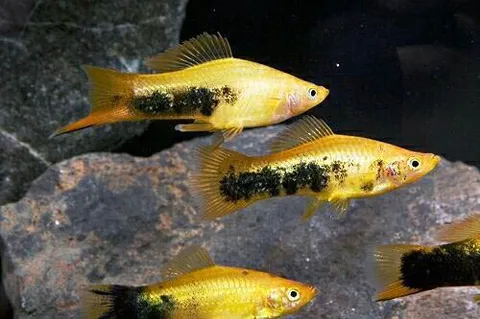
The Hi-Fin Swordtail is a selective breeding form of Xiphophorus hellerii, distinguished by an abnormally developed dorsal fin resembling a flag in shape. The body is elongated and robust. In males, the lower part of the caudal fin is extended into a characteristic "sword," which may have a black outline. Coloration is variable: red, orange, and black hues are most common. Males are typically more slender than females and possess a gonopodium, while females are larger and more massive.
In nature, the species inhabits freshwater bodies of Central America, including rivers, streams, and ponds from Mexico to Honduras. They prefer areas with dense vegetation and clear water, often found in places with rocky or sandy bottoms. They possess high adaptability, capable of tolerating fluctuations in water parameters and living in brackish conditions.
A peaceful and active fish, suitable for a community tank. Intraspecific hierarchy is pronounced: dominant males may exhibit territoriality, so it is recommended to keep a group with a predominance of females (at least 3 females per 1 male). Due to their long fins, they are incompatible with fin-nipping species, such as some types of barbs.
This fish species is not demanding regarding keeping conditions, demonstrating hardiness and adaptability, which makes its care similar to other swordtails. These fish successfully adapt to a wide range of temperature indicators, as well as pH and dGH values, including brackish water. They are not picky about aquarium decor and readily accept most common foods. The behavior of Hi-Fin Swordtails is characterized by activity and mobility, despite the fact that their large fin may somewhat slow down their movements. It is important to consider that such impressive fins can attract the attention of fish prone to fin-nipping, such as some types of barbs. These fish are peaceful, both towards their own kind and towards representatives of other species. However, it should be remembered that cohabitation with closely related species, such as platies or mollies, can lead to the appearance of hybrid offspring.
An omnivorous species. In the aquarium, they readily consume high-quality dry foods in the form of flakes or pellets, supplemented with live or frozen foods such as Artemia, Daphnia, or insect larvae. To maintain health and vibrant coloration, it is recommended to include vegetable supplements in their diet — blanched vegetables or foods with spirulina. Feeding should be done 1–2 times a day in small portions.
A livebearing species; spawning occurs in the community tank. They reach sexual maturity at 6 months. Gestation lasts 4–6 weeks, after which the female gives birth to fully formed fry. For the survival of the offspring, dense plant thickets are necessary, where the fry can hide from adult fish. It is recommended to move the pregnant female to a separate tank or use special breeding traps.
When water cleanliness is maintained and nutrition is balanced, the fish have strong immunity. Common problems include swim bladder diseases, bacterial infections (including aeromonosis), and protozoan infestations. Prevention includes regular water changes, quarantine for new individuals, and avoiding overpopulation.
When purchasing, choose active fish with clean fins showing no signs of damage, film, or sores. It is important to inspect the eyes and scales for spots. Avoid individuals that stay near the surface, appear emaciated, or show signs of apathy. It is recommended to purchase fish from aquariums with clear water and no deceased individuals.
The essentials: size, tank volume, water parameters and care
An adult reaches 14–16 cm in length. Plan the tank around the maximum size: the fish quickly outgrows a cramped setup.
The recommended volume is 100 L. A smaller tank speeds up nitrate build-up and raises stress levels.
Temperature 16–28 °C, pH 7–8, hardness 10–30 dGH. Stability matters more than exact values: sudden swings are harder on the fish than a small deviation from the ideal.
Around 4 years when kept properly. Lifespan depends directly on tank volume, water quality and a varied diet.
Temperament: peaceful (regular). Keep this in mind when choosing tank mates.
Recommended setup: mixed (solitary / pair / group). Ignoring this is a common cause of stress and disease.
Diet type: any (universal). Feed small portions that are finished within a couple of minutes — overfeeding does more harm than underfeeding.
The scientific name of the species is Xiphophorus hellerii, family Poeciliidae. It also appears in the literature as: Mollienisia helleri, Poecilia helleri, Xiphophorus brevis.
The water suits 114 of 208 plants in the catalogue — the easiest ones are shown first.
African Onion PlantAfzelius's AnubiasAmazon FrogbitAmazon SwordAnacharisAnubiasArrowhead CryptDwarf CloverDwarf CloverDwarf HygrophilaDwarf SagittariaDwarf ValGuppy GrassHornwortJava MossMoneywortMud SwordNair's LagenandraNarrow Leaf AnacharisNarrow-leaf CloverStringy MossTaiwan MossTape GrassUssuri Watermilfoil
Matched by family, categories and overlapping keeping conditions
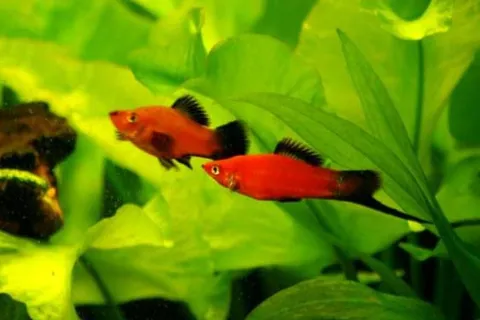
Xiphophorus hellerii
The Berlin Swordtail, known in the English-speaking world as the Red Wagtail Swordtail, is an artificially bred variety. This hybrid, resulting from the crossbreeding of the common Green Swordtail (Xiphophorus hellerii)…
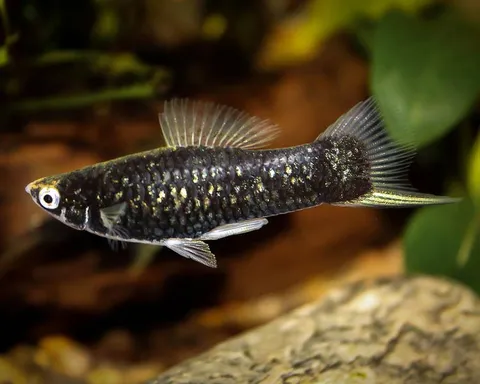
Xiphophorus hellerii
The Black Swordtail, scientifically known as Xiphophorus hellerii (Black variety), belongs to the Poeciliidae family. This fish is distinguished by its uniform dark body coloration, which gives it its name. Under…
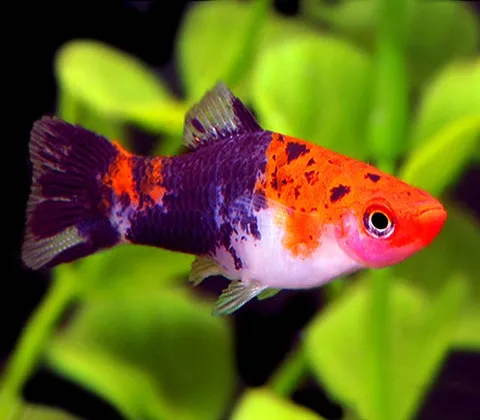
Xiphophorus hellerii
The Calico Swordtail, known scientifically as Xiphophorus hellerii (Showa strain), belongs to the Poeciliidae family. This fish earned its name due to its body coloration, which resembles the pattern of the decorative…
Xiphophorus hellerii
The Cuban Swordtail, known in the trade as the Tuxedo Swordtail, is the result of crossbreeding. This fish is a hybrid between the Green Swordtail and the Tuxedo Platy. From the former ancestor, males inherited the…