Temperature16 – 28 °C
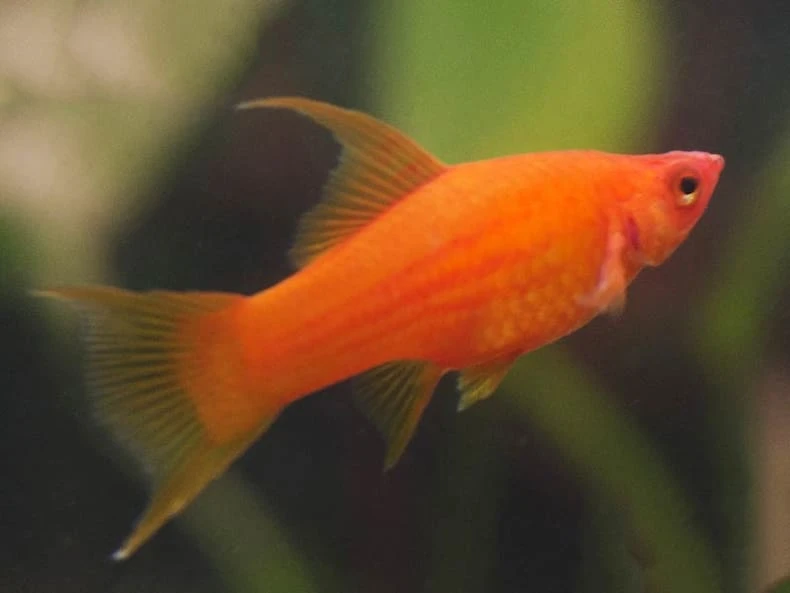
The Lyretail Swordtail, officially known as Xiphophorus hellerii, belongs to the Poeciliidae family. A distinctive feature of this breed is the unique structure of its caudal fin, where the upper and lower rays are noticeably elongated. This tail shape, resembling the ancient Greek musical instrument, the lyre, is the reason for the fish's name.
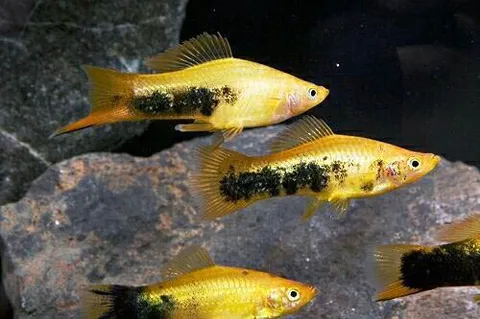
The Lyretail Swordtail is a cultivated form of Xiphophorus hellerii, distinguished by its characteristic caudal fin structure with elongated upper and lower rays, resembling a lyre. The body is elongated, robust, with the sword-like extension typical of males on the lower part of the tail. Sexual dimorphism is pronounced: males possess a gonopodium and brighter coloration, while females are larger and more massive. Numerous color variations, obtained through selective breeding, are found in the aquarium hobby.
The natural species originates from water bodies in Central America, including Honduras and Guatemala. In their natural habitat, they prefer rivers and streams with calm currents, sandy or rocky bottoms, and dense vegetation. Water parameters in nature vary, but the fish show high adaptability to different conditions, including the ability to live in slightly brackish water.
A peaceful and active species, suitable for community tanks. It is recommended to keep them in a group with a predominance of females, as males can display intraspecific aggression and persistently pursue females. They are compatible with most similarly sized peaceful fish. Due to their jumping ability, the aquarium must be covered with a lid.
This swordtail breed, like many of its relatives, is undemanding in care, making it an excellent choice for beginner aquarists. The Lyretail Swordtail thrives in various water conditions, including slightly brackish water. It has no special requirements for aquarium decor and can peacefully coexist with many other fish species. Its diet easily includes most popular foods of appropriate size; dry products such as flakes and pellets can form the basis of its daily nutrition. Standard aquarium maintenance includes weekly cleaning of the substrate from organic deposits, such as food remnants and excrement, performing this procedure along with a partial water change with fresh water.
Omnivorous fish, undemanding regarding their diet. In the aquarium, they accept high-quality dry foods in the form of flakes or pellets. To maintain health and vibrant coloration, it is recommended to supplement their diet with live or frozen foods, such as Artemia or Daphnia, as well as plant-based additives, for example, spirulina or blanched vegetables.
As a result of selective breeding, some male individuals exhibit excessive development of the gonopodium – a modified anal fin that males use to fertilize females. Due to this peculiarity, reproduction can be difficult or even impossible. Professional breeders, striving to maintain a pure strain, employ complex methods of semen extraction and perform artificial insemination. For ordinary aquarists, the method of cross-breeding is available: female Lyretail Swordtails are kept with males of regular Red Swordtails. The genes determining the tail shape are dominant and are passed on to the offspring, but not to the entire brood.
Provided proper keeping conditions and regular water changes, they possess strong immunity. Common problems include bacterial infections, protozoan or monogenean infestations, often arising from overcrowding or poor water quality. Prevention includes quarantining new individuals and maintaining cleanliness in the aquarium.
When purchasing, choose active fish with clean fins and no visible spots or film on their bodies. It is important to avoid individuals showing signs of emaciation, clamped fins, or unnatural behavior. It is recommended to acquire fish from reputable breeders, as due to selective breeding characteristics, the reproduction of lyretail males can be challenging.
The essentials: size, tank volume, water parameters and care
An adult reaches 14–16 cm in length. Plan the tank around the maximum size: the fish quickly outgrows a cramped setup.
The recommended volume is 100 L. A smaller tank speeds up nitrate build-up and raises stress levels.
Temperature 16–28 °C, pH 7–8, hardness 10–30 dGH. Stability matters more than exact values: sudden swings are harder on the fish than a small deviation from the ideal.
Around 4 years when kept properly. Lifespan depends directly on tank volume, water quality and a varied diet.
Temperament: peaceful (regular). Keep this in mind when choosing tank mates.
Recommended setup: mixed (solitary / pair / group). Ignoring this is a common cause of stress and disease.
Diet type: any (universal). Feed small portions that are finished within a couple of minutes — overfeeding does more harm than underfeeding.
The scientific name of the species is Xiphophorus hellerii, family Poeciliidae. It also appears in the literature as: Mollienisia helleri, Poecilia helleri, Xiphophorus brevis.
The water suits 114 of 208 plants in the catalogue — the easiest ones are shown first.
African Onion PlantAfzelius's AnubiasAmazon FrogbitAmazon SwordAnacharisAnubiasArrowhead CryptDwarf CloverDwarf CloverDwarf HygrophilaDwarf SagittariaDwarf ValGuppy GrassHornwortJava MossMoneywortMud SwordNair's LagenandraNarrow Leaf AnacharisNarrow-leaf CloverStringy MossTaiwan MossTape GrassUssuri Watermilfoil
Matched by family, categories and overlapping keeping conditions
Xiphophorus hellerii
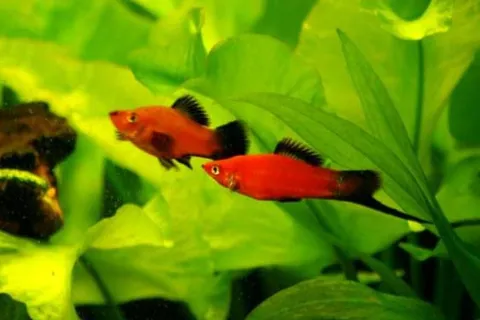
The Berlin Swordtail, known in the English-speaking world as the Red Wagtail Swordtail, is an artificially bred variety. This hybrid, resulting from the crossbreeding of the common Green Swordtail (Xiphophorus hellerii)…
Xiphophorus hellerii
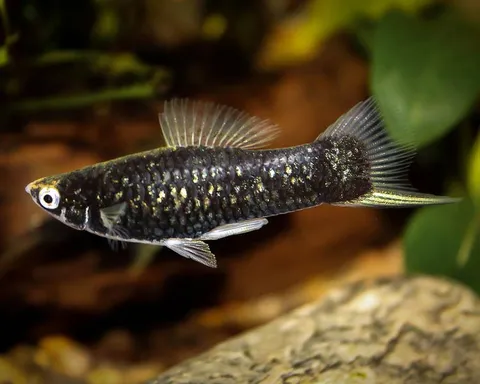
The Black Swordtail, scientifically known as Xiphophorus hellerii (Black variety), belongs to the Poeciliidae family. This fish is distinguished by its uniform dark body coloration, which gives it its name. Under…
Xiphophorus hellerii
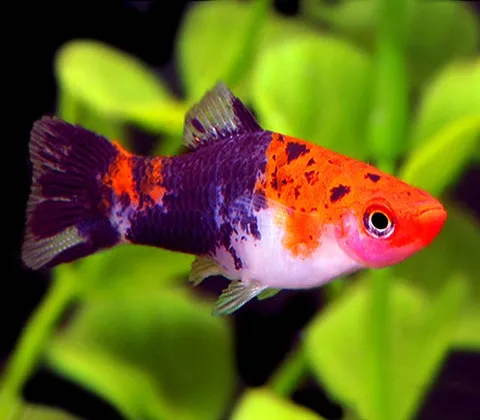
The Calico Swordtail, known scientifically as Xiphophorus hellerii (Showa strain), belongs to the Poeciliidae family. This fish earned its name due to its body coloration, which resembles the pattern of the decorative…
Xiphophorus hellerii
The Cuban Swordtail, known in the trade as the Tuxedo Swordtail, is the result of crossbreeding. This fish is a hybrid between the Green Swordtail and the Tuxedo Platy. From the former ancestor, males inherited the…