Temperature22 – 27 °C
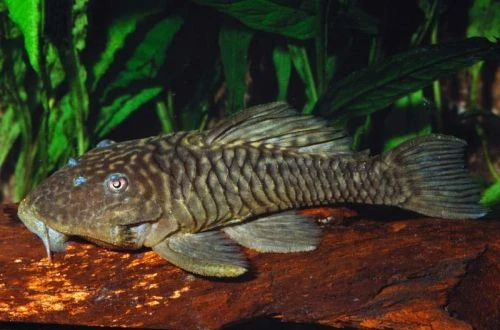
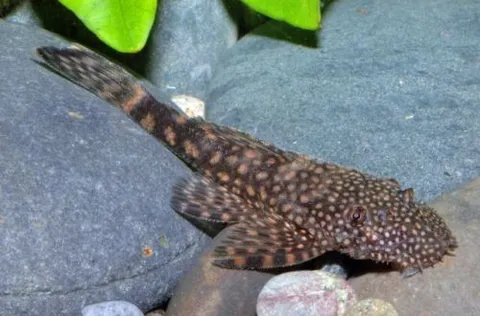
Parancistrus aurantiacus, also known as the "Round-faced" pleco, belongs to the family Loricariidae, which includes the armored catfish. Its name comes from its unusual head shape; unlike most plecos with a wedge-shaped profile, its head appears rounded when viewed from above.
Adults can reach approximately 20 cm in length. In addition to the aforementioned rounded head shape, this catfish is characterized by bony "armor" in the form of rows of plates covering its entire body. Its fins are large, with thickened first rays that are sharp spines, further studded with numerous barbs. The primary coloration of the fish is usually a uniform gray. However, Parancistrus aurantiacus can sometimes change its coloration to completely golden, and then return to its usual appearance. Researchers suggest that such color metamorphoses may be caused by the fish being in an unfavorable habitat. Thus, the appearance of golden color may serve as an indicator of negative external factors, such as poor water quality, low oxygen content, or signal that the fish is undergoing an acclimatization stage.
The homeland of this catfish is South America. It inhabits the upper Amazon River basin, specifically the Ucayali River in Peru, as well as its right tributaries, including the Tocantins and Xingu rivers in Brazil. It prefers areas with abundant aquatic vegetation and plenty of driftwood.
These fish are quite peaceful. When young, they get along well with each other, but as they mature, they will require individual territory. Inadequate space and insufficient food can lead to conflicts. In spacious aquariums, they successfully coexist with many other fish species, but the selection of territorial neighbors requires caution. Inhabitants of the middle and upper water layers will be a good choice for cohabitation.
For one adult catfish, an aquarium of at least 200 L is recommended. In its design, key attention is paid to the bottom layer. It is advisable to place plenty of natural driftwood on the bottom and create shelters, for example, using artificial grottoes or caves. Given the vegetarian diet of the "Round-faced" pleco, it is better to choose hard-leaved plants for aquascaping, such as Anubias, Vallisneria, or various aquatic ferns (e.g., Java fern). They prefer subdued lighting and do not tolerate excessive current well. Therefore, it is important to regulate the operation of filters to avoid strong water movement. For long-term successful keeping, it is necessary to maintain stable water parameters, which is achieved through regular aquarium maintenance and timely equipment prevention.
The basis of these fish's diet consists mostly of algae, plants, and other plant-based organic matter, and to a lesser extent, various invertebrates. In a home aquarium, sinking dry foods of plant origin, spirulina in various forms (flakes, granules, tablets), as well as pieces of vegetables and fruits (e.g., cucumber, zucchini, apple, spinach) should be offered. As supplementary food, universal sinking dry foods, as well as fresh or frozen bloodworms, pieces of shrimp, or mussels, are suitable.
It is bred in home aquaria only very rarely. The species spawns in a cave large enough for both fish: the female lays the eggs and the male guards the clutch, fanning it with his fins. To bring the fish into condition keepers use a roomy tank of 250–300 litres with several large shelters, strong current, a protein-rich diet and weekly changes with soft water.
No diseases that affect only this species have been described. Under suitable conditions — clean water, a balanced diet and calm tank mates — health problems usually do not arise. The most common cause of illness is a decline in conditions: it weakens the immune system, and the fish becomes vulnerable to infections that are always present in an aquarium. At the first signs of trouble — lethargy, wasting, refusal of food or clamped fins — check the basic water parameters and the levels of ammonia, nitrite and nitrate first. Restoring acceptable conditions often lets the fish recover on its own. Catfish of this group have naked, scaleless skin and are therefore more sensitive to medication than most aquarium fish. Products based on malachite green and copper should be used with care and at about half the dose stated on the packaging.
When choosing specimens, pay attention to the condition of the skin and fins. A healthy fish should not have ulcers, whitish spots, or signs of erosion, and its breathing should be calm and rhythmic. It is important to ensure that the fish shows activity in the evening or under subdued light, as Parancistrus are primarily nocturnal. Avoid purchasing specimens with sunken bellies, which may indicate emaciation or internal parasitic infections, common in recently imported fish.
The essentials: size, tank volume, water parameters and care
An adult reaches 20 cm in length. Plan the tank around the maximum size: the fish quickly outgrows a cramped setup.
The recommended volume is 200 L. A smaller tank speeds up nitrate build-up and raises stress levels.
Temperature 22–27 °C, pH 5.5–7, hardness 2–12 dGH. Stability matters more than exact values: sudden swings are harder on the fish than a small deviation from the ideal.
Around 10 years when kept properly. Lifespan depends directly on tank volume, water quality and a varied diet.
Temperament: semi-peaceful (aggression when space is limited). Keep this in mind when choosing tank mates.
Recommended setup: both solitary and in group (flexible). Ignoring this is a common cause of stress and disease.
Diet type: plant-based (algae, vegetables). Feed small portions that are finished within a couple of minutes — overfeeding does more harm than underfeeding.
The scientific name of the species is Parancistrus aurantiacus, family Armored Catfishes (Loricariidae). It also appears in the literature as: Hypostomus aurantiacus, Hypostomus nigricans, Hypostomus vicinus.
The water suits 198 of 208 plants in the catalogue — the easiest ones are shown first.
Afzelius's AnubiasAnacharisAnubiasBrazilian PennywortDwarf CloverDwarf CloverDwarf HygrophilaDwarf SagittariaDwarf ValGuppy GrassHornwortJava FernJava MossMoneywortMud SwordNair's LagenandraNarrow Leaf AnacharisNarrow-leaf CloverStringy MossSüsswassertangTaiwan MossTape GrassTemple PlantUssuri Watermilfoil
Matched by family, categories and overlapping keeping conditions
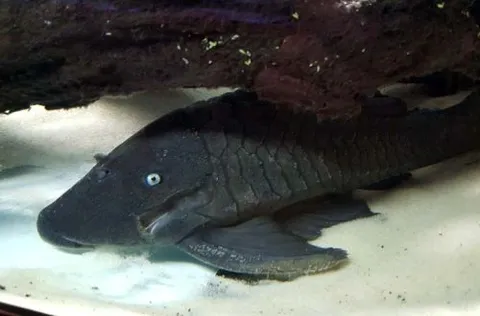
Panaque suttonorum
Panaque suttonorum, also known as the Blue-Eyed Panaque or Sutton's Panaque, belongs to the Loricariidae family, which includes armored catfish. In Venezuela and other South American countries, the word "panaque" is…
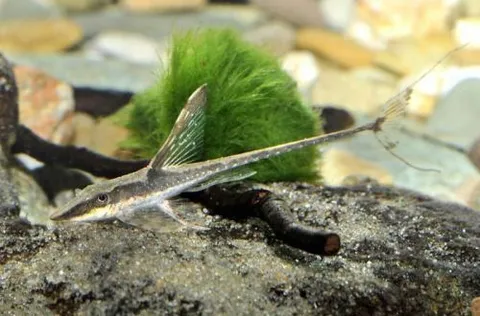
Sturisomatichthys aureus
The Golden Sturisoma, scientifically known as Sturisomatichthys aureus (formerly Sturisoma aureum), is a member of the armored catfish family (Loricariidae). This species originates from South America, where it is found…
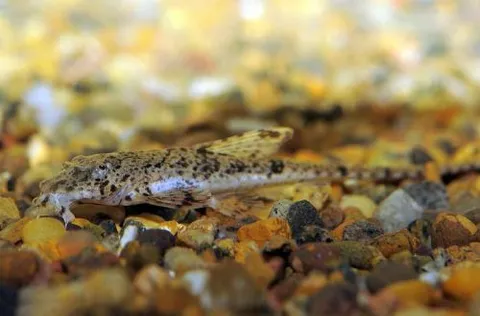
Rineloricaria microlepidogaster
The fish known as the Golden Loricarid or Six-banded Loricarid, scientifically named Rineloricaria microlepidogaster, is a member of the Armored Catfish family (Loricariidae). This catfish originates from South America.…
Ancistrus cirrhosus
The Dark Ancistrus, also known as the Bristlenose Pleco (Ancistrus cirrhosus), possesses a rather unusual appearance that might remind one of something shaggy. This fish can remain motionless for long periods, which,…