Temperature24 – 28 °C
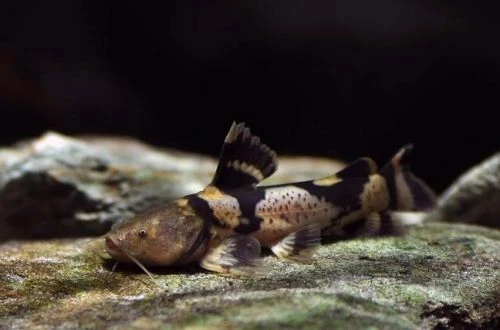
Pseudopimelodus bufonius, known by its scientific name Pseudopimelodus bufonius, belongs to the family Pseudopimelodidae. This catfish originates from South America, predominantly in Venezuela and the northern Brazilian states. It can be found in Lake Maracaibo, as well as in the river systems that flow into it.
Adults of this species can grow up to 24–25 cm in length. The fish is characterized by a robust, torpedo-shaped body with a flat, flattened head. Its fins are short, as is its tail. The eyes are small, located closer to the top of the head. The body pattern consists of large brown spots or stripes on a light background with small speckles.
The species inhabits freshwater bodies in the northeastern part of South America. Its range extends from Lake Maracaibo in Venezuela to the eastern regions of Brazil. The fish prefers rivers with moderate currents, living a benthic lifestyle, hiding in natural shelters.
The catfish spends most of the day in hiding, being relatively inactive. It becomes most active at dusk. Territoriality is not characteristic of this species, so it can successfully coexist with both its conspecifics and other large catfishes. The species is peaceful and does not show aggression. However, one should remember its gastronomic preferences: Pseudopimelodus can eat any fish that fits into its mouth. Larger species, such as South American cichlids, dollar fish, armored catfishes, and others, make good tankmates.
For one or two fish, the optimal aquarium volume starts from 250 liters. When decorating, it is necessary to provide a hiding place. A cave or grotto made of intertwined snags or a pile of stones will serve as an excellent shelter. The bottom should preferably be sandy, covered with fallen leaves. The presence of aquatic plants is not mandatory, but species floating on the surface can effectively create the necessary shading. This species is unpretentious, easily adapts to various keeping conditions and a wide range of hydrochemical parameters. Aquarium maintenance is standard: it includes weekly replacement of part of the water with fresh water, removal of accumulated organic waste, and regular equipment checks.
Representatives of this species are omnivorous and readily accept most common aquarium foods, whether dry, frozen, or live. It is advisable to give preference to sinking products. As already mentioned, smaller aquarium inhabitants may also be included in their diet.
There is no information on aquarium breeding. This is a nocturnal bottom-dwelling predator that stays in shelter by day; its reproduction has not been described. No external sexual differences are reported, and the fish reaches the trade as wild-caught stock.
No diseases that affect only this species have been described. Under suitable conditions — clean water, a balanced diet and calm tank mates — health problems usually do not arise. The most common cause of illness is a decline in conditions: it weakens the immune system, and the fish becomes vulnerable to infections that are always present in an aquarium. At the first signs of trouble — lethargy, wasting, refusal of food or clamped fins — check the basic water parameters and the levels of ammonia, nitrite and nitrate first. Restoring acceptable conditions often lets the fish recover on its own. Catfish of this group have naked, scaleless skin and are therefore more sensitive to medication than most aquarium fish. Products based on malachite green and copper should be used with care and at about half the dose stated on the packaging.
When purchasing, choose individuals with clean skin without visible damage, ulcers, or white film. It is important to assess the fish's activity: a healthy Pseudopimelodus should show interest in food and have a robust physique. Avoid specimens with a severely sunken abdomen or signs of emaciation, as this may indicate hidden diseases or problems with adapting to aquarium foods.
The essentials: size, tank volume, water parameters and care
An adult reaches 24–25 cm in length. Plan the tank around the maximum size: the fish quickly outgrows a cramped setup.
The recommended volume is 250 L. A smaller tank speeds up nitrate build-up and raises stress levels.
Temperature 24–28 °C, pH 5.6–7.6, hardness 2–20 dGH. Stability matters more than exact values: sudden swings are harder on the fish than a small deviation from the ideal.
Around 8 years when kept properly. Lifespan depends directly on tank volume, water quality and a varied diet.
Temperament: semi-peaceful (dangerous to smaller ones). Not a predatory species, but small fish that fit in its mouth will eventually be eaten.
Recommended setup: solitary. Ignoring this is a common cause of stress and disease.
Diet type: sinking (any). Feed small portions that are finished within a couple of minutes — overfeeding does more harm than underfeeding.
The scientific name of the species is Pseudopimelodus bufonius, family Pseudopimelodidae. It also appears in the literature as: Pimelodus bufonius.
The water suits 197 of 208 plants in the catalogue — the easiest ones are shown first.
Afzelius's AnubiasAnacharisAnubiasBrazilian PennywortDwarf CloverDwarf CloverDwarf HygrophilaDwarf SagittariaDwarf ValGuppy GrassHornwortJava FernJava MossMoneywortMud SwordNair's LagenandraNarrow Leaf AnacharisNarrow-leaf CloverStringy MossSüsswassertangTaiwan MossTape GrassTemple PlantUssuri Watermilfoil
Matched by family, categories and overlapping keeping conditions
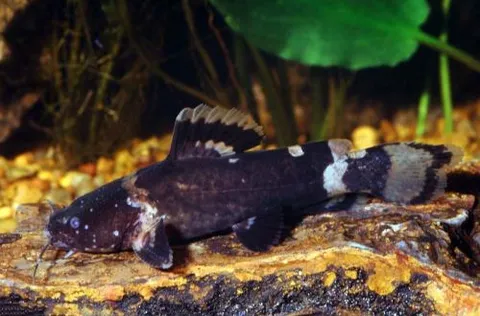
Batrochoglanis raninus
Batrochoglanis, scientifically known as Batrochoglanis raninus, belongs to the family Pseudopimelodidae. This fish originates from South America, inhabiting many river systems in the lower Amazon basin, as well as water…
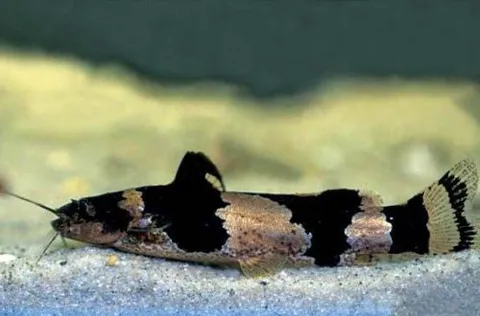
Microglanis iheringi
The scientific name Microglanis iheringi is assigned to this member of the Pseudopimelodidae family, known as the Harlequin Catfish or American Bumblebee Catfish. The natural habitat of this species is the Turmero River…
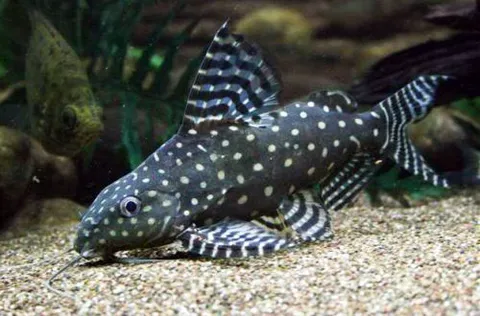
Synodontis angelicus
The Angel Squeaker Catfish, also known by its scientific name Synodontis angelicus, or Synodontis Angel, belongs to the family Mochokidae. This medium-sized catfish species easily adapts to most community tanks,…
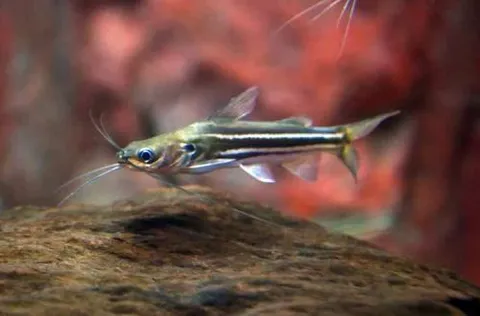
Mystus vittatus
The Striped Mystus, scientifically known as Mystus vittatus, is a member of the Bagridae family. Its habitat range is wide, covering South Asia, including Pakistan, India, Sri Lanka, Nepal, and Bangladesh. This fish can…