Temperature25 – 28 °C
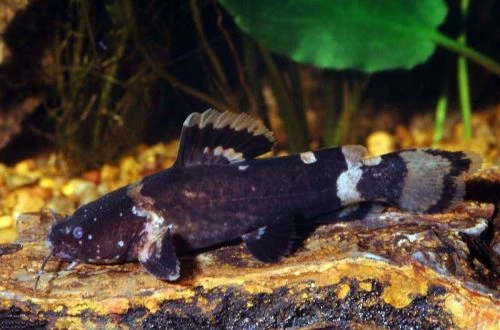
Batrochoglanis, scientifically known as Batrochoglanis raninus, belongs to the family Pseudopimelodidae. This fish originates from South America, inhabiting many river systems in the lower Amazon basin, as well as water bodies in Guyana and French Guiana. In its natural habitat, it can be found among accumulations of silty substrate, in thickets of submerged snags, and, of course, hiding in a layer of fallen leaves.
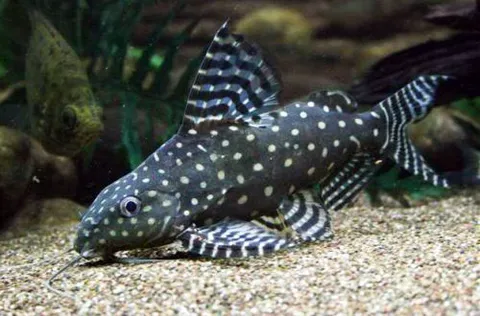
Adults of this catfish can reach a length of up to 20 cm. However, in aquarium conditions, their growth typically stops at 8–10 cm. The catfish's body appears stout, with short fins; the first rays of the fins are thickened and modified, forming spines. The caudal fin is rounded. The predominant coloration is dark brown or almost black, with light cream speckles. The tail stands out as it contains more light pigments compared to the body.
The genus's range covers the Amazon, Orinoco, Paraguay, and Essequibo river basins, as well as water bodies in Ecuador, Colombia, Guyana, and French Guiana. These fish are demersal inhabitants of tropical freshwater bodies. In nature, they prefer deep, shaded sections of rivers with slow currents, where the bottom is covered with gravel, plant debris, and an abundance of snags used as shelters.
This catfish leads a rather secretive lifestyle, preferring to stay in shelters during daylight hours. It is peaceful and gets along well with its conspecifics, but it does not exhibit excessive sociability, feeling perfectly fine alone. It can be kept with most non-aggressive fish species. However, it is important to consider the omnivorous nature of Batrochoglanis: it is capable of eating small fish or fry.
Given the sedentary nature of this catfish, an aquarium of at least 50 liters will be sufficient for a single specimen. Accordingly, a larger tank will be required for a group of several fish of comparable size. The decor can be chosen arbitrarily, based on the aquarist's personal preferences or the needs of other inhabitants. The main condition is the mandatory presence of numerous shelters. These can be natural elements such as snags, rock formations creating caves and grottoes, or dense plant thickets, as well as artificial items. PVC pipe fragments also serve as simple and effective shelters. For successful long-term keeping, it is important to provide soft, slightly acidic water, although the fish can successfully adapt to higher pH and dGH values. Batrochoglanis tolerates excessive current poorly. Soft filtration, providing gentle water movement, is recommended. Aquarium maintenance should be standard: weekly partial water changes, timely removal of organic waste, regular equipment maintenance, and cleaning of glass and decorative elements.
In their natural environment, the diet of these fish consists primarily of plant material and small invertebrates. In a home aquarium, Batrochoglanis readily accepts almost all popular types of food: dry, frozen, fresh, and live. It is important to remember that in a confined space and with a high population density, Batrochoglanis may shift its attention to its smaller neighbors.
Breeding is not documented. Pseudopimelodid catfish spawn in aquaria only rarely, and for this species there are no confirmed cases. The fish is secretive and nocturnal, hiding under driftwood and stones by day, which makes both observation and pairing difficult.
No diseases that affect only this species have been described. Under suitable conditions — clean water, a balanced diet and calm tank mates — health problems usually do not arise. The most common cause of illness is a decline in conditions: it weakens the immune system, and the fish becomes vulnerable to infections that are always present in an aquarium. At the first signs of trouble — lethargy, wasting, refusal of food or clamped fins — check the basic water parameters and the levels of ammonia, nitrite and nitrate first. Restoring acceptable conditions often lets the fish recover on its own. Catfish of this group have naked, scaleless skin and are therefore more sensitive to medication than most aquarium fish. Products based on malachite green and copper should be used with care and at about half the dose stated on the packaging.
When selecting specimens, attention should be paid to their activity at night, as these catfish lead a predominantly secretive lifestyle. A healthy fish should have clean integuments without visible damage, ulcers, or film, and should exhibit a natural reaction to feeding. It is important to consider that these fish are predators, so when purchasing, assess the size of the specimen to rule out the possibility of them eating smaller aquarium neighbors in the future.
The essentials: size, tank volume, water parameters and care
An adult reaches 8–20 cm in length. Plan the tank around the maximum size: the fish quickly outgrows a cramped setup.
The recommended volume is 150 L. A smaller tank speeds up nitrate build-up and raises stress levels.
Temperature 25–28 °C, pH 6–7, hardness 10–15 dGH. Stability matters more than exact values: sudden swings are harder on the fish than a small deviation from the ideal.
Around 10 years when kept properly. Lifespan depends directly on tank volume, water quality and a varied diet.
Temperament: semi-peaceful (dangerous to smaller ones). Not a predatory species, but small fish that fit in its mouth will eventually be eaten.
Recommended setup: both solitary and in group (flexible). Ignoring this is a common cause of stress and disease.
Diet type: sinking (any). Feed small portions that are finished within a couple of minutes — overfeeding does more harm than underfeeding.
The scientific name of the species is Batrochoglanis raninus, family Pseudopimelodidae. It also appears in the literature as: Batrachoglanis raninus, Pimelodus raninus, Pseudopimelodus acanthochirus.
The water suits 185 of 208 plants in the catalogue — the easiest ones are shown first.
Afzelius's AnubiasAnacharisAnubiasBrazilian PennywortDwarf CloverDwarf CloverDwarf HygrophilaDwarf SagittariaDwarf ValGuppy GrassHornwortJava FernJava MossMoneywortMud SwordNair's LagenandraNarrow Leaf AnacharisNarrow-leaf CloverSüsswassertangTaiwan MossTape GrassTemple PlantUssuri WatermilfoilWater Wisteria
Matched by family, categories and overlapping keeping conditions
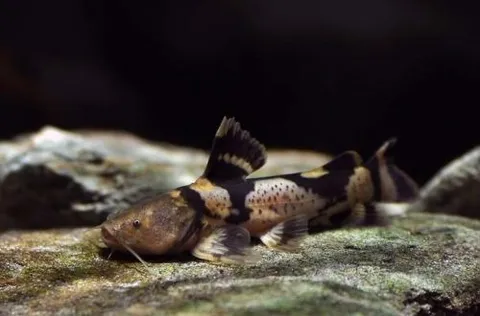
Pseudopimelodus bufonius
Pseudopimelodus bufonius, known by its scientific name Pseudopimelodus bufonius, belongs to the family Pseudopimelodidae. This catfish originates from South America, predominantly in Venezuela and the northern Brazilian…
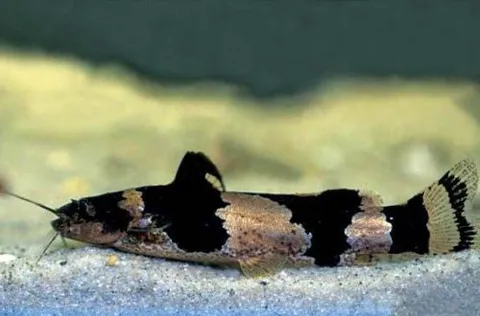
Microglanis iheringi
The scientific name Microglanis iheringi is assigned to this member of the Pseudopimelodidae family, known as the Harlequin Catfish or American Bumblebee Catfish. The natural habitat of this species is the Turmero River…
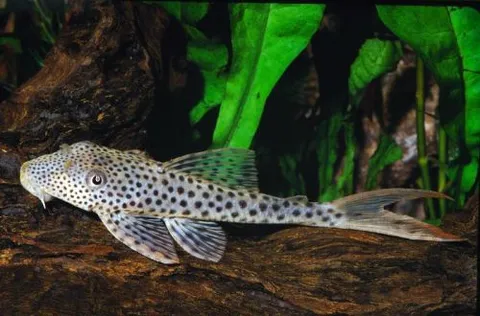
Aphanotorulus emarginatus
Aphanotorulus emarginatus, or Pleco catfish, belongs to the family Loricariidae. Interestingly, this common name often encompasses several closely related species that have been assigned different numbers in scientific…
Synodontis angelicus
The Angel Squeaker Catfish, also known by its scientific name Synodontis angelicus, or Synodontis Angel, belongs to the family Mochokidae. This medium-sized catfish species easily adapts to most community tanks,…