Temperature22 – 28 °C
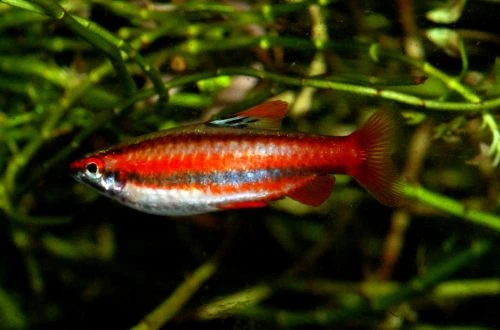
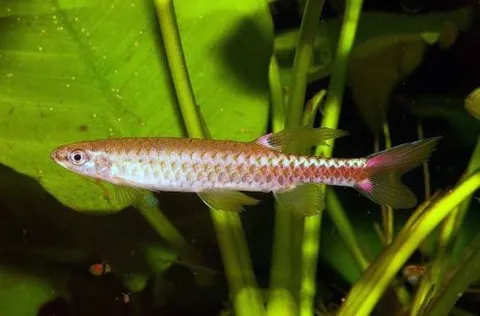
A stunning representative of the Lebiasinidae family, also known as the Coral Red Pencilfish, is the Red Pencilfish, scientifically named Nannostomus mortenthaleri. This characin species was discovered relatively recently—its scientific description appeared only in 2001. Despite this, it has already gained significant popularity among aquarists worldwide. However, it's worth noting that most specimens offered for sale are still wild-caught, which can create certain difficulties with their adaptation to a home aquarium.
The elegant, elongated, and slender body of this fish is harmoniously complemented by horizontal black lines extending from the head to the tail. The overall coloration is predominantly red, with the belly noticeably lighter, often taking on a shade from light pink to almost white. Males are easily distinguished by a white spot at the base of the dorsal fin, as well as the intensely red outer edge of the anal fin, which is much paler in females. Differences are also evident in behavior: females are usually calm, while males constantly engage in skirmishes. Additionally, during spawning, the males' coloration becomes significantly brighter.
The natural habitat of the Red Pencilfish covers a relatively small area in the basins of the Peruvian rivers Nanay and Rio Tigre. This region remains a wild and hard-to-reach corner of nature. They prefer small forest streams and channels where the water is exceptionally clean.
This species is characterized by friendly and active behavior. It coexists well with other peaceful, small schooling fish. However, cohabitation with larger specimens can become a problem, as the Red Pencilfish risks becoming their prey and, out of fear, will not be able to compete for food. It is recommended to keep them in schools of at least 6 individuals. Intraspecific competitive relationships are observed among males vying for the attention of females; this manifests in constant skirmishes, though they rarely result in serious injuries. Nevertheless, given their poor adaptation to aquarium conditions, even minor damage can worsen and provoke diseases. Therefore, an optimal solution might be to keep one male with a group of females. To keep the male active, a small trick can be used: place a small mirror in the aquarium, which he will perceive as a rival.
The main difficulty in keeping Red Pencilfish lies in maintaining stable and appropriate water parameters, such as pH, dGH, and temperature. Any significant deviations from the norm can immediately affect the fish's health. For effective regulation of water acidity, it is recommended to use a filter with alder cone media. Water hardness is established during preparation, and the temperature regime is regulated with a heater. Essential additional equipment includes an air pump and a lighting system that provides soft, subdued light, as these fish prefer moderate illumination. For aquarium decoration, floating plants are essential to create additional shade. Other plants are arranged in groups along the walls. Dark substrate, decorative elements like snags, intertwined roots, and other hiding places create excellent habitats for the fish.
These fish are not particularly fussy eaters and readily accept a variety of foods. Their diet perfectly includes both dry commercial foods (e.g., flakes or granules) and meaty products in frozen, freeze-dried, or live forms. The ideal feeding regimen involves daily feeding of crushed flakes or granules 2–3 times a day. Approximately every other day, small bloodworms (live or freeze-dried), as well as finely chopped pieces of worms or shrimp, can be added to the diet.
Although the Red Pencilfish is already successfully bred in captivity, this process is currently available mainly to commercial breeders, not home aquarists. Therefore, most of the fish offered in retail today are still wild-caught specimens.
Red Pencilfish are predisposed to infections caused by protozoan microorganisms, especially during acclimatization. Health problems can also arise from sharp fluctuations in water parameters or exceeding permissible values.
When purchasing, preference should be given to individuals with bright, rich coloration, as a pale color may indicate stress, poor health, or improper keeping conditions. It is important to carefully inspect the fish for fin damage, ulcers, or signs of emaciation, as the species is sensitive to water quality and tolerates transportation poorly. Since most specimens come from the wild, it is recommended to ask the seller about the fish's adaptation period in the store and their current diet. Healthy Nannostomus should be active, stay in a school, and show no signs of timidity or apathy.
The essentials: size, tank volume, water parameters and care
An adult reaches 3 cm in length. Plan the tank around the maximum size: the fish quickly outgrows a cramped setup.
The recommended volume is 81 L. A smaller tank speeds up nitrate build-up and raises stress levels.
Temperature 22–28 °C, pH 6–7, hardness 2–10 dGH. Stability matters more than exact values: sudden swings are harder on the fish than a small deviation from the ideal.
Around 5 years when kept properly. Lifespan depends directly on tank volume, water quality and a varied diet.
Temperament: peaceful (regular). Keep this in mind when choosing tank mates.
Recommended setup: medium group (6–8 individuals). Ignoring this is a common cause of stress and disease.
Diet type: small / appropriate size / pieces. Feed small portions that are finished within a couple of minutes — overfeeding does more harm than underfeeding.
The scientific name of the species is Nannostomus mortenthaleri, family Lebiasinidae. It also appears in the literature as: Nannostomus marginatus.
The water suits 197 of 208 plants in the catalogue — the easiest ones are shown first.
Afzelius's AnubiasAnacharisAnubiasBrazilian PennywortDwarf CloverDwarf CloverDwarf HygrophilaDwarf SagittariaDwarf ValGuppy GrassHornwortJava FernJava MossMoneywortMud SwordNair's LagenandraNarrow Leaf AnacharisNarrow-leaf CloverStringy MossSüsswassertangTaiwan MossTape GrassTemple PlantUssuri Watermilfoil
Matched by family, categories and overlapping keeping conditions
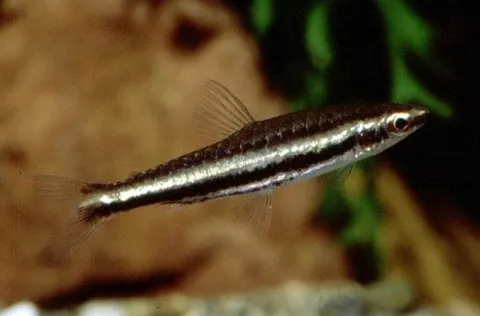
Nannostomus digrammus
Nannostomus digrammus, known as the two-striped nannostomus, is a member of the Lebiasinidae family. It is not frequently encountered by hobbyists in the aquarium trade, usually arriving in shipments with other…
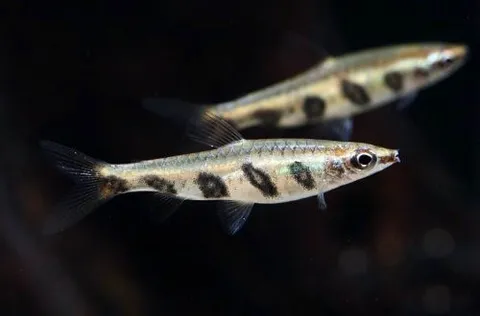
Nannostomus espei
Nannostomus espei, known as the Banded Pencilfish, belongs to the family Lebiasinidae. It is quite popular in the aquarium hobby, but its widespread distribution is hindered by certain difficulties in breeding. However,…
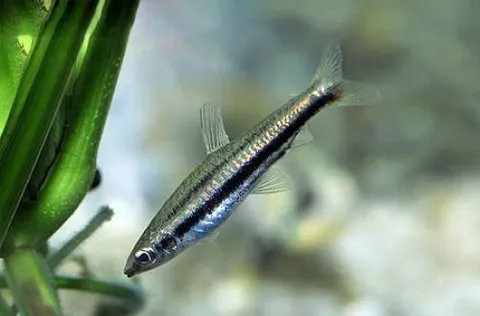
Nannostomus marilynae
Nannostomus marilynae, known by its scientific name, belongs to the family Lebiasinidae. It was named in honour of Marilyn Sohner Weitzman, the wife of the scientist who described this species. In aquaristics, these…
Copella compta
Copella compta, or Copella compta, belongs to the family Lebiasinidae. This fish originates from the tropical regions of South America, where it can be found in numerous forest streams and rivers located in the upper…