Temperature22 – 26 °C
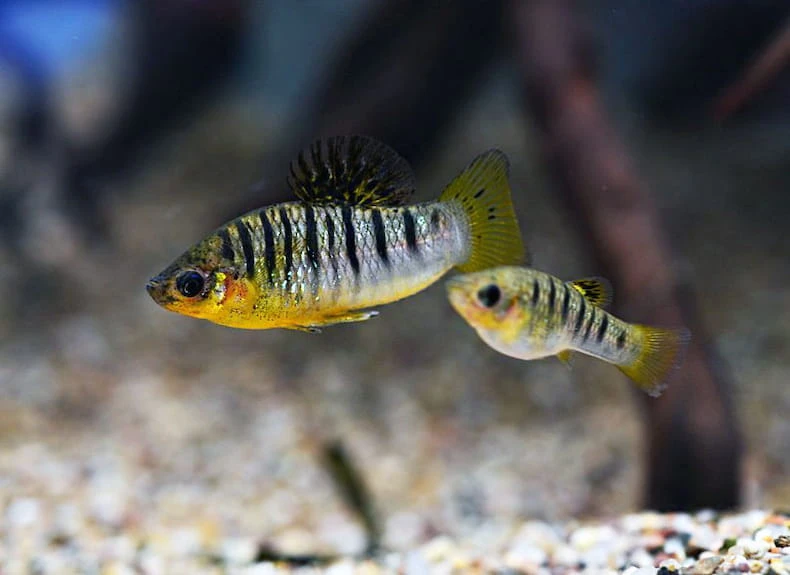
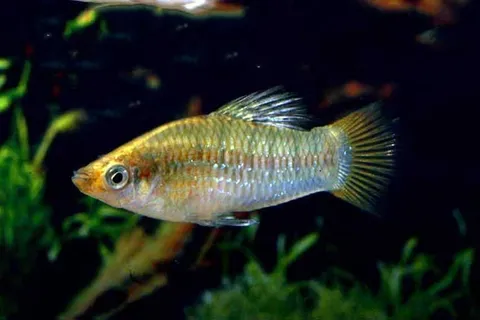
Limia nigrofasciata, also known as the blackbanded limia, is part of the Poeciliidae family. This fish is easy to keep and breed in an aquarium and coexists well with various species, making it an excellent choice for beginner aquarists. The only thing that might seem unremarkable is its coloration.
Adults reach a size of about 6 cm. Males are noticeably smaller than females and have a narrower keel, which gives them a more elegant appearance compared to their partners. Their coloration is silvery-gray, with yellowish hues around the head and belly. A distinctive feature of their pattern is the characteristic black transverse stripes on their body.
Its natural habitat is in the Caribbean basin, specifically on the island of Haiti. These fish inhabit various bodies of water, including brackish waters, from small rivers to oxbow lakes. They are usually found in shallow water, in areas with abundant aquatic vegetation, where they stay in large schools.
Possessing a peaceful and calm disposition, these fish get along well with representatives of other species of similar size. When selecting tank mates, it is important to avoid overly active or aggressive fish.
A small school of blackbanded limia will feel perfectly comfortable in an aquarium of 40 L or more. The aquarium decor can be arbitrary, but it is important to provide both areas with dense vegetation and open swimming zones. Limia is a very unpretentious and hardy species, so it does not have excessive requirements for keeping conditions. The fish successfully adapts to various water parameters. It can also stay in brackish water for a long time, provided that the salt concentration does not exceed 5 grams per 1 liter.
This species is undemanding regarding its diet: fish readily accept all common types of suitable-sized food, be it live, frozen, or dry. For complete nutrition, it is recommended to include foods with vegetable additives in their diet.
The blackbanded limia is a livebearing species: this means that the fish do not lay eggs but give birth to fully formed offspring, as the entire incubation period takes place inside the female's body. Under favorable conditions, new offspring can appear every 6–8 weeks, and the number of fry in one brood often reaches 50. Fish reach sexual maturity by 6 months. During the breeding period, males begin to actively pursue females; to prevent potential problems, the number of male individuals in the aquarium should be significantly less. In addition, areas with dense vegetation should definitely be provided, which will serve as a temporary refuge for females from excessive courtship by their partners. Since adult fish can eat fry, it is advisable to move a pregnant female to a separate tank and return her after spawning.
Health problems usually arise only as a result of injuries or keeping in unsuitable conditions, which leads to a weakening of the immune system and, as a rule, provokes the development of various diseases. At the first signs of illness, the primary task is to check the water parameters for excesses or dangerous concentrations of toxic substances (nitrates, nitrites, ammonia, etc.). After bringing all indicators back to normal, treatment can begin.
When purchasing, choose active fish that stay in the water column and show interest in their surroundings. Avoid individuals with clamped fins, visible damage, film on scales, or an unnaturally bloated abdomen. It is optimal to acquire a group of 5–7 individuals, as fish feel more confident in a school and are less susceptible to stress during relocation. Before purchasing, make sure that the conditions in the seller's aquarium meet basic requirements, and the fish appear well-fed and show no signs of emaciation.
The essentials: size, tank volume, water parameters and care
An adult reaches 6 cm in length. Plan the tank around the maximum size: the fish quickly outgrows a cramped setup.
The recommended volume is 40 L. A smaller tank speeds up nitrate build-up and raises stress levels.
Temperature 22–26 °C, pH 7–8, hardness 10–25 dGH. Stability matters more than exact values: sudden swings are harder on the fish than a small deviation from the ideal.
Around 3 years when kept properly. Lifespan depends directly on tank volume, water quality and a varied diet.
Temperament: peaceful (regular). Keep this in mind when choosing tank mates.
Recommended setup: schooling (usually from 5–6 individuals and more). Ignoring this is a common cause of stress and disease.
Diet type: any (universal). Feed small portions that are finished within a couple of minutes — overfeeding does more harm than underfeeding.
The scientific name of the species is Limia nigrofasciata, family Poeciliidae. It also appears in the literature as: Limia arnoldi, Poecilia nigrofasciata.
The water suits 114 of 208 plants in the catalogue — the easiest ones are shown first.
African Onion PlantAfzelius's AnubiasAmazon FrogbitAmazon SwordAnacharisAnubiasArrowhead CryptDwarf CloverDwarf CloverDwarf HygrophilaDwarf SagittariaDwarf ValGuppy GrassHornwortJava MossMoneywortMud SwordNair's LagenandraNarrow Leaf AnacharisNarrow-leaf CloverStringy MossTaiwan MossTape GrassUssuri Watermilfoil
Matched by family, categories and overlapping keeping conditions
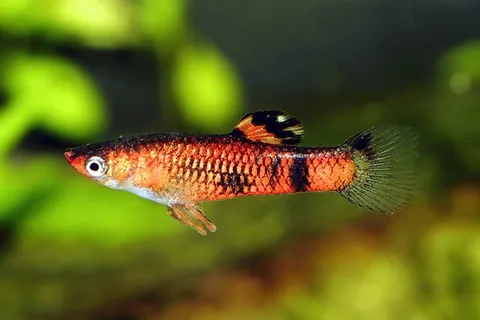
Poecilia picta
Poecilia picta, widely known as the Swamp Guppy, belongs to the family Poeciliidae. This species was first introduced to aquarists in 1939 in Germany, where it was referred to as Micropoecilia melanzonus. It…
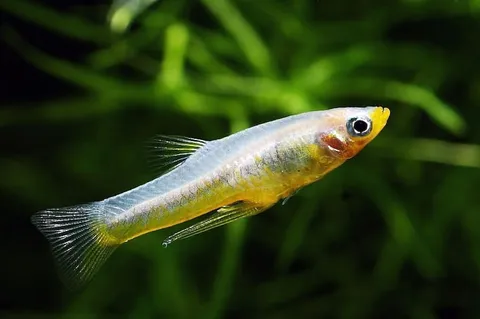
Girardinus metallicus
Girardinus metallicus, or metallic livebearer, belongs to the family Poeciliidae. This fish was once very popular among aquarists in the early 20th century, largely due to its exceptional hardiness and resilience.…
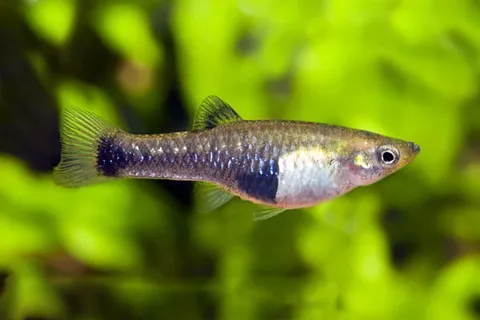
Limia melanogaster
Limia melanogaster, known as the Blackbelly Limia, belongs to the family Poeciliidae. These fish are characterized by their undemanding nature, successful breeding, and good compatibility with various tank mates. Such…
Limia perugiae
The Dominican Limia, scientifically known as Limia perugiae, belongs to the family Poeciliidae, also known as livebearers. As its name suggests, this fish is native to Central America. It is known as an endemic species,…