Temperature24 – 28 °C
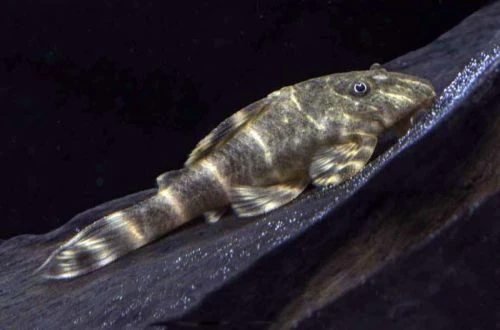
Dekeyseria pulchra, also known as Butterfly Pleco or Banded Peckoltia (formerly Peckoltia pulcher), is a catfish species inhabiting the waters of South America. It can be found in the basins of the Rio Negro and Orinoco rivers, extending across Colombia, Venezuela, and northern Brazilian states.
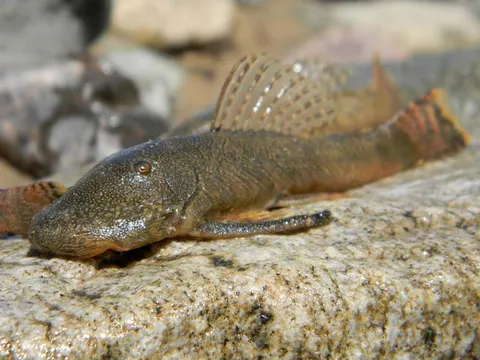
This catfish has a flattened body topped with a large, conical head. Adults grow to approximately 10 cm in length. Their eyes are set high, allowing for an almost 180-degree view of their surroundings. The entire body is covered with bony plates studded with short, sharp spines, which are also present on the first rays of the fins. The fish's coloration can vary significantly, adapting to environmental conditions. The color can change from light gray with a greenish tint to almost black, but the pattern of 7–8 dark transverse stripes always remains constant.
The species occurs in South America — in the upper Rio Negro, the Orinoco basin and the Casiquiare Canal that links them, across Brazil, Colombia and Venezuela. The form traded as L168 comes from the Rio Negro and its tributary the Rio Demini, while L052 originates from the Orinoco and the Atabapo. This is a classic blackwater biotope: soft, acidic water stained by humic compounds, in flowing streams and tributaries that are well oxygenated and noticeably current-swept. The bottom and banks are littered with driftwood and tangles of roots and branches, offering plenty of shaded hiding places and rocky crevices.
This peaceful but timid fish prefers to hide in shelters, avoiding overly active tank mates. It coexists well with most non-aggressive species of comparable size. Good choices for tank mates include fish that inhabit the middle or upper layers of the water column.
For a single catfish, the optimal aquarium size starts from 80–100 liters. In terms of decor, the presence of shelters and natural wood elements, such as various shaped snags, is fundamentally important. Under certain conditions, algae can grow on the snags, serving as an additional food source for the Banded Peckoltia. Otherwise, the decor is chosen at the aquarist's discretion. Warm, slightly acidic water with dH values not exceeding 19 is considered comfortable for these fish. The accumulation of organic waste, which can significantly degrade water quality, must be avoided. Weekly aquarium maintenance is absolutely necessary, along with a stable filtration system, which is especially important for bottom dwellers.
The diet of the Banded Peckoltia should be based on foods with a high content of plant components, as they can subsist exclusively on a plant-based diet, including algae. Dry sinking foods such as flakes, granules, and tablets are excellent for this, as are fresh vegetable pieces like zucchini, cucumber, spinach, or peas.
Breeding in an aquarium is associated with difficulties. Spawning requires a spacious tank with soft and acidic water (pH 6.0–6.5) at a temperature of 25–27 °C. Males differ from females in the shape of their anal fin: males have a notch, while females have a straight edge. A gradual lowering of the water level followed by the addition of fresh water serves as a spawning trigger. The eggs float on the surface; after spawning, the parents must be removed to prevent cannibalism. Rearing the fry requires very fine live food, as the young only feed on moving prey.
The Butterfly Pleco is sensitive to abrupt changes in water parameters and environmental quality. Major health problems often arise from an improper diet or poor aquarium hygiene. The species is susceptible to fungal and bacterial infections, which can develop if fins are damaged or due to stress. Prevention includes maintaining stable conditions, using high-quality live food, and avoiding aggressive tank mates that could injure the long rays of the pelvic fins.
When purchasing, select active individuals with undamaged fins and clear eyes. It is important to inspect the fish for external signs of parasites or skin erosion. Since the species is a specialized predator, it is worth clarifying whether the individual is accustomed to the food offered in the store. Avoid purchasing fish that appear emaciated or stay at the bottom, as this may indicate health or adaptation problems.
The essentials: size, tank volume, water parameters and care
An adult reaches 10–12 cm in length. Plan the tank around the maximum size: the fish quickly outgrows a cramped setup.
The recommended volume is 80 L. A smaller tank speeds up nitrate build-up and raises stress levels.
Temperature 24–28 °C, pH 6–8, hardness 5–19 dGH. Stability matters more than exact values: sudden swings are harder on the fish than a small deviation from the ideal.
Around 3 years when kept properly. Lifespan depends directly on tank volume, water quality and a varied diet.
Temperament: peaceful, timid (shy). Keep this in mind when choosing tank mates.
Recommended setup: both solitary and in group (flexible). Ignoring this is a common cause of stress and disease.
Diet type: plant-based (algae, vegetables). Feed small portions that are finished within a couple of minutes — overfeeding does more harm than underfeeding.
The scientific name of the species is Dekeyseria pulchra, family Armored Catfishes (Loricariidae). It also appears in the literature as: Pantodon buchholtzi.
The water suits 196 of 208 plants in the catalogue — the easiest ones are shown first.
Afzelius's AnubiasAnacharisAnubiasBrazilian PennywortDwarf CloverDwarf CloverDwarf HygrophilaDwarf SagittariaDwarf ValGuppy GrassHornwortJava FernJava MossMoneywortMud SwordNair's LagenandraNarrow Leaf AnacharisNarrow-leaf CloverStringy MossSüsswassertangTaiwan MossTape GrassTemple PlantUssuri Watermilfoil
Matched by family, categories and overlapping keeping conditions
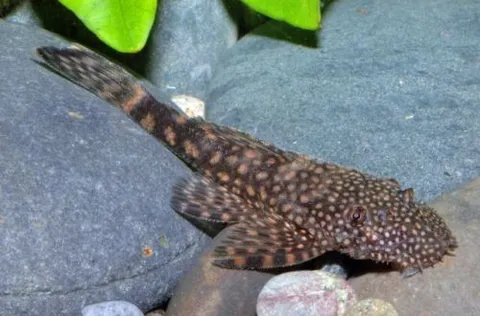
Ancistrus cirrhosus
The Dark Ancistrus, also known as the Bristlenose Pleco (Ancistrus cirrhosus), possesses a rather unusual appearance that might remind one of something shaggy. This fish can remain motionless for long periods, which,…
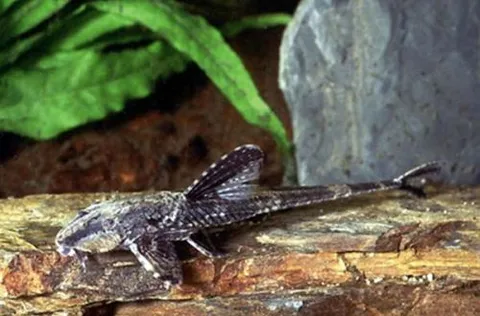
Rineloricaria lanceolata
Rineloricaria lanceolata, also known as the Peruvian Whiptail Catfish, belongs to the Armored Catfish family (Loricariidae). This species is valued among aquarists for its moderate size, unpretentious nature, and…
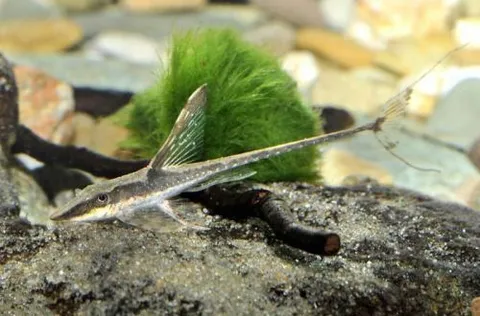
Sturisomatichthys aureus
The Golden Sturisoma, scientifically known as Sturisomatichthys aureus (formerly Sturisoma aureum), is a member of the armored catfish family (Loricariidae). This species originates from South America, where it is found…
Chaetostoma fischeri
Chaetostoma fischeri, known as Fischer's Chaetostoma, is a member of the family Loricariidae, or armored catfish. Its natural habitat is in the river systems of Central America, as well as in some South American rivers…